0 Reviews
Simple Daily Fitness Exercises – An Easy Routine for Total Wellness
Simple Daily Fitness Exercises. We’ll give you a full, beginner-friendly 20-minute routine that fits in a hotel room, park, or living room. This plan focuses on practical progressions so we can reliably build strength and muscle without needing a gym.
Why this short routine works
We want a program that respects busy schedules while still applying the key training principles for strength and hypertrophy. By performing a focused circuit at a slightly challenging intensity and using progressive overload strategies, we can stimulate muscle and strength gains in 20 minutes. Consistency and small, measurable improvements are the real drivers.
Can you build muscle with bodyweight training?
Yes—we can. Muscle growth requires applying progressive overload (more work over time). With bodyweight training that means increasing reps, switching to more difficult movement variations, shortening rest, slowing tempo, or adding more rounds. While absolute load is smaller than heavy gym lifts, manipulating volume and intensity lets us grow muscle and build strength.
How progressive overload works without weights
We increase the challenge gradually so the body must adapt. Practical methods include:
- Adding reps or rounds.
- Choosing harder variations (incline → flat → decline push-up).
- Reducing rest between exercises.
- Slowing eccentric (lowering) tempo or pausing at weak points.
- Increasing time under tension with slower reps or holds.
Want a simple, 20-minute bodyweight workout we can do anywhere to build strength and muscle without equipment?
The 20-Minute Beginner Bodyweight Circuit
We designed a single circuit to be performed back-to-back. Aim for 2–3 rounds depending on fitness and time. The whole session, including warm-up and a short cool-down, should fit into about 20 minutes.
Circuit (perform exercises consecutively; rest 1–2 minutes between rounds)
- 20 bodyweight squats
- 10 push-ups
- 10 walking lunges per leg
- 10 single-arm rows (use a milk jug or similar per arm)
- 15-second plank
- 30 jumping jacks
How to structure the session
We recommend:
- Warm-up: 2–5 minutes of dynamic movement.
- Circuit: 2–3 rounds as listed above. If 2 rounds feels too easy after a few sessions, add a third round.
- Rest between rounds: 60–120 seconds depending on how recovered we feel.
- Cool-down/brief stretch: 2–5 minutes focusing on hips, chest, and hamstrings.
Warming up prepares our nervous system and raises body temperature so we can train harder and reduce injury risk. Spend 2–5 minutes doing easier dynamic movements such as light jogging on the spot, marching, arm and leg swings, hip circles, or a slow, warm-up round of the workout at reduced intensity.
Example 3-minute dynamic warm-up
- 30 seconds marching or light jogging
- 30 seconds arm circles (15 seconds forward/15 seconds back)
- 30 seconds leg swings (15 seconds each leg)
- 30 seconds hip hinge/good mornings (slow)
- 30 seconds bodyweight squats (slow tempo)
- 30 seconds shoulder taps in plank position (slow)
This image is property of images.unsplash.com.
Frequency and recovery
We should do this routine 2–4 times per week, allowing roughly 48 hours between full-strength sessions to recover. On off days we can add walking, yoga, mobility work, or light activity. Recovery and sleep are essential components of muscle growth.
Exercise progression and regressions
We must match the exercises to our current ability. Use regressions if exercises are too hard, or progressions for greater challenge. Below is a practical list of regressions and progressions for the main movements in the circuit.
Progression principles summarized
- Regressions: reduce range, reduce load, add support (e.g., knee push-ups, elevated hands).
- Progressions: increase load or mechanical difficulty (e.g., decline push-ups, one-legged squats), increase reps/rounds, shorten rests, or slow tempo.
Detailed exercise descriptions and cues
We’ll list 17 beginner-friendly exercises, with primary muscles targeted, key technique cues, and suggested regressions/progressions so we can scale each movement.
| # | Exercise | Primary Muscles | Technique Cues | Regression | Progression |
|---|---|---|---|---|---|
| 1 | Bodyweight Squat | Quads, glutes, hamstrings | Chest up, knees track toes, sit back into hips | Box/bench squat, reduced range | Tempo squat (3s down), jump squat |
| 2 | Assisted/Elevated Squat | Quads, glutes | Hands on chair for support; sit to a bench | Wall sit hold | Full deep squat, pistol progressions |
| 3 | Good Morning (bodyweight) | Hamstrings, glutes, lower back | Hinge at hips, neutral spine, slight knee bend | Small range hip hinge | Romanian deadlift with weight |
| 4 | Glute Bridge | Glutes, hamstrings, core | Drive hips up, squeeze glutes at top | Partial bridge | Single-leg glute bridge |
| 5 | Walking Lunge (forward) | Quads, glutes, hamstrings | Tall chest, step long enough to keep knee behind toes | Reverse lunge or static split squat | Walking jump lunge |
| 6 | Reverse Lunge | Quads, glutes | Step back into lunge, maintain upright torso | Assisted hold on support | Bulgarian split squat |
| 7 | Supported Split Squat (static lunge) | Quads, glutes | Hands on support for balance | Reduce depth | Single-leg squat progression |
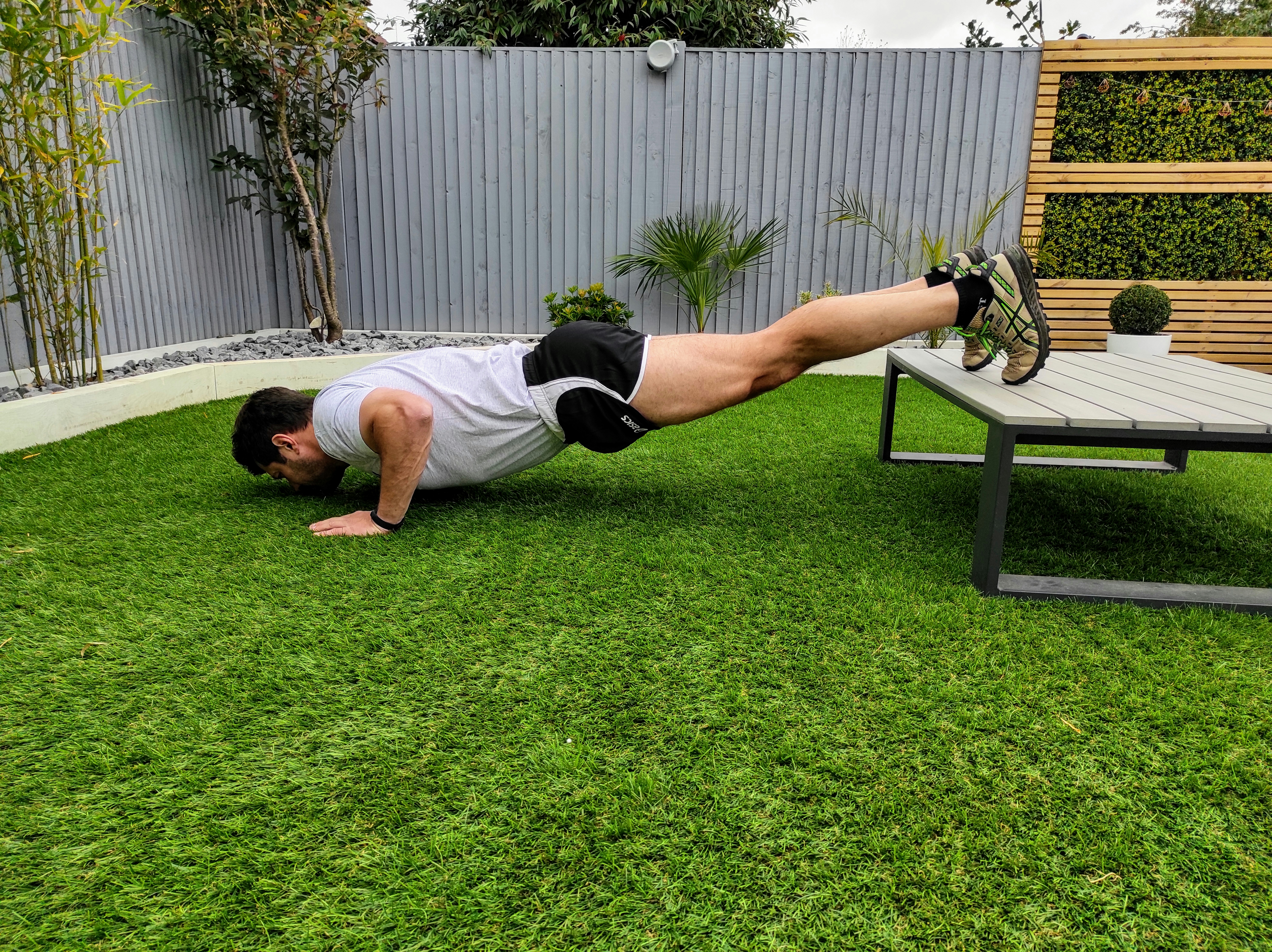
| 8 | Push-up (standard) | Chest, triceps, shoulders, core | Straight body line, hands under shoulders, chest to floor | Knee push-up, incline push-up | Decline push-up, archer push-up |
| 9 | Knee Push-up | Chest, triceps, shoulders | Hips in line with body from knees to shoulders | Wall or incline push-up | Regular push-up |
| 10 | Incline/Elevated Push-up | Chest, shoulders | Hands on bench or wall to reduce load | Higher incline | Lower incline toward floor |
| 11 | Single-arm Row (milk jug) | Back (lats), biceps, rear delts | Hinge at hips, pull elbow back, squeeze shoulder blade | Two-arm bent-over row (lighter load) | One-arm row with heavier load |
| 12 | Doorway/Horizontal Row (inverted) | Upper back, biceps | Maintain straight plank line, pull chest to hands | Bent-over row with bodyweight support | Feet-elevated horizontal row |
| 13 | Plank (forearm/full) | Core, shoulders | Neutral spine, squeeze glutes, avoid sagging | Knee plank | Plank with alternating arm/leg raise |
| 14 | Side Plank (knee/straight) | Obliques, core | Stack hips, keep breathing, avoid dropping | Side plank on knee | Full side plank with leg raise |
| 15 | Jumping Jacks | Cardio, shoulders, calves | Land soft, use full range of motion | Step-outs/walking jacks | Star jumps |
| 16 | Walking Jacks (low impact) | Cardio, hips | Step side to side, arms overhead for motion | Seated arm movements + step | Add calf raise or bigger range |
| 17 | Tempo Squat or Squat Hold | Quads, glutes, core | 3s lowering or 30–45s hold to increase time under tension | Shorter hold/more support | Eccentric-only slow squats |
How to use the table above
We should pick regressions if an exercise is too challenging and progress when an exercise becomes easy. Small changes—one extra rep, slightly slower tempo, or a tougher variation—keep the stimulus growing.
Movement coaching: common form cues
Proper technique reduces injury risk and ensures we target the intended muscles. Here are brief cues for key moves:
- Squat: Sit back as if to a chair, keep weight on heels, chest up, knees track toes.
- Lunge: Step far enough that the front knee stays behind toes; keep torso upright.
- Push-up: Keep a straight line from head to heels, retract shoulder blades slightly, breathe out on the push.
- Row: Hinge at hips, keep a long spine, pull elbow toward the hip and squeeze shoulder blade.
- Plank: Neutral neck, ribs zipped down, glutes braced to avoid sagging.
This image is property of images.unsplash.com.
Warm-up-to-workout flow example
We can do a warm-up round with lighter reps immediately before the main circuit to further prepare:
- 10 bodyweight squats (slow)
- 5 incline push-ups
- 5 walking lunges (total)
- 10-second plank
- 15 walking jacks
This is a reduced-intensity “practice” round that also checks movement quality.
Sample 4-week progression plan
This table shows a simple way to progress across 4 weeks while keeping the same circuit structure. The idea is small, consistent increases.
| Week | Rounds per session | Rest between rounds | Intensity tweak |
|---|---|---|---|
| 1 | 2 | 90–120s | Baseline reps (as prescribed) |
| 2 | 2–3 | 90s | Add 1–2 reps to select exercises |
| 3 | 3 | 60–90s | Use slightly harder variations for push-ups or rows |
| 4 | 3 | 60s | Add an extra set or slow tempo on squats/lunges |
We should record our reps, perceived exertion, and any notes so we can apply small improvements each week.
How to scale the circuit for different goals
We may want to emphasize strength, endurance, or fat loss. Here’s how to adapt the same 20-minute structure.
- Strength focus: Reduce reps per exercise slightly, increase difficulty of variations, increase time under tension (3–5s eccentrics), and keep rest 60–120s.
- Endurance focus: Keep or increase reps, choose easier variations, reduce rest to 30–60s.
- Fat-loss focus: Increase circuit rounds, shorten rest, and combine with daily walking and calorie control.
Weight-loss effectiveness of bodyweight training
Bodyweight training helps calorie burn and preserves or builds muscle, which supports fat loss. However, nutrition matters more for weight loss—exercise is roughly 10–20% of the equation. We should prioritize a moderate calorie deficit, prioritize protein, eat plenty of vegetables, practice mindful eating, and limit liquid calories. Training supports metabolic health, appetite control, and body composition, but diet is the main lever.
Practical nutrition tips to pair with the routine
- Aim for a protein target (for many adults, 0.6–1.0 g per lb of bodyweight depending on goals).
- Focus meals around lean protein, vegetables, and whole grains or starchy veg as needed.
- Track portions when starting so we can adjust intake.
- Replace sugary beverages with water, herbal tea, or sparkling water.
- Plan meals and snacks to avoid impulsive choices after workouts.

Tracking progress
We must measure what we want to improve. Track the following each workout:
- Rounds completed
- Reps per exercise
- Variations used
- Rest between rounds
- Rate of perceived exertion (RPE)
- Notes on form or pain
A simple tracking PDF or printable sheet helps maintain consistency. If we don’t have one, a notebook or notes app works fine. Aim to improve one small metric every session—one more rep, slightly better form, or a shorter rest period.
Tools and next steps
We don’t need equipment, but a few simple items can expand options:
- Milk jug or filled water bottle (rows)
- Sturdy chair or bench (elevated push-ups, step-ups)
- Resistance band (assist or add load)
- Yoga mat for comfort during floor work
Consider adding these progressions later:
- Dumbbell or kettlebell variations for squats, rows, and presses
- Gym-based progressions like barbell squats and bench presses once technique and strength are established
- Advanced bodyweight routines (one-arm push-up progressions, pistol squats)
We recommend downloading a tracking PDF or printable routine card to bring to sessions so we can log progress. After 4–6 weeks of consistent work, consider shifting to a new routine that targets different rep ranges or adds external load.
17-exercise progression ideas (sample pairings)
Below we provide brief pairings so we can move smoothly from easier to harder work across common movement families.
- Squat family: Wall squat → Box/bench squat → Bodyweight squat → Tempo squat → One-leg pistol progressions
- Hip hinge family: Bodyweight good morning → Glute bridge → Single-leg bridge → Hip hinge with weight
- Lunge family: Assisted reverse lunge → Reverse lunge → Walking lunge → Bulgarian split squat
- Push family: Wall/incline push-up → Knee push-up → Standard push-up → Decline/archer push-up
- Pull family: Bent-over milk-jug row → One-arm row → Doorway horizontal row → Elevated feet rows
- Core family: Knee plank → Forearm plank → Side plank → Plank with limb raises
- Cardio/conditioning: Step-outs/walking jacks → Jumping jacks → Star jumps or burpees for advanced conditioning
Sample weekly schedule (balanced)
We should combine strength sessions with light activity and recovery days. Here is a balanced weekly pattern:
- Monday: Circuit (2–3 rounds)
- Tuesday: 30–45 minute walk or yoga
- Wednesday: Circuit (2–3 rounds)
- Thursday: Active recovery (mobility, light walk)
- Friday: Circuit (optional third session if recovered)
- Saturday: Longer walk or fun activity
- Sunday: Rest and mobility
Adjust frequency to individual recovery and schedule. If we feel excessively sore, add another rest day.
Common beginner mistakes and how we fix them
We’ve seen patterns that slow progress. Here’s how we adjust:
- Mistake: Doing the same workout forever without progression. Fix: Track and nudge up reps, sets, or difficulty every 1–2 weeks.
- Mistake: Sacrificing form to hit reps. Fix: Regress or reduce reps until form is solid.
- Mistake: Not prioritizing sleep or nutrition. Fix: Aim for 7–9 hours sleep and basic protein intake.
- Mistake: Too little recovery. Fix: Schedule rest days and use easier activity on off days.
Quick at-home equipment substitutes
If we want to increase load or variety without gym access, these items are useful:
- Filled milk jugs or water bottles (rows, added weight)
- Backpack with books (front rack holds, added load)
- Sturdy chair or low table (step-ups, elevated push-ups)
- Resistance bands (assistance on pull-ups, added resistance for squats)
These affordable tools let us make linear progress before investing in heavier dumbbells or gym memberships.
After 4–6 weeks: how to progress beyond the beginner circuit
We should assess improvements after 4–6 weeks. Use these criteria to choose next steps:
- If we can comfortably perform 3 rounds with good form, move to advanced variations or higher intensity.
- If we’ve improved reps but want a new stimulus, add tempo work (slow eccentrics), paused reps, or a fourth round.
- If we have access to weights, start adding dumbbell rows, goblet squats, and weighted hip hinges.
Consider these specific next routines:
- Advanced bodyweight circuit with unilateral work
- Beginner dumbbell routine (2–3 exercises per muscle group)
- 6-level gym plan progressing from machine assistance to free weights
- A catalog of 42 bodyweight exercises to rotate weekly
Mindset and long-term consistency
We must focus on consistency, gradual progression, proper form, and adequate rest. Strength and muscle growth are the result of repeated, incremental improvements. That means showing up, tracking performance, and being patient. Small wins compound: one extra rep, improved range, or better posture every week leads to meaningful change over months.
A simple habit to keep us consistent
Schedule workouts as appointments in our calendar, track each session, and set a micro-goal (add one rep or reduce rest by 10 seconds). Celebrate those small wins to reinforce the habit.
Troubleshooting soreness and minor issues
- Normal muscle soreness usually comes 24–72 hours after a novel workout. We can use light activity, stretching, and hydration to manage it.
- Sharp joint pain is not normal. Stop the offending movement and regress or see a healthcare professional if pain persists.
- Plateaus often mean we stalled progression. Reexamine tracking data and intentionally adjust one variable (reps, variation, rest) to create a new stimulus.
Final practical checklist before starting
- Clear a small space and remove tripping hazards.
- Have a water bottle and towel nearby.
- Warm up for 2–5 minutes.
- Log your baseline (how many rounds you completed and which variations you used).
- Aim to improve one metric each workout.
Closing thoughts and next steps
We’ve laid out a practical 20-minute bodyweight circuit plus the progression strategies, regressions, and recovery guidance we need to build strength and muscle anywhere. If we follow the plan consistently for 4–6 weeks, track improvements, and prioritize nutrition and sleep, we’ll see measurable progress. After that, we can add small tools or switch to more advanced routines to keep progressing.
If we want resources to support the plan, we can download a tracking sheet, add simple tools like a milk jug or resistance band, or try a beginner dumbbell routine next. Above all, let’s keep the focus on consistent effort, quality movement, and steady progression—those are the elements that build lasting strength and muscle.