0 Reviews
Simple Daily Fitness Routine – Build Healthy Habits Without the Gym
Simple Daily Fitness Routine. We often think of exercise as something that requires a gym, a long time commitment, or special equipment. Dr Rangan Chatterjee’s simple 5-minute kitchen workout shows us that brief, consistent bodyweight sessions in the kitchen can be practical, effective, and easy to fit into modern life. In this article we’ll explain why it works, how to do it safely, and how to make it stick.
Why the kitchen is a great place for quick movement
Our kitchens are places we visit multiple times daily, often while waiting for water to boil, an oven timer to buzz, or a kettle to boil. These small pockets of time add up. By using them for brief strength-focused sessions, we turn idle minutes into opportunities for improving muscle strength, balance, and glucose handling. The familiar setting also reduces barriers to starting and helps us build a habit.
The science behind short, frequent strength sessions
Short bursts of resistance or bodyweight training have measurable benefits. Even 5–10 minutes of strength work increases muscle activation, stimulates neuromuscular adaptations, and contributes to improved insulin sensitivity — which helps our muscles take up glucose more efficiently after meals. Frequent, short sessions also raise daily non-exercise activity thermogenesis (NEAT) and support better posture and joint stability. While longer sessions are useful, brief daily efforts are a powerful complement for busy lifestyles.
The 5-Minute Kitchen Workout — overview
Dr Chatterjee’s routine focuses on five fundamental bodyweight movements we can do with minimal space and no equipment. The routine is balanced, targeting lower body, upper body, core, and calves. We recommend performing this sequence while waiting for cooking tasks or before meals, and encouraging family members to join for social support and consistency.
- Duration: ~5 minutes
- Equipment: None required (a sturdy kitchen chair or bench can be useful)
- Frequency: Daily or most days of the week
- Goal: 5–10 repetitions per exercise (adjust to ability)
Can five minutes in the kitchen each day really make a meaningful difference to our strength, blood sugar, and overall wellbeing?
The exercises (step-by-step)
We’ll present each exercise with technique cues, what it targets, and progressions so we can scale safely.
1. Bodyweight squats — 5–10 reps
Squats are a foundational movement that works the glutes, quadriceps, hamstrings, and core. Stand with feet slightly wider than hip-width, toes slightly turned out, chest up, and weight through the heels. Hinge the hips back as if sitting to a chair, lowering until comfortable, then push through the heels to return to standing. We should aim for controlled tempo and full range of motion as mobility allows.
- Common tips: Keep knees tracking over toes, avoid rounding the lower back, and engage the core.
- Progressions: Increase reps, add tempo changes (slow down the lowering), or hold a weighted object (e.g., a filled water bottle).
2. Calf raises — 5–10 reps
Calf raises strengthen the gastrocnemius and soleus and help with balance. Stand near a counter or step for support if needed. Rise up onto the balls of the feet as high as comfortable, then lower the heels slowly. If using a step, allow heels to drop slightly below step level for a larger range of motion.
- Common tips: Keep weight centered across the foot and avoid gripping with the toes.
- Progressions: Perform single-leg calf raises or add a tempo hold at the top.
3. Press-ups (push-ups) — 5–10 reps
Press-ups build upper-body strength across the chest, shoulders, and triceps. Start with hands shoulder-width apart and a straight body line. Lower the chest toward the surface (wall, counter, or floor) and push back up. Begin against a wall or kitchen counter if floor push-ups are too challenging.
- Common tips: Maintain a straight spine from head to heels, and avoid letting hips sag.
- Progressions: Move from wall → counter → floor, then to incline or decline variations or single-arm progressions when appropriate.
4. Tricep dips — 5–10 reps
Tricep dips target the back of the upper arms and the shoulders. Use a sturdy chair or kitchen bench. Place hands shoulder-width apart on the edge, slide the hips off the seat, extend legs forward, and bend the elbows to lower the body before pushing back up. Keep elbows pointing backward rather than flaring to the sides.
- Common tips: Keep shoulders down and avoid shrugging, and maintain a small bend in the elbows at full extension to protect joints.
- Progressions: Increase range of motion, elevate feet, or add repetitions.
5. Bodyweight lunges — 5–10 reps each leg
Lunges focus on glutes, quadriceps, hamstrings, and core stability. Step forward with one leg, lower the back knee toward the floor while keeping the front knee over the ankle, and return to standing. Keep the torso upright and the core engaged. We can hold a countertop for balance if needed.
- Common tips: Avoid forward knee tracking beyond toes, and keep weight distributed through the front heel.
- Progressions: Add a trunk rotation, hold weights, perform walking lunges, or add plyometric jumps if safe.
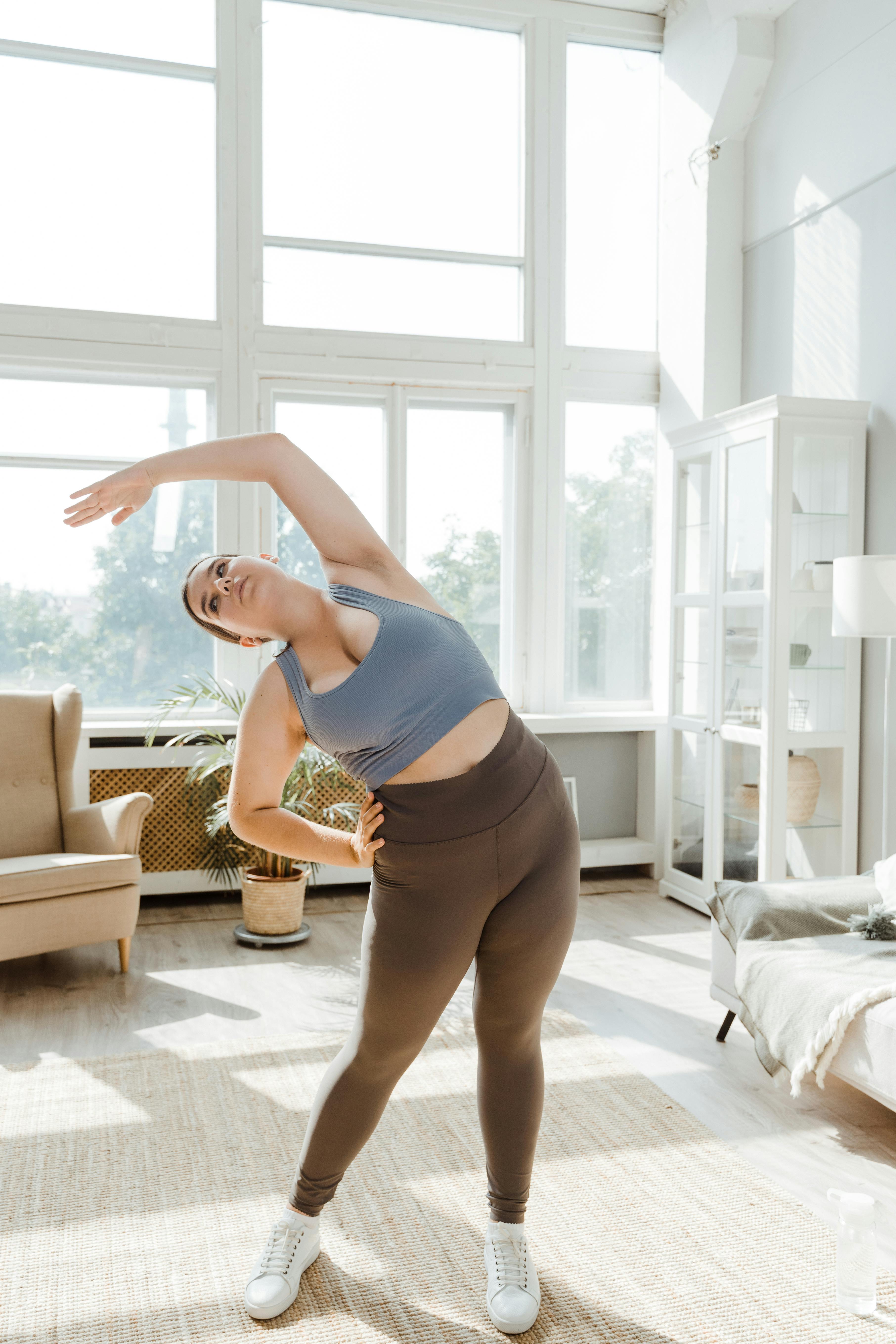
This image is property of images.pexels.com.
Following exercises will list out the top ways to keep going.
| Exercise | Primary muscles targeted | Recommended reps | Easy modification | Harder progression | Common mistake |
|---|---|---|---|---|---|
| Bodyweight squat | Glutes, quads, hamstrings, core | 5–10 | Partial squats, chair-supported | Add weight, slow eccentrics | Rounding lower back; knees caving |
| Calf raise | Gastrocnemius, soleus | 5–10 | Two-legged on flat floor, hold support | Single-leg on step, pause at top | Pushing off toes, rolling foot |
| Press-up | Chest, shoulders, triceps, core | 5–10 | Wall or counter press-ups | Floor press-ups, decline | Sagging hips; flared elbows |
| Tricep dip | Triceps, anterior shoulders | 5–10 | Reduced leg extension, higher bench | Lower deeper, add weight | Elbows flaring, shrugging shoulders |
| Lunge (each leg) | Glutes, quads, hamstrings, core | 5–10 | Hold support, shorter step | Add rotation, weights | Leaning forward; knee past toes |
Warm-up and safety
Even for a short 5-minute routine, a brief warm-up helps prepare muscles and joints. We recommend 30–60 seconds of gentle dynamic movements before starting: marching on the spot, ankle circles, hip circles, arm swings, or a few slow bodyweight squats. This increases blood flow and reduces injury risk.
Safety pointers:
- If we have pre-existing conditions (cardiovascular issues, uncontrolled hypertension, recent surgery, severe joint pain), we should consult our healthcare provider before starting.
- Use sturdy chairs or counters — avoid unstable surfaces.
- Breathe rhythmically; hold positions only when training under a coach’s guidance.
Modifications for different fitness levels
The beauty of this routine is adaptability. We can make small changes to fit our current capacity.
For beginners
- Use wall or counter press-ups.
- Perform partial squats or sit-to-stand from a chair.
- Shorten lunge range of motion and hold onto a support.
- Start with 3–5 reps per exercise and work up.
For intermediate exercisers
- Use full range of motion for squats and lunges.
- Perform press-ups from the floor with knees down if needed.
- Increase reps to 10–15 or add a second circuit within 5–10 minutes.
For advanced exercisers
- Add load (heavy objects, dumbbells) or increase tempo control.
- Introduce single-leg squats (pistol progressions), explosive lunges, or elevated feet press-ups.
- Combine the circuit into a higher-intensity interval (e.g., 30–45 seconds per exercise).
For special situations (injury, pregnancy)
- Modify as directed by our healthcare provider.
- Replace lunges with step-ups or partial range squats if knee pain exists.
- During pregnancy, prioritize stability, avoid supine-based exercises after the first trimester, and maintain comfortable ranges with medical clearance.
How to integrate this routine into our daily life
Consistency matters more than intensity at the start. Here are practical ways we can make the 5-minute kitchen workout habitual.
- Do it before each meal: breakfast and dinner are great anchors. Strength training before meals can improve post-meal blood sugar control.
- Attach it to an existing habit: while waiting for the kettle or oven timer.
- Family challenge: get everyone to do it together for accountability and fun.
- Set reminders: a simple phone alarm or sticky note on the fridge works well.
- Make it enjoyable: play a short song, keep a visible checklist, or pair with a warm beverage after to reward ourselves.

This image is property of images.pexels.com.
Four-week progression plan
This plan helps us build volume and confidence in a structured way. Aim to perform the routine 5–6 days a week if possible, with one or two rest days.
| Week | Sets per day | Reps per exercise | Notes |
|---|---|---|---|
| Week 1 | 1 set | 5 reps each | Focus on form; warm up 30–60s |
| Week 2 | 1–2 sets | 8 reps each | Add second set on alternate days |
| Week 3 | 2 sets | 10 reps each | Slightly increase tempo control; reduce rest |
| Week 4 | 2 sets or 1 longer circuit | 10–15 reps | Option: increase intensity (single-leg, added weight) |
We should adjust progression based on how our body responds. If anything causes pain, regress and reassess technique.
Combining the kitchen workout with nutrition and lifestyle
To maximize benefits from brief strength sessions, consider synchronizing them with meal patterns and general healthy habits.
- Strength work before meals can improve insulin sensitivity and help blunt post-meal glucose spikes.
- Ensure adequate protein intake across the day to support muscle repair and adaptation — aim for around 20–30 g protein per meal for most adults, tailored to individual needs.
- Stay hydrated and avoid starting exercise on an empty stomach if we feel lightheaded.
- Sleep and stress management are crucial: poor sleep impairs recovery and metabolic health, reducing the gains from even brief exercise.
Measuring progress and staying motivated
We can use simple, non-scale measures to track progress:
- Increase in repetitions or sets completed comfortably.
- Improved ease with range of motion (deeper squats, longer calf raises).
- Better posture and reduced stiffness during daily tasks.
- Improved ability to do floor press-ups or single-leg variants.
- Improved energy levels and smaller post-meal glucose swings (if we monitor with a glucometer).
Keep a short log or use a habit tracker app to observe trends. Celebrate small wins and focus on consistency rather than perfection.
Common mistakes and how to correct them
Awareness of frequent errors helps us stay safe and effective.
- Rushing the movements: Slow, controlled reps build strength better and reduce injury risk.
- Sacrificing form for reps: It’s better to do fewer clean reps than many sloppy ones.
- Holding breath: Breathe out during the exertion phase (e.g., standing up from a squat, pushing from a press-up).
- Overtraining: Even short daily sessions require listening to our bodies. Rest when needed.
- Using unstable furniture: Choose stable, strong surfaces only.

Troubleshooting common barriers
If we struggle with consistency or comfort, try these strategies.
- Time constraints: Anchor workouts to existing tasks (e.g., pull one 5-minute set while waiting for coffee).
- Embarrassment: If we feel silly, remember the long-term benefits and consider doing the routine when others are busy.
- Pain or joint discomfort: Reduce range of motion, slow tempo, or consult a clinician for tailored modification.
- Lack of progress: Slightly increase volume or intensity, or vary exercises to promote adaptation.
Frequently asked questions (FAQ)
We’ll answer practical questions we commonly encounter.
Q: Can five minutes really help build muscle?
A: Short, frequent sessions contribute to muscle maintenance and strength gains when combined with progressive overload over time. They’re especially useful when done consistently and can be progressed.
Q: Is it safe to do this right before a meal?
A: For most people, yes. Strength work before meals may improve postprandial glucose control. If we feel lightheaded or have a medical condition, consult our provider.
Q: How soon will we notice results?
A: Some improvements in energy and posture can be noticed within days. Strength and body composition changes usually take several weeks to months, depending on consistency and nutrition.
Q: Can children do this routine?
A: Yes — with supervision and age-appropriate modifications. Bodyweight activities are generally safe and beneficial for children’s motor development.
Q: What if we have limited mobility?
A: We can perform seated or supported versions of each movement; the key is to maintain safe ranges and progress gradually.
Q: How should pregnant individuals modify the workout?
A: With medical clearance, modify ranges, avoid supine positions after the first trimester, and prioritize stability. Seek personalized guidance from a healthcare professional.
Q: Do we need to warm up?
A: Yes — 30–60 seconds of dynamic movements is sufficient for this brief routine.
Q: Can this routine replace longer workouts?
A: It’s a great supplement and excellent for habit formation and daily movement. For specific goals like building large amounts of muscle or training for events, longer or targeted sessions will also be needed.
When to seek medical advice
We should consult our doctor or a qualified healthcare provider before starting this or any exercise regimen if we:
- Have known cardiovascular disease or significant risk factors.
- Experience chest pain, dizziness, or fainting during or after activity.
- Are recovering from surgery or have an unstable medical condition.
- Have uncontrolled high blood pressure or metabolic disease.
If any movement causes sharp pain, sudden swelling, or persistent joint pain, stop and seek professional assessment.
Equipment and space considerations
Part of the appeal of the kitchen routine is minimal equipment. Still, a few optional items can increase safety and variety:
- A sturdy kitchen chair or bench (for dips and support)
- A non-slip mat to prevent foot slippage
- A filled water bottle or small weighted object for added resistance
- A timer or short playlist to structure sessions
Make sure any props are stable and that the floor is free of spills or obstacles.
Family and habit strategies to improve adherence
We increase our chances of sticking to the routine by making it social and habitual.
- Do it together: Encourage family members to participate before meals; children often mimic adults and will respond well to consistency.
- Keep it visible: A small chart on the fridge with checkboxes for each day can be motivating.
- Gamify: Create a family streak or reward system for consistency, such as choosing dinner or a weekend walk.
- Short commitments: Commit to just five minutes — psychologically this feels manageable and reduces friction to starting.
Sample variations and progressions to prevent boredom
To maintain engagement and continuous adaptation, rotate variations every 2–4 weeks.
- Tempo changes: Slow the lowering phase to increase time under tension.
- Single-leg focus: One-legged squats or calf raises to emphasize balance and unilateral strength.
- Rotation and stability: Add a torso rotation during lunges or a single-arm press with a small weight.
- Mini-circuits: Perform two rounds with shorter rests to raise intensity.
Tracking and celebrating progress
We recommend keeping a simple log of exercises, reps, and feelings after the session. Periodically assess:
- How many reps of each exercise we can do with good form.
- Whether we graduated from counter press-ups to floor press-ups.
- Changes in daily movement ease and fatigue levels.
Celebrating milestones — such as a full month of consistent practice — reinforces habit formation and increases motivation.
Common myths and evidence-based clarifications
- Myth: We need 30–60 minutes daily to see any benefit. Reality: Short bouts of strength activity contribute meaningfully to health outcomes and can be accumulated across the day.
- Myth: Bodyweight exercises are not “real” strength training. Reality: Bodyweight work is effective for strength, balance, and neural adaptations and can be progressed to provide substantial overload.
- Myth: Exercise before meals is bad for digestion. Reality: Brief strength work before meals is generally safe and can improve post-meal glucose handling for many people.
Closing tips and encouragement
We can make real changes by using the time we already spend in the kitchen. The 5-minute kitchen workout is a low-barrier, effective way to build strength, improve balance, and support metabolic health. Start small, prioritize technique, and gradually progress. Consistency will compound into meaningful improvements over weeks and months.
Please remember: this information is educational and not a replacement for medical advice. If we have specific medical issues or concerns, we should consult our healthcare provider before starting a new exercise routine.
If we try this routine, let’s note what works and what needs modifying — that simple feedback helps us tailor the habit to our life and keeps us moving forward together.