0 Reviews
Are we moving enough each week to protect our heart, bones and general wellbeing?
Physical activity guidelines for adults aged nineteen to sixty four
We know that regular movement benefits our physical and mental health. These guidelines help us understand how much and what kind of activity to aim for between the ages of 19 and 64 so we can keep our bodies strong, reduce chronic disease risk and feel better day to day.
Who these guidelines apply to
These recommendations are intended for most adults aged 19 to 64, including disabled adults and those who are pregnant or have recently given birth. We should adapt the guidance to our current fitness, health conditions and any medical advice we’ve received.
Quick summary of the core recommendations
At a minimum, we should:
- Do muscle-strengthening activities working all major muscle groups on at least two days each week.
- Accumulate at least 150 minutes of moderate-intensity aerobic activity per week, or at least 75 minutes of vigorous-intensity aerobic activity per week.
- Spread aerobic activity across most days of the week (for example over 4–5 days) and try to be active every day.
- Reduce time spent sitting or lying down and interrupt long periods of inactivity with light activity.
We can meet weekly targets through combinations of moderate, vigorous and very vigorous activity, or several short bouts of intense activity.
Understanding intensity: how we judge effort
We should be able to tell whether an activity is light, moderate, vigorous, or very vigorous based on how our body responds. This helps us plan a balanced programme.
The “talk test” and perceived effort
A simple way to gauge intensity is the talk test: at moderate intensity we can still talk but cannot sing; at vigorous intensity we can say only a few words without pausing for breath. We can also use how our breathing, heart rate and sweat change as practical clues.
Comparing intensity levels
We find it useful to compare levels in a table to see their differences clearly.
| Intensity | How we feel | Typical effect on breathing | Example activities |
|---|---|---|---|
| Light | Little effort; easy to maintain | Normal breathing | Slow walking, light household tasks |
| Moderate | Noticeable effort; can talk but not sing | Faster breathing, warmer | Brisk walking, gentle cycling |
| Vigorous | Hard effort; can speak only a few words | Much faster breath, heart pounding | Running, fast cycling, competitive sports |
| Very vigorous | Maximal or near-maximal effort in short bursts | Gasping; unable to talk | Sprint intervals, heavy lifts, hill sprints |
What counts as moderate aerobic activity?
Moderate activity raises our heart rate and makes us breathe faster and feel warmer, but we can still hold a conversation. Moderate activity improves cardiovascular fitness and supports metabolic health.
Examples of moderate-intensity activities
We can do many everyday activities at a moderate intensity when we increase our effort. Common examples include:
- Brisk walking (walking fast enough to raise the heart rate)
- Water aerobics
- Leisure cycling on flat ground
- Dancing
- Doubles tennis
- Pushing a lawn mower
- Hiking on gentle terrain
- Rollerblading at a steady pace
What counts as vigorous aerobic activity?
Vigorous activity causes rapid breathing and a substantial step-up in heart rate. At this level we can talk only in short phrases or a few words. Seventy-five minutes of vigorous activity per week gives similar health benefits to 150 minutes of moderate activity.
Examples of vigorous-intensity activities
Many moderate activities can become vigorous if we increase speed or effort. Typical vigorous activities include:
- Running at a steady pace
- Swimming laps at a brisk pace
- Riding a bike fast or on hilly terrain
- Walking up stairs quickly
- Competitive team sports (football, rugby, hockey)
- Skipping rope, high-intensity aerobics
- Martial arts
What counts as very vigorous activity (HIIT)?
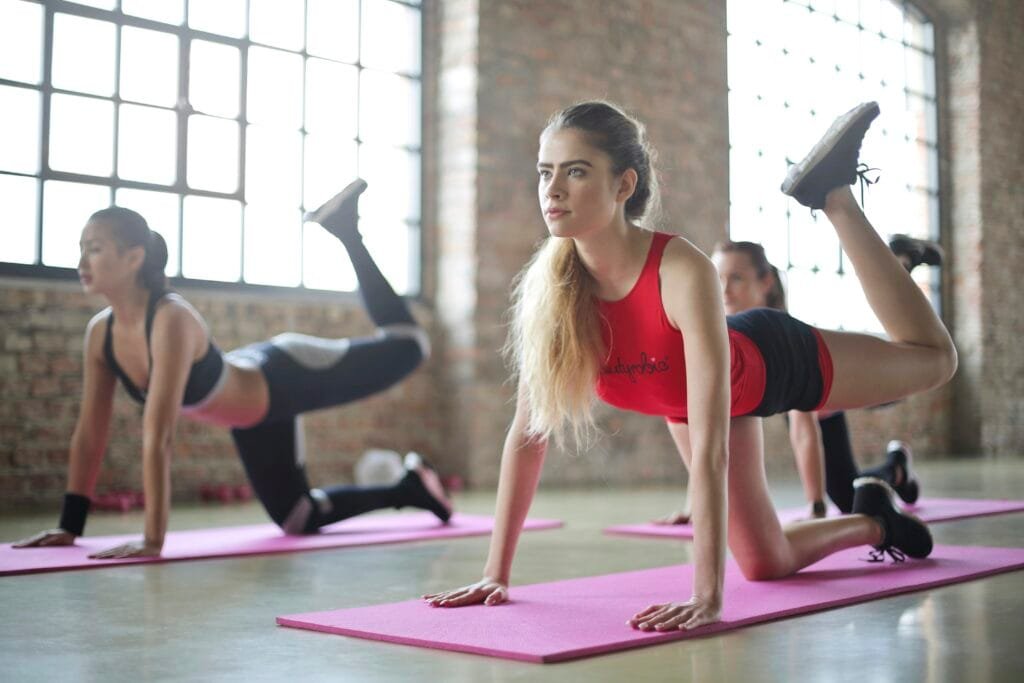
Very vigorous activities are performed in short bursts of near-maximal effort followed by recovery. This is commonly known as High Intensity Interval Training (HIIT). Because of the intensity, sessions are typically shorter.
Examples of very vigorous activities
We can include very vigorous efforts as part of our weekly total by performing intervals such as:
- Sprint intervals or hill sprints
- Heavy weightlifting with short rest periods
- Short maximal effort circuits
- Stationary bike sprints (spinning) in intervals
- Fast stair running
Muscle-strengthening activities: why we need them
Strength training supports our ability to do daily tasks, preserves bone density, improves posture and metabolic health, and reduces the risk of falls and injury. We should perform exercises that work the major muscle groups — legs, hips, back, abdomen, chest, shoulders and arms — at least two days each week.
How to tell if strength work is effective
Strength exercises should be challenging: we should reach a point where we need a short rest before repeating a set, or where the final repetitions are difficult to complete with good form.
Examples of muscle-strengthening activities
We can use many modes of resistance to strengthen muscles. A table helps clarify options.
| Mode | Examples | Where we can do it |
|---|---|---|
| Bodyweight | Push-ups, squats, lunges, planks | Home, park, gym |
| Free weights | Dumbbell rows, kettlebell swings, overhead press | Gym, home with equipment |
| Resistance bands | Band squats, band rows | Home, travel-friendly |
| Machines | Leg press, chest press | Gym |
| Everyday activities | Carrying heavy shopping, lifting children, heavy gardening | At home or outdoors |
| Classes/video programmes | Strength workout videos, guided circuits | Online, gym classes |
We can combine strength work with aerobic sessions or schedule them on separate days — whatever fits our routine best.
Spreading activity across the week
Accumulating minutes is important, but how we distribute activity matters for consistent benefits and recovery.
How often to be active
We should aim to spread aerobic activity across most days of the week — for example, over 4–5 days — or try to do some activity every day. Strength sessions should be on at least two non-consecutive days so muscles have time to recover.
Short sessions count
We can reach our weekly target in several shorter sessions such as 10–15 minute blocks if that suits our schedule. Short vigorous or very vigorous bursts can also contribute if they add up to the recommended total.
Mixing intensities and equivalent conversions
We can mix moderate, vigorous and very vigorous activity to reach our weekly targets. The general equivalence is that 1 minute of vigorous activity counts about the same as 2 minutes of moderate activity. Very vigorous bursts can be included, but because they are highly demanding they are usually accumulated in short intervals.
Practical mixing examples
- Two 30-minute brisk walks and one 60-minute cycling session gives us 120 minutes moderate — we would need another 30 minutes to reach 150 minutes.
- Replacing 30 minutes of moderate activity with 15 minutes of vigorous activity is an equivalent swap in effort.

Reducing sedentary time and breaking up long sitting periods
Sitting for long periods is linked with poorer health outcomes, even in active people. We should aim to reduce total sedentary time and interrupt long spells of sitting with short bouts of light activity.
How we can sit less
Simple choices add up:
- Stand or walk during phone calls.
- Take 2–5 minute movement breaks every 30–60 minutes of sitting.
- Use a standing desk or alternate sitting and standing.
- Walk to speak with colleagues rather than sending messages.
- Break up long travel with brief walks and stretches.
Special considerations: pregnancy and postnatal return to activity
We should tailor activity choices during pregnancy and postpartum periods to our previous activity levels and overall health.
During pregnancy
If we were active before pregnancy, we can generally continue with adaptations for comfort and safety. We should avoid exercises that risk abdominal trauma or balance loss and pay attention to our hydration and temperature regulation.
After childbirth
Following the typical 6–8 week postnatal check, many of us can gradually return to more intense activities if we feel ready. If we were inactive before pregnancy, very vigorous activities are usually not recommended immediately. Always follow medical advice and listen to our bodies.
Guidance for disabled adults
These guidelines are adaptable to adults with disabilities. We should aim to be as active as our condition allows and focus on aerobic and muscle-strengthening activities suited to our abilities.
Adaptations and examples
Wheelchair users can perform vigorous upper-body aerobic work, strength training using resistance bands or machines, and activities like wheelchair sports. We should work with health professionals to tailor a safe, effective plan.
Starting after a period of inactivity or illness
If we haven’t exercised for some time, have chronic conditions or are recovering from illness, we should talk to a GP or specialist before starting. We should begin gradually and build frequency, intensity and duration slowly.
Practical progression plan
- Week 1–2: 10–15 minutes of light-to-moderate activity most days.
- Week 3–6: Increase to 20–30 minutes, 3–5 days per week, and add one short strength session.
- Week 7+: Progressively increase duration and include more vigorous intervals if appropriate.
We should stop or modify activity if we experience chest pain, dizziness, fainting, or severe breathlessness, and seek medical advice.
Warm-up and cool-down basics
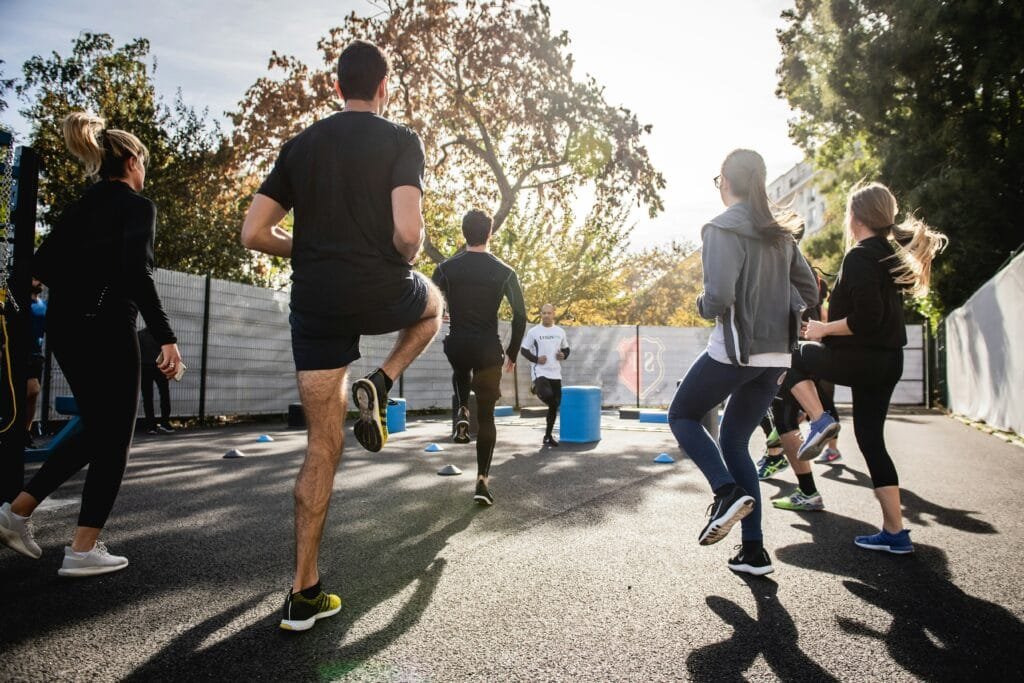
Preparing and recovering from activity reduces injury risk and aids performance. We should include a short warm-up and cool-down in each session.
Warm-up
A 5–10 minute warm-up that increases heart rate gradually — brisk walking, dynamic movements or gentle cycling — prepares muscles and joints for exercise.
Cool-down and stretching
After activity, 5–10 minutes of slower movement followed by gentle stretching helps reduce stiffness and supports recovery.
Safety, hydration and equipment
Safety considerations help us exercise sustainably.
Safety checklist
- Wear appropriate footwear and clothing for the activity and weather.
- Stay hydrated before, during and after exercise.
- Use correct technique for strength exercises; reduce load to maintain form.
- Gradually progress intensity and duration.
- Seek professional guidance for new or complex movement patterns.
Sample weekly plans
We find it helpful to see concrete examples of how to structure a week to meet the guidelines. These sample plans show different approaches depending on time and fitness level.
Sample: Moderate-activity focused week
| Day | Activity | Duration |
|---|---|---|
| Monday | Brisk walk + core strength (bodyweight) | 40 min walk + 10 min |
| Tuesday | Strength session (full body) | 30 min |
| Wednesday | Brisk walk or cycle | 40 min |
| Thursday | Strength session (resistance bands) | 30 min |
| Friday | Brisk walk + light stretching | 30–40 min |
| Saturday | Longer hike or active gardening | 60 min |
| Sunday | Active recovery (gentle yoga or walking) | 20–30 min |
This plan gives ~200 minutes moderate activity + two strength sessions.
Sample: Busy schedule with intervals
| Day | Activity | Duration |
|---|---|---|
| Monday | HIIT intervals (treadmill or cycling) | 20 min (including warm-up) |
| Tuesday | Strength circuit (bodyweight + bands) | 30 min |
| Wednesday | Brisk walking in short bursts | 3 × 15 min |
| Thursday | Rest or light mobility work | 20 min |
| Friday | Sprint intervals or spinning class | 20–30 min |
| Saturday | Active family outing (cycling/walking) | 60 min |
| Sunday | Strength/stretch session | 20–30 min |
This plan uses shorter high-intensity sessions and still reaches recommended totals when combined.
Strength exercises by major muscle groups
Focusing on major muscle groups ensures balanced development and functional strength.
Examples of exercises and variations
| Muscle group | Bodyweight example | Progression / equipment |
|---|---|---|
| Legs | Squats, lunges | Add dumbbells/kettlebells, split squats |
| Hips & glutes | Glute bridges, step-ups | Single-leg bridges, weighted hip thrusts |
| Back | Reverse snow angels, supermans | Dumbbell rows, resistance band rows |
| Abdomen | Planks, dead bugs | Weighted sits, hanging leg raises |
| Chest | Push-ups, incline push-ups | Bench press, dumbbell press |
| Shoulders | Pike push-ups, arm circles | Overhead press, lateral raises |
| Arms | Triceps dips (bench), biceps curls | Heavier weights, cable work |
We should aim for exercises that allow 8–15 repetitions per set for strength-building, adjusting load so the final repetitions are challenging but doable with good form.
High Intensity Interval Training (HIIT) basics
HIIT alternates high-effort bursts with rest or low-intensity recovery and can be time-efficient for cardiovascular and metabolic benefits.
Typical HIIT structure
A simple HIIT session might include:
- 5–10 minute warm-up
- 20–60 seconds hard effort followed by 1–2 minutes of recovery
- Repeat 6–12 times depending on fitness
- 5–10 minute cool-down
We should start with fewer intervals and longer recovery periods, increasing intensity or repetitions as fitness improves.
Tracking progress and staying motivated
Monitoring our activity helps us stay consistent and see improvements. We can use simple metrics and behavioural strategies to maintain momentum.
Practical tracking methods
- Log minutes of moderate and vigorous activity weekly.
- Use step counts as a broad activity indicator (10,000 steps is not required, but increases in daily steps show progress).
- Record strength sessions by sets, reps and load to track improvements.
- Use apps, wearables or a paper journal to celebrate milestones.
Behavioural tips to keep going
- Schedule activity like appointments and treat them as non-negotiable.
- Find movement we enjoy so it feels sustainable.
- Partner with friends or family for accountability.
- Set short-term, measurable goals and celebrate progress.
Common questions and myths
We answer typical concerns we hear so we can act on accurate information.
Myth: Only long workouts count
Short bouts of activity, even 10 minutes, contribute to our weekly totals if they are at the appropriate intensity.
Myth: Strength training makes us bulky
For most adults the primary benefits of strength training are increased functional capacity, better posture and stronger bones. Large muscle mass requires specific nutrition and training that most recreational exercisers do not follow.
Myth: If we exercise regularly, sitting doesn’t matter
High volumes of sitting are linked to poorer health independently of exercise. We should still break up long sitting periods.
When to seek medical advice
If we have long-term health conditions (heart disease, uncontrolled high blood pressure, recent surgeries), are pregnant with complications, or have been inactive for a long time, consulting a GP or relevant specialist before starting or increasing intensity is sensible.
Red flags to stop activity and seek help
We should stop exercising and get medical attention if we experience chest pain, severe breathlessness, fainting, blacking out, or sudden, severe joint pain.
Adapting exercise for common situations
We can tailor activity to personal circumstances for safe, effective training.
Working from home and limited time
Fit in short sessions during breaks, use bodyweight circuits, or walk for part of the commute. Even 10–15 minute focused sessions add up.
Older adults approaching age 65
As we get closer to 65, we should include balance and flexibility work and maintain muscle strength to protect mobility.
If we have joint pain or mobility limits
Low-impact options such as swimming, cycling, water-based activities and seated strength work are effective and reduce joint stress.
Resources and practical tools
We can use a range of resources to support our activity:
- Guided strength and aerobic workout videos.
- Local exercise classes, community groups and walking schemes.
- Fitness apps and wearable devices for tracking.
- Healthcare professionals, physiotherapists or exercise specialists for personalised plans.
We should choose resources that suit our needs, abilities and goals.
Final thoughts and encouragement
We will do the most good for our health by being as active as we can within our personal circumstances, aiming to meet the core recommendations and breaking up sedentary time. Small changes — swapping a short drive for a walk, adding a couple of strength sessions a week, or replacing a TV break with a quick mobility routine — accumulate into meaningful benefits for our heart health, mood, strength and resilience.
We can start where we are, be consistent, adapt plans as our fitness improves, and seek professional guidance when necessary. By making movement a normal part of our week, we help our bodies and minds stay healthier for longer.