Exercise Routine for Beginners Over Fifty
This guide explains how to begin safely, how to structure your week, what types of exercise matter most after fifty, and how to progress without pushing too hard. For a wider foundation that supports both physical and mental wellbeing, you can also explore our pillar guide on healthy lifestyle for mind and body.
Can you really start an exercise routine now that you are over fifty and expect meaningful, lasting results? Yes. With the right approach, you can improve strength, stamina, balance, mobility, and overall quality of life in a very real and measurable way.
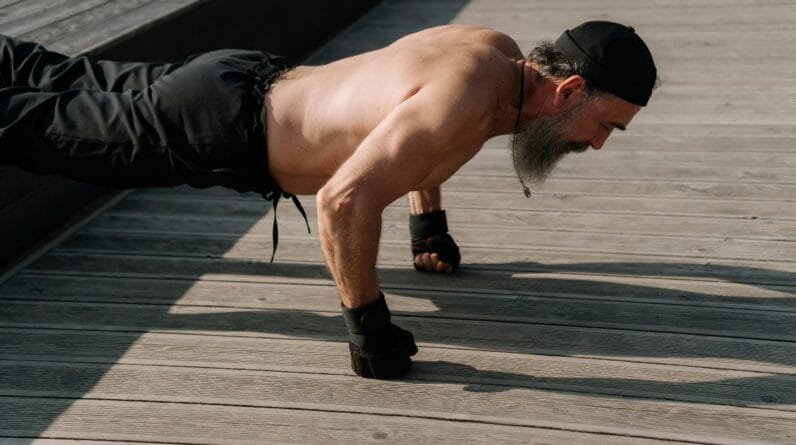
This image is property of images.pexels.com.
Why Start Exercising After Fifty?
Exercise becomes increasingly important with age because the body changes in ways that make strength, movement, and recovery more valuable. Muscle mass naturally declines with age if it is not trained. Bone density can decrease. Balance may become less steady. Joint stiffness may increase. Cardiovascular fitness can also decline if activity levels remain low for too long.
A good exercise routine helps slow or reverse many of these changes. It supports healthier aging by keeping the body active, strong, and capable. This is not only about appearance or fitness goals. It is about maintaining independence, reducing fall risk, supporting daily function, and feeling more physically confident.
Physical Benefits of Exercise Over Fifty
Regular exercise can improve or preserve many important areas of health. Strength training helps maintain muscle and supports bone density. Cardio improves heart and lung function. Mobility and flexibility work reduce stiffness and improve movement quality. Balance training lowers fall risk and increases stability. Together, these create a stronger foundation for daily life.
- Better joint function and easier movement
- Improved balance and coordination
- Stronger muscles for walking, lifting, climbing, and standing
- Support for healthy body composition and metabolism
- Lower risk of falls, fractures, and frailty
Mental and Emotional Benefits
Exercise also helps mood, stress, and cognitive function. Many people notice that regular movement improves sleep, lowers anxiety, and creates a greater sense of emotional steadiness. Exercise often boosts confidence because it creates visible progress and reinforces the feeling that the body is still capable of learning, adapting, and becoming stronger.
The social side matters too. Walking groups, beginner classes, or training with a friend can create accountability and connection, which often makes exercise more enjoyable and easier to sustain.
Medical Considerations and Safety Before Starting
Safety matters at every age, but it becomes especially important when starting or returning to exercise after fifty. A conservative and informed start reduces injury risk and builds confidence. If you have chronic medical conditions, recent surgeries, chest symptoms, dizziness, or major joint issues, it is smart to get medical guidance before beginning a new routine.
When Medical Clearance Is Especially Important
- Known heart disease or recent cardiac events
- Uncontrolled high blood pressure
- Recent surgery or serious injury
- Severe osteoporosis or fracture history
- Joint replacements or unstable joints
- Unexplained dizziness, fainting, or chest pain
Warning Signs to Stop and Reassess
Stop immediately and seek medical advice if you develop chest pain, severe shortness of breath, sudden dizziness, fainting, new weakness, or unusual swelling. Mild muscle fatigue is normal. Sharp, joint-based, worsening, or radiating pain is not.
If you need gentler options with extra joint support, this topic also connects well with low impact exercises for beginners to build strength and mobility.
Assessing Your Starting Point
Before building a plan, it helps to understand your current baseline. This is not about passing or failing. It is about choosing the right starting level so that progress feels achievable and safe.
Simple Self-Checks
You can learn a lot from a few basic checks:
- Can you stand up from a chair without using your hands?
- Can you walk briskly for 6 minutes without unusual strain?
- Can you balance on one leg for 10 to 20 seconds with support nearby?
- Do basic movements feel stiff, shaky, or painful?
These simple tests help identify whether your biggest priorities are strength, mobility, balance, endurance, or just consistency.
Principles of an Effective Exercise Routine After Fifty
An effective routine is not built around random workouts. It follows clear principles that support progress without overload. One useful framework is the FITT principle: frequency, intensity, time, and type.
Frequency
Most beginners do well with strength training 2 to 3 times per week, moderate cardio on most days, and short mobility work daily or near daily.
Intensity
Moderate intensity is usually the best place to start. You should feel like you are working, but still able to maintain good form and recover well by the next day.
Time
Sessions do not need to be long. Twenty to forty minutes is often enough for a very effective beginner workout.
Type
A complete routine includes cardio, strength, balance, flexibility, and recovery. These areas support each other. Skipping one often limits the benefits of the others.
Components of the Best Exercise Routine for Beginners Over Fifty
A well-rounded routine after fifty should include five main components: warm-up, cardiovascular training, strength training, balance work, and flexibility or mobility. Recovery should be treated as part of the routine, not as an afterthought.
Warm-Up
Start with 5 to 10 minutes of easy movement to increase blood flow and prepare the joints and muscles. Marching in place, arm swings, shoulder rolls, hip circles, and gentle torso turns work well.
Cardiovascular Training
Cardio supports heart health, stamina, circulation, and energy. Walking, cycling, swimming, water aerobics, and elliptical training are excellent low-impact choices. A common goal is 150 minutes per week of moderate activity, but you can build up gradually from smaller amounts.
Strength Training
Strength training matters because muscle loss accelerates with age. Maintaining strength helps preserve independence, metabolism, posture, and bone health. Focus on large movement patterns such as sitting and standing, pushing, pulling, hinging, lifting, and stabilizing.
Balance and Coordination
Balance work is especially important after fifty because fall risk increases with age. Short balance drills improve body awareness, confidence, and stability. These exercises do not take long, but the benefits add up.
Flexibility and Mobility
Flexibility refers to tissue length, while mobility refers to the ability to move joints through range with control. Both matter. Daily mobility work and short stretching sessions can improve comfort, posture, and ease of movement.
Cool-Down and Recovery
Finish sessions with a few minutes of slower walking, breathing, and gentle stretching. This helps the body transition out of exercise and can reduce post-workout stiffness.
If you want a simpler home-based structure, this also pairs naturally with simple exercise routine without gym equipment.
Sample Beginner Weekly Exercise Routine Over Fifty
The easiest way to stay consistent is to follow a clear weekly structure. Below is a practical beginner schedule that balances strength, cardio, mobility, and recovery.
| Day | Session Type | Duration | Notes |
|---|---|---|---|
| Monday | Strength (Full body) | 30 min | 1 to 2 sets of 8 to 12 reps per exercise |
| Tuesday | Cardio + Mobility | 30 min | 20-minute brisk walk plus 10 minutes mobility |
| Wednesday | Balance + Flexibility | 20 to 25 min | Simple balance drills and gentle stretching |
| Thursday | Strength (Full body) | 30 min | Repeat main strength session, focus on form |
| Friday | Low-impact Cardio | 30 min | Walking, cycling, water exercise, or elliptical |
| Saturday | Active Recovery | 20 to 40 min | Leisure walk, gardening, easy yoga, or stretching |
| Sunday | Rest | – | Prioritize sleep, hydration, and recovery |
Sample Beginner Strength Session
A full-body strength session should train the major muscle groups without being complicated. This is one of the most effective ways to improve daily function and reduce age-related muscle loss.
Warm-Up
Spend 5 to 7 minutes doing marching in place, shoulder rolls, arm swings, hip circles, and gentle bodyweight squats or sit-to-stands.
Main Strength Exercises
- Sit-to-stand from a chair — 8 to 12 reps
- Wall push-up — 8 to 12 reps
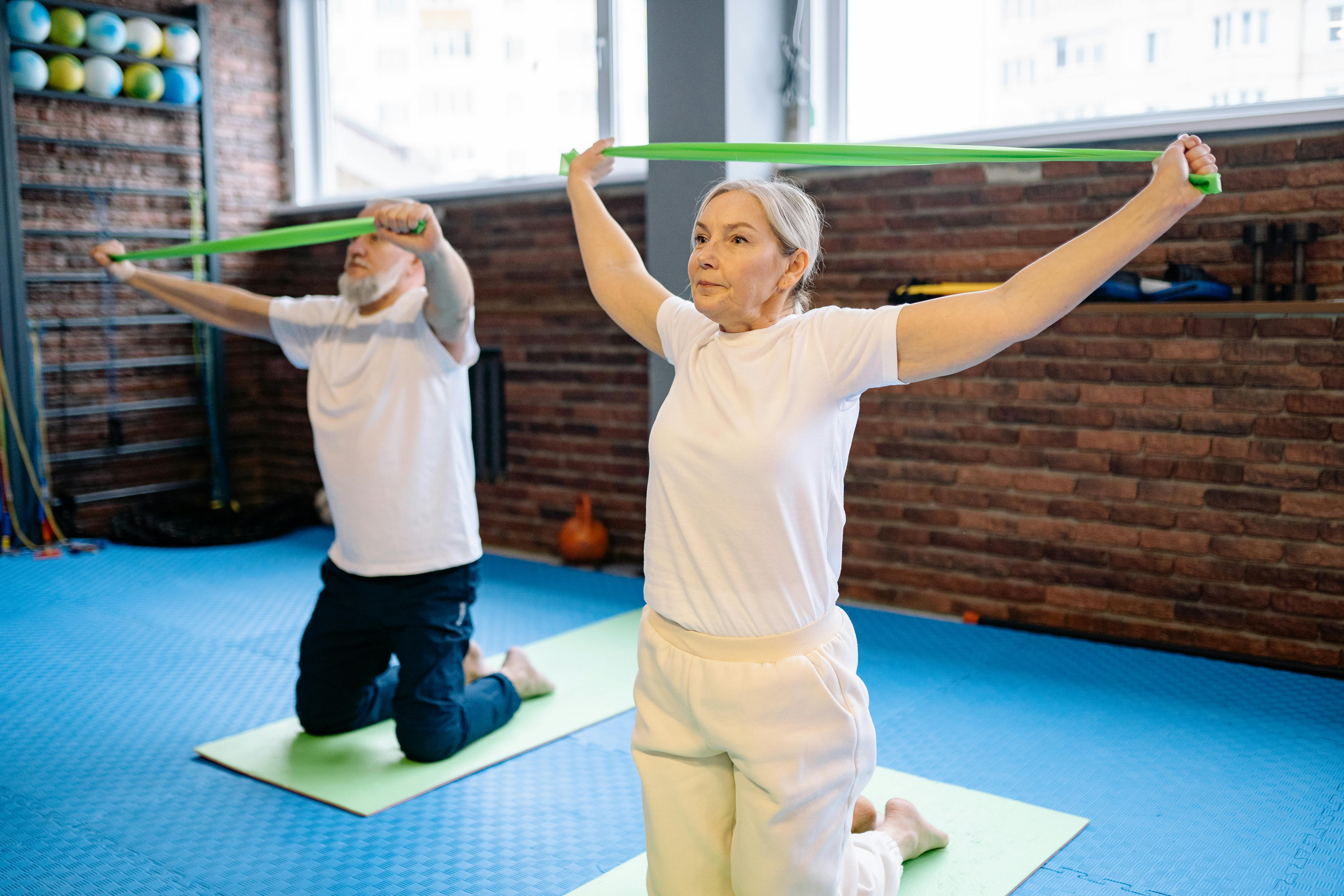
- Seated band row — 10 to 15 reps
- Dumbbell or bodyweight Romanian deadlift — 8 to 12 reps
- Standing calf raise — 12 to 15 reps
- Bird-dog — 8 to 10 reps per side
- Single-leg balance hold with support nearby — 10 to 20 seconds per side
Perform 1 to 2 sets at first. As you get stronger, build toward 2 to 3 sets.
Exercise Descriptions and Beginner Progressions
| Exercise | Target | Beginner Modification | Progression |
|---|---|---|---|
| Sit-to-stand | Legs, glutes | Use a higher chair or hands for assistance | Hold light dumbbells or lower to a lower chair |
| Wall push-up | Chest, shoulders, triceps | Hands on wall | Move to counter-height or incline push-ups |
| Seated band row | Upper back | Use lighter band resistance | Increase tension or perform standing row |
| Romanian deadlift | Hamstrings, glutes | Bodyweight hinge only | Add dumbbells gradually |
| Standing calf raise | Calves, balance | Hold chair for support | Single-leg calf raise |
| Bird-dog | Core, back stability | Hands and knees, short reach | Add longer holds or slower tempo |
| Heel-to-toe walk | Balance | Use light support nearby | Reduce support or add turns |
Sample Intermediate Progression (Weeks 5 to 12)
Once the first month feels manageable and technique is improving, you can gradually increase the challenge. This does not require extreme changes. Small increases are enough.
| Week Range | Strength Sessions | Cardio Sessions | Notes |
|---|---|---|---|
| 5 to 8 | 2 to 3 per week | 3 to 4 per week | Increase to 2 to 3 sets per exercise |
| 9 to 12 | 2 to 3 per week | 3 to 4 per week | Add slightly heavier resistance and occasional interval work |
Simple Ways to Progress
- Add 1 to 2 reps per set
- Add one extra set
- Increase dumbbell or band resistance slightly
- Add 2 to 5 more minutes of cardio
- Move from wall to incline push-ups
- Hold balance positions longer
This kind of progress is enough to create better stamina, strength, and movement confidence without overwhelming recovery.
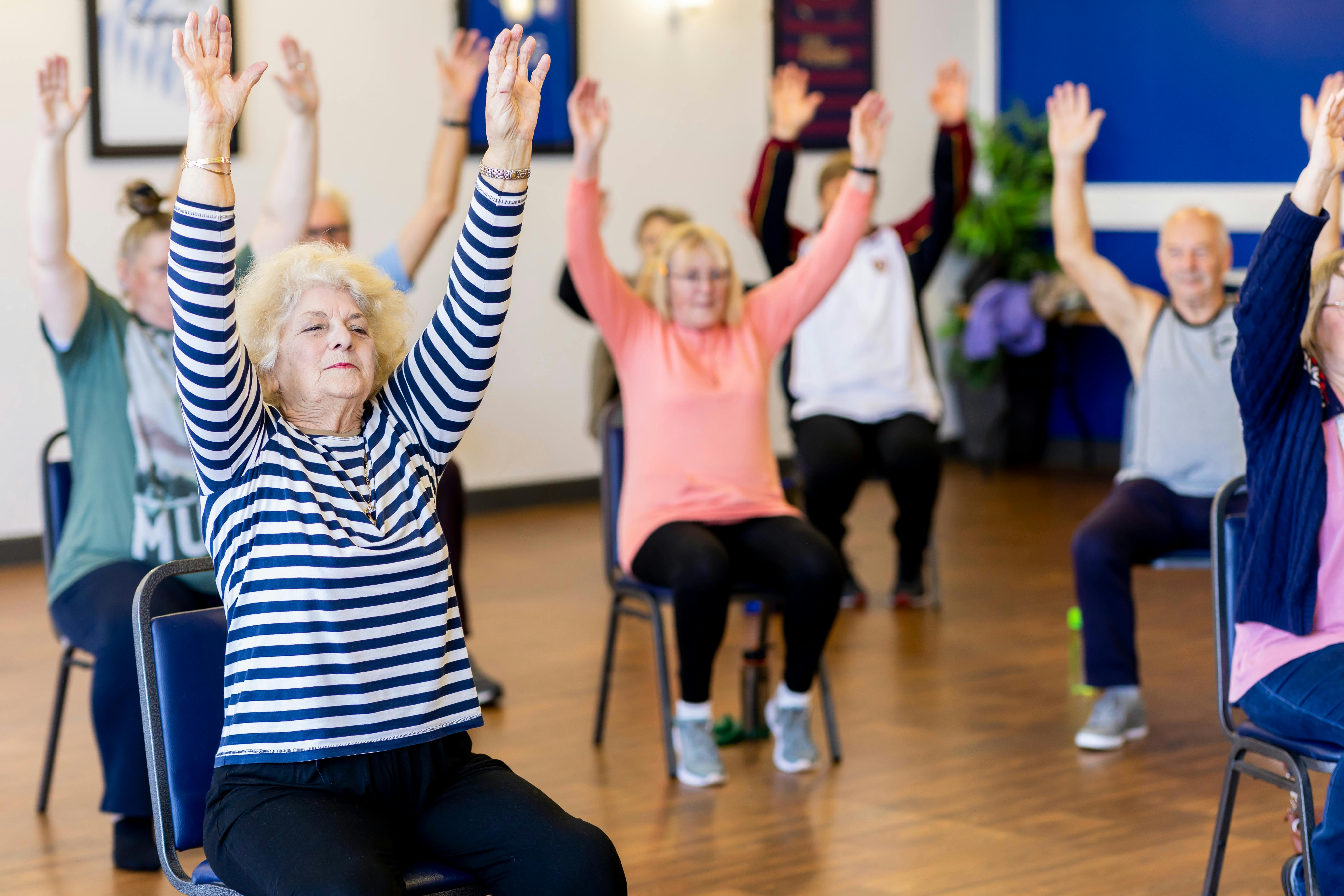
This image is property of images.pexels.com.
Balance and Fall Prevention Exercises
Balance training deserves special attention after fifty because it can directly reduce fall risk and improve body awareness. The good news is that effective balance work is simple and does not take long.
| Exercise | Sets / Reps | Progression |
|---|---|---|
| Single-leg stand | 3 × 10 to 30 sec per leg | Reduce support or add head turns |
| Heel-to-toe walk | 3 × 10 to 20 steps | Use fewer supports or add turns |
| Step-ups | 3 × 8 to 12 each leg | Increase step height slowly |
| Tandem stance | 2 × 20 to 30 sec | Use less support or add gentle reach |
Keep support nearby when practicing these. Safety comes first, especially when balance is still improving.
Flexibility and Mobility Routine for Beginners Over Fifty
Mobility and flexibility help reduce stiffness, improve posture, and make other forms of exercise feel better. These sessions can be done daily, even on rest days.
Sample 10-Minute Mobility Sequence
- Neck turns and gentle side stretches
- Shoulder circles and band pull-aparts
- Hip hinges and leg swings
- Ankle circles and calf stretches
- Cat-cow for spine mobility
- Gentle seated forward fold or hamstring stretch
This style of routine also works well alongside simple daily fitness exercises if you want to build more movement into ordinary days.
Cardio Guidelines for Beginners Over Fifty
Cardio supports heart health, stamina, circulation, weight management, and recovery. It does not have to be complicated. Walking is often the easiest and most sustainable starting point.
Low-Impact Cardio Options
- Brisk walking
- Cycling
- Swimming
- Water aerobics
- Elliptical
- Low-impact dance or cardio classes
How Hard Should Cardio Feel?
A moderate session should feel like a 3 to 5 out of 10 on a perceived effort scale. You should still be able to talk, though not sing comfortably. That is often enough to improve fitness without excessive fatigue.
Recovery, Sleep, and Nutrition After Fifty
Exercise results do not come only from training sessions. They depend heavily on recovery. After fifty, recovery becomes even more important because sleep quality, stress, hydration, and nutrition all influence how well the body adapts.
Protein and Hydration
Adequate protein helps support muscle maintenance and repair. Many active older adults benefit from roughly 1.0 to 1.2 grams of protein per kilogram of body weight each day, depending on individual needs and medical context. Hydration also matters. Drinking water before and after exercise and paying attention to thirst and urine color can help maintain performance and recovery.
Sleep and Rest Days
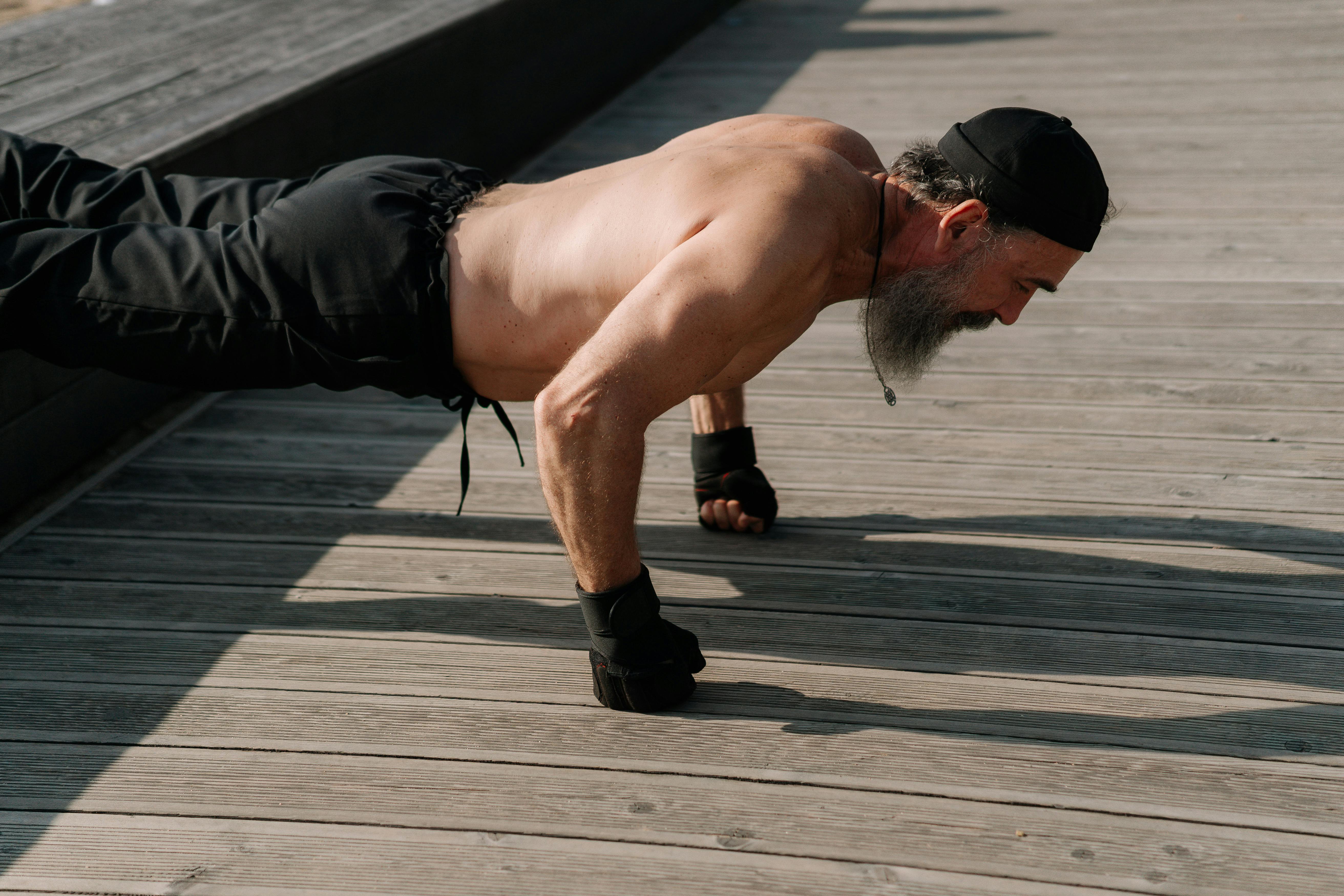
Sleep supports hormonal balance, tissue repair, and emotional resilience. Aim for 7 to 9 hours whenever possible. Rest days are not wasted days. They are part of the adaptation process that makes training effective.
This image is property of images.pexels.com.
Tracking Progress and Knowing When to Adjust
Tracking gives you evidence that your effort is working. It also helps you know when it is time to progress or when recovery may be falling behind.
What to Track
- Number of reps or amount of resistance used
- Minutes walked or distance covered
- Single-leg balance time
- How stairs, chairs, or daily tasks feel
- Energy, sleep, and soreness levels
When to Increase Difficulty
If an exercise feels easy for two consecutive sessions and form remains solid, it is usually safe to add a few reps, use slightly more resistance, or increase duration. Small steps are enough.
Special Considerations for Common Conditions
Osteoarthritis
Low-impact cardio, controlled strengthening, and mobility work can improve function and reduce discomfort. Strengthening muscles around the hips and knees often helps reduce joint stress.
Hypertension or Heart Disease
Moderate intensity and gradual warm-ups are important. Avoid sudden heavy exertion without medical guidance, and follow any heart rate or medication advice from your clinician.
Diabetes
Exercise can improve insulin sensitivity, but timing around meals, medication, and blood sugar control matters. Follow your clinician’s recommendations if you monitor glucose levels.
Exercise Safety Checklist Before Each Session
| Checklist Item | Why it matters |
|---|---|
| Medical clearance if needed | Ensures no major contraindications |
| Comfortable shoes and clothing | Improves movement and reduces injury risk |
| Water nearby | Supports hydration and safety |
| Warm-up planned | Prepares the body for work |
| Clear workout space | Reduces risk of falls and accidents |
| Pain awareness | Helps stop harmful movement early |
Frequently Asked Questions
Can I start strength training with no prior experience after fifty?
Yes. Strength training can be very safe for beginners over fifty when started gradually and with proper form. Bodyweight exercises, resistance bands, and light dumbbells are excellent starting tools. The key is to begin conservatively, move with control, and progress only when the exercises feel manageable and stable.
How often should I do cardio after fifty?
Most people benefit from at least 150 minutes of moderate cardio per week, but that does not need to happen all at once. Short sessions of 10 to 20 minutes count and can be spread across most days. Walking is one of the easiest and most effective ways to begin.
Is walking enough exercise?
Walking is an excellent form of exercise and a great foundation for better health. However, it works best when combined with strength, balance, and mobility training. Walking supports cardiovascular health, but strength training helps preserve muscle and balance training helps reduce fall risk, both of which become especially important after fifty.
What if I have joint pain?
If you have joint pain, choose lower-impact movements, reduce range of motion, and strengthen the muscles around the affected joint. Chair squats, wall push-ups, and low-impact cardio are often easier to tolerate. If pain is persistent, worsening, or sharp, a clinician or physical therapist can help guide modifications.
How long before I notice results?
Many beginners notice better mood, energy, and sleep within a few days to weeks. Strength, mobility, and balance improvements often become noticeable within 4 to 8 weeks. More visible body composition changes may take a few months, but functional gains usually come much sooner and are often the most meaningful.
Can I lose weight after fifty with exercise alone?
Exercise helps, but weight loss usually works best when training is combined with supportive nutrition habits and a realistic calorie balance. Strength training helps preserve muscle while cardio increases energy expenditure. Together with better food quality and consistency, exercise can absolutely support fat loss after fifty.
Final Thoughts
An exercise routine for beginners over fifty does not need to be complicated to be effective. It needs to be safe, realistic, and consistent. That means using a balanced mix of strength, cardio, balance, mobility, and recovery while progressing slowly enough that your body can adapt without unnecessary setbacks.
The most important thing is to begin. Start with simple movements, manageable sessions, and clear goals. Track small wins. Respect recovery. Build the habit before you build intensity. Over time, those small steps can lead to better strength, steadier balance, improved heart health, more confidence, and a stronger sense that your body is still capable of meaningful change.
That is the real value of exercise after fifty. It is not only about fitness. It is about preserving independence, protecting long-term health, and feeling stronger in everyday life.