Gentle Daily Exercises for Mindful Movement
Gentle Daily Exercises for Mindful Movement. I’ve written this guide to help me—and anyone who reads it—understand how gentle daily exercises can support physical function, mental clarity, and emotional balance. I’ll share principles, routines, and specific movements that I use to cultivate mindful movement, and I’ll keep everything in a clear, step-by-step style so it’s easy to apply.
Why mindful movement matters to me
I find that moving with attention transforms a routine stretch into a moment of self-care. Mindful movement connects breath, sensation, and intention. Over time I’ve noticed improved posture, reduced stress, and steadier balance when I practice daily. These small, consistent efforts compound into meaningful change.
Who benefits and why
I believe almost anyone can benefit from gentle mindful movement: people returning from injury, those with sedentary jobs, older adults, and anyone seeking to reduce stress. I’m careful to adapt movements to my own abilities and limitations, and I encourage others to do the same.
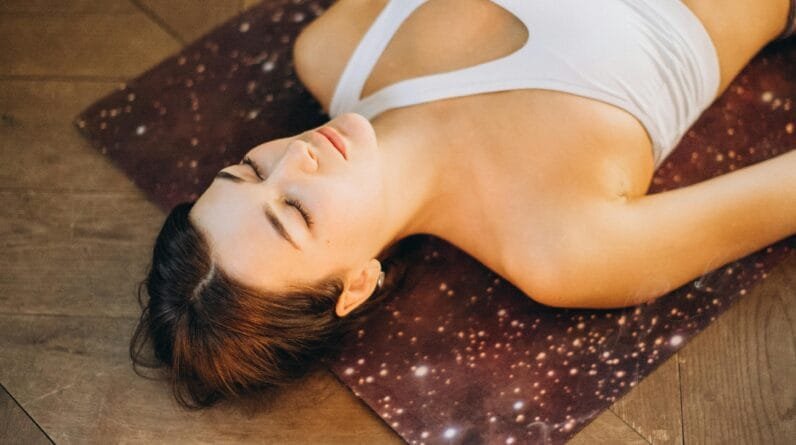
Have I noticed how much better I feel when I move gently every day?

This image is property of images.pexels.com.
Principles of mindful movement
I base my daily practice on a few core principles that help me keep it safe, effective, and sustainable.
Move with awareness
I pay attention to breath, alignment, and sensations. Awareness helps me notice tension, compensations, and areas that need more care. When I move slowly, I can feel subtle changes and make adjustments.
Prioritize comfort over intensity
I choose comfort over pushing to extremes. Gentle movement doesn’t seek maximal range or force; it cultivates sustainable habits. I aim to feel challenged but not overwhelmed.
Consistency beats intensity
Short daily sessions add up. I would rather do ten minutes each morning than one hour once a week. Consistency builds habits, mobility, and confidence.
Integrate breath and sensation
I coordinate inhalations and exhalations with movement. Breath anchors my attention and supports rhythm. Sensation tells me when to ease back or when I can safely move further.
How I prepare for practice
Preparation sets the stage for a mindful session. I take small steps to make practice inviting and practical.
Choose a comfortable setting
I find a quiet, minimally cluttered spot with enough room to move. Natural light and a comfortable surface—carpet, mat, or chair—help me feel grounded. I arrange props like a pillow or strap nearby if I might need them.
Wear comfortable clothing
I pick clothing that allows free movement. Tight or restrictive garments can distract me from breathing and alignment. I prefer layers so I can adjust temperature.
Set a realistic time
I choose a time of day when I’m most likely to be consistent. Mornings help me start the day centered; evenings help me unwind. I schedule a duration I know I can keep—often 10–30 minutes.
Safety check
I assess recent injuries, dizziness, or surgeries. If I have health concerns, I consult a medical professional before starting. I keep a water bottle and a phone nearby if needed.
Core gentle exercises: descriptions and steps
I’ll present essential gentle movements I return to again and again. I describe each step in the first person so I can model them in my own practice.
Breath awareness and diaphragmatic breathing
I begin most sessions with breath because it sets the nervous system tone.
- Sit or lie comfortably with soft knees.
- Place one hand on my belly and one hand on my chest to feel movement.
- Inhale slowly through my nose for 3–4 counts, feeling my belly rise.
- Exhale for 4–6 counts, feeling my belly fall.
- Repeat for 5–10 minutes, keeping the breath smooth and even.
I use this to calm the mind, improve rib mobility, and increase pelvic-floor coordination.
I use gentle neck movements to reduce stiffness and tension that accumulates from screen use.
- Sit tall with shoulders relaxed.
- Slowly drop my chin to my chest and hold for 3 breaths.
- Roll my head slowly to the right, bringing the right ear toward the shoulder; breathe for 3 breaths.
- Return to center and repeat to the left.
- Perform gentle upward gaze (chin lift) only as comfort allows.
- Finish with gentle lateral head tilts and tiny nods.
I avoid forcing range; I move only into comfortable limits.
Shoulder opening and scapular mobility
I prioritize shoulder health because shoulders carry upper-body tension.
- Sit or stand tall, inhale and reach both arms overhead (if comfortable).
- Exhale and sweep arms down and back, squeezing shoulder blades gently together.
- For a standing variation, place palms on a wall at chest level and walk hands up and down with soft shoulder blade movement.
- For tighter shoulders, use a strap or towel to maintain distance between hands overhead.
I keep the neck soft and avoid shrugging hard into the ears.
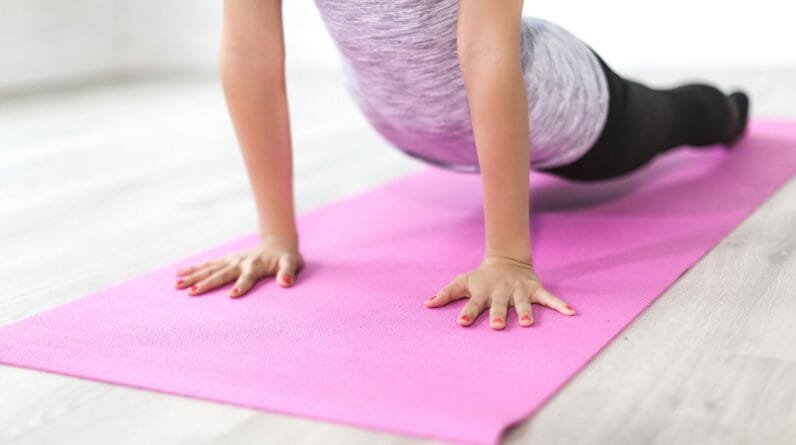
Spine mobility: cat-cow and seated variations
I practice spine mobility to maintain healthy discs and reduce back pain.
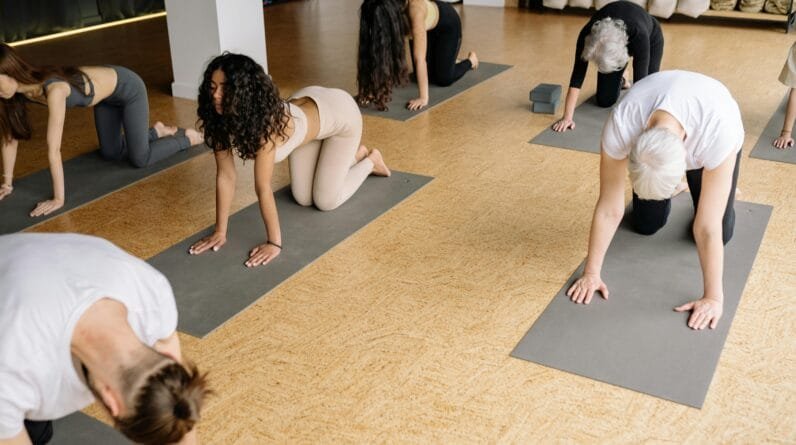
- On hands and knees, align wrists under shoulders and knees under hips.
- Inhale to arch my spine (cow): lift chest, drop belly, gaze forward.
- Exhale to round my spine (cat): tuck chin, draw navel toward spine, round upper back.
- Move slowly for 8–12 cycles, coordinating breath and movement.
- If hands-and-knees is not comfortable, I perform a seated version: arch on the inhale and round on the exhale.
I focus on segmental movement and avoid forcing flexibility.
Hip mobility: gentle circles and hip openers
I use hip mobility to improve walking mechanics and lower back comfort.
- Lie on my back and hug one knee to my chest for a gentle glute stretch.
- For hip circles: stand and shift weight to one leg, lift the other knee slightly and make small circles, changing direction after 8–12 reps.
- For a seated figure-four: cross one ankle over the opposite thigh, flex the foot, and lean forward gently if needed.
I avoid pinching sensations in the front of the hip and favor gentle, repeated motion.
Knee-friendly strengthening and mobility
I include low-impact movements to support knee health.
- Seated leg extensions: sit tall and extend one leg slowly, hold for 1–2 seconds, lower with control for 10–15 reps.
- Wall sits with slight knee bend for 10–30 seconds, ensuring knees stay over toes.
- Heel raises: stand and slowly raise onto the balls of my feet, lower slowly for 12–20 reps.
I stop if I feel sharp pain and reduce range or load.
Ankle mobility and balance
I often neglect ankles, but they are crucial for stable movement.
- Ankle circles: I sit and rotate each foot 10 times in each direction.
- Alphabet with the big toe: I trace letters with my toe while seated to mobilize all planes.
- Single-leg stand: I hold onto a chair and lift one foot slightly off the floor for 20–30 seconds, progressing slowly.
I use support and a stable surface to maintain safety.
Short sequence: a gentle 10-minute routine
I use this quick sequence when I have limited time but want to move mindfully.
- 2 minutes diaphragmatic breathing while seated.
- 1 minute neck mobility and shoulder rolls.
- 2 minutes cat-cow spinal mobility.
- 2 minutes hip circles and knee-friendly leg extensions.
- 1 minute ankle circles and heel raises.
- 1 minute standing balance left and right.
I keep pace slow, connecting breath to movement, and finish with a moment of gratitude for the body.
Gentle strength-building with mindful intent
I believe strength supports mobility, and gentler loads can be highly effective when performed mindfully.
Bodyweight and resistance-band options
I choose exercises that emphasize control and alignment.
- Squat to chair: stand in front of a chair, lower down until the seat lightly touches my glutes, then stand. I keep hips back and knees tracking over toes.
- Glute bridges: lie on my back, knees bent, feet hip-width. Press through heels to lift hips with a squeeze of glutes, then lower slowly for 10–15 reps.
- Banded rows: sit or stand with a resistance band anchored, pull elbows back while squeezing shoulder blades.
I breathe deliberately on exertion and maintain steady tempo.
Key cues I use for safe strengthening
I focus on slow eccentric lowering, core engagement, and joint-friendly alignment. I avoid holding my breath and I check that movements feel sustainable.
Mindful walking and gait awareness
Walking can be one of the most accessible forms of mindful movement.
How I practice mindful walking
- I choose a route where I can move continuously for 5–20 minutes.
- I begin with diaphragmatic breaths for a few cycles to center myself.
- I notice foot contact, knee and hip mechanics, and the rhythm of my breath with each step.
- I may count breaths or steps to maintain attention, returning to sensations when my mind wanders.
I notice posture and soften the shoulders, allowing my gaze to be soft and forward.
Variations to enrich practice
I alternate slow mindful walking with slightly faster, attentive walking to increase proprioception. For an indoor option, I walk in place with the same attention to foot contact and breath.
This image is property of images.pexels.com.
Chair-based and seated practices
I always include seated options for days when standing or lying down is not possible.
Seated mobility circuit
- Seated breath: 1–2 minutes of diaphragmatic breathing.
- Seated cat-cow: hands on knees, arch on inhale, round on exhale for 8–12 reps.
- Seated twist: hands on opposite knees, gentle rotation on exhale for each side.
- Seated leg lifts: extend each leg and hold for 3 breaths, 8–12 reps.
I find these exercises reassuringly accessible and effective for maintaining mobility.
Incorporating gentle yoga and tai chi principles
I borrow principles and movement patterns from mindful disciplines to enhance my practice.
Gentle yoga ideas
- I favor restorative and yin-style poses that emphasize long, supported holds and breath.
- Poses I use: child’s pose, supported bridge, supine knees-to-chest, legs-up-the-wall.
- I hold poses for 1–5 minutes as comfortable, focusing on breath and softening.
Tai chi and qigong-inspired movements
- I practice slow, continuous weight shifts and sweeping arm movements coordinated with breath.
- Simplicity matters: a few foundational forms repeated slowly can calm the nervous system and improve balance.
I use these modalities as inspiration rather than strict sequences, so my practice remains flexible.
Recovery and relaxation techniques
I pay attention to recovery to prevent overuse and support calm.
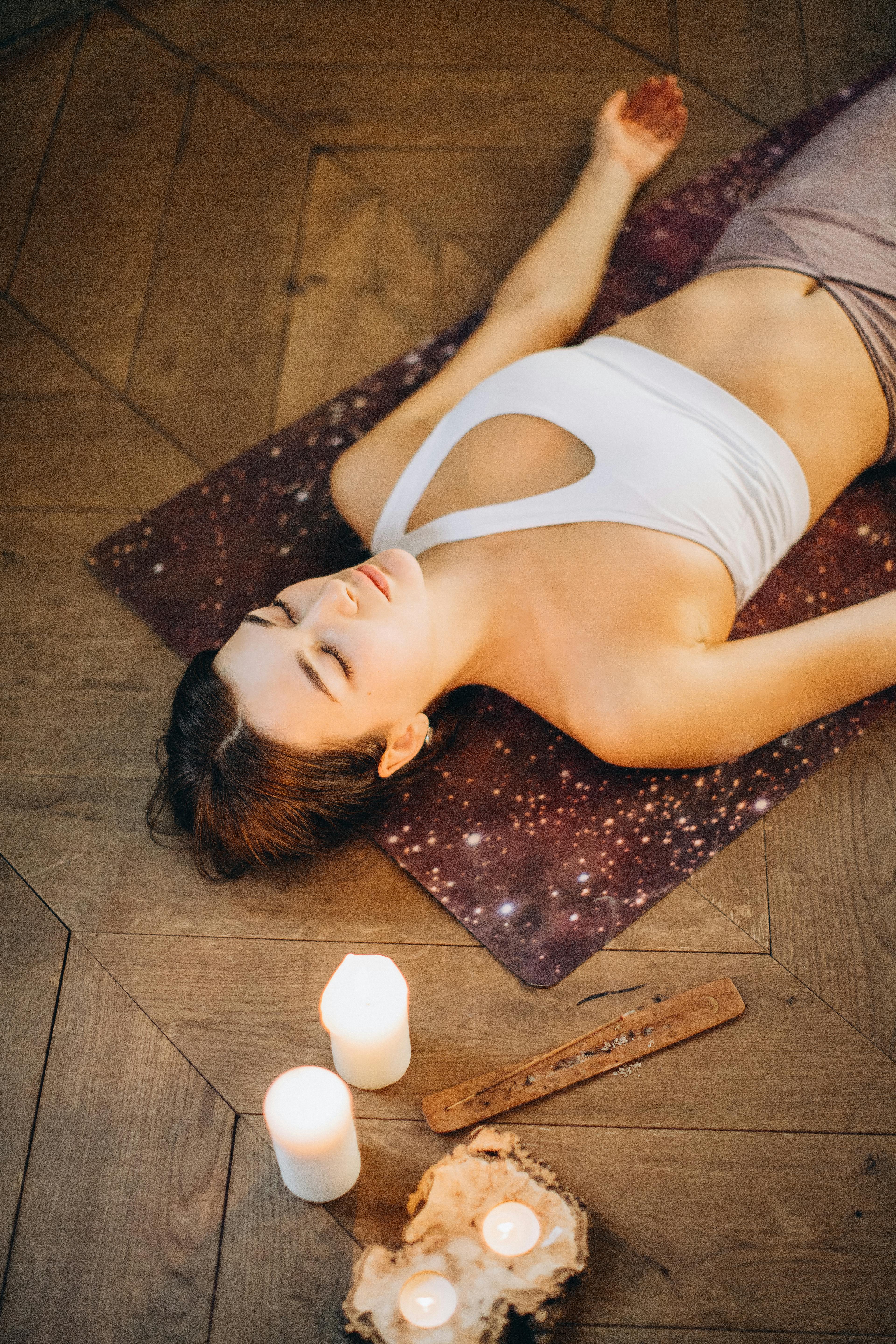
Progressive muscle relaxation
- Lying or sitting comfortably, I sequentially tense and release muscle groups from toes to head.
- I hold tension for 5 seconds, then release for 20–30 seconds, noticing the contrast.
- This helps me become aware of unconscious tension patterns.
Gentle stretching and passive holds
- I hold light stretches for 30–90 seconds, focusing on breathing into the sensation.
- Passive support (bolster, pillow) helps me relax into the stretch rather than brace.
I avoid intense ballistic stretches and prioritize slow, mindful holds.
This image is property of images.pexels.com.
Modifications and contraindications
I’m careful to adapt every movement when I or someone else has specific conditions.
When to modify or skip exercises
I modify or skip if I experience sharp or radiating pain, dizziness, lightheadedness, or acute swelling. After surgery or during pregnancy I tailor intensity and positions. I consult a clinician for red-flag symptoms.
Table: Common conditions and suggested modifications
| Condition | Typical issue | Modification I use |
|---|---|---|
| Low back pain | Pain with flexion or extension | Prefer supported positions, small ranges, avoid prolonged end-range flexion; emphasize pelvic neutral and core engagement |
| Knee osteoarthritis | Pain with deep knee bend | Use chair squats, reduce depth, emphasize hip hinge and glute activation |
| Shoulder impingement | Pain overhead | Keep elbows lower, use wall slides or banded scapular work instead of full overhead reaching |
| Balance impairment | Fall risk | Perform single-leg work next to a stable surface, use seated alternatives |
| Dizziness / vestibular issues | Unsteadiness with head movement | Reduce rapid head turns, progress slowly and perform gaze stabilization under guidance |
I always err on the side of gentleness and slow progression.
Tracking progress and setting realistic goals
I track small wins and tweak my plan based on results rather than expectations.
How I monitor progress
- I keep a simple log of frequency, duration, and subjective notes (energy, pain levels, sleep quality).
- I recheck specific mobility markers (e.g., ability to reach overhead, single-leg stand time) every 2–4 weeks.
Goal-setting approach I follow
I set process goals (move 5–7 days per week for 10–20 minutes) rather than rigid outcome goals. This keeps motivation steady and reduces pressure.
Sample weekly routine I use
I alternate focus areas to create balance across strength, mobility, and calming practices.
Table: Sample weekly schedule (my example)
| Day | Focus | Duration | Key elements |
|---|---|---|---|
| Monday | Morning mobility + breath | 15 min | Breathwork, neck, shoulders, spine |
| Tuesday | Gentle strength | 20 min | Chair squats, glute bridges, rows |
| Wednesday | Mindful walk | 20–30 min | Walking with breath awareness |
| Thursday | Restorative movement | 20 min | Gentle yoga, hip and hamstring holds |
| Friday | Balance and ankles | 15 min | Single-leg stands, heel raises, toe alphabet |
| Saturday | Mixed mobility | 25 min | Combined spine, hips, shoulders |
| Sunday | Relaxation + recovery | 15 min | Progressive relaxation, light stretching |
I adapt this weekly plan based on how my body feels and life schedule.
Awareness of pitfalls helps me keep practice effective and safe.
Rushing through movements
I avoid fast, unchecked motions. Rushing sacrifices control and sensory feedback. Slow, controlled movement lets me notice compensations and correct form.
Ignoring pain signals
I listen to sharp or radiating pain as a cue to stop and reassess. I distinguish between mild discomfort from working a muscle and dangerous pain demanding modification.
Neglecting consistent scheduling
I prioritize short daily sessions over sporadic long ones. Consistent practice yields more reliable gains.
Equipment and props I find helpful
I keep a few inexpensive items to make practice comfortable and adaptable.
Common props I use
- Yoga mat or soft carpet for cushioning.
- A sturdy chair for seated and balance support.
- Resistance bands of light–medium tension for gentle strengthening.
- A strap or towel for assisted stretches.
- A small bolster or pillow for support during restorative poses.
These items are optional but expand what I can do safely at home.
Frequently asked questions I often answer
I address questions I frequently reflect on or answer to others.
How long should each session be?
I find that even 5–10 minutes daily can make a difference. I typically aim for 15–30 minutes depending on time and energy.
Is gentle movement enough to gain strength?
Yes—when performed with mindful progressive overload. Increasing repetitions, adding resistance bands, or slowing eccentric phases builds strength effectively without heavy loads.
Can I practice every day?
I practice daily with variation. Some days are active (strength, mobility), others are restorative. Recovery is part of the plan.
What if I have chronic pain?
I start with pain education, gentle movement tolerance, and frequent communication with healthcare providers. I focus on small, achievable tasks and use graded exposure to build capacity.
How I integrate mindful movement into daily life
I aim to make mindful movement habitual and woven into daily tasks.
Micro-practices I use
- I perform 2–3 minutes of deep breathing at my desk between tasks.
- I stand and do ankle or hip circles during TV commercials or waiting times.
- I do brief posture resets: shoulders back, chin tucked, and a couple of deep breaths.
These small practices accumulate into more consistent movement.
Creating ritual and motivation
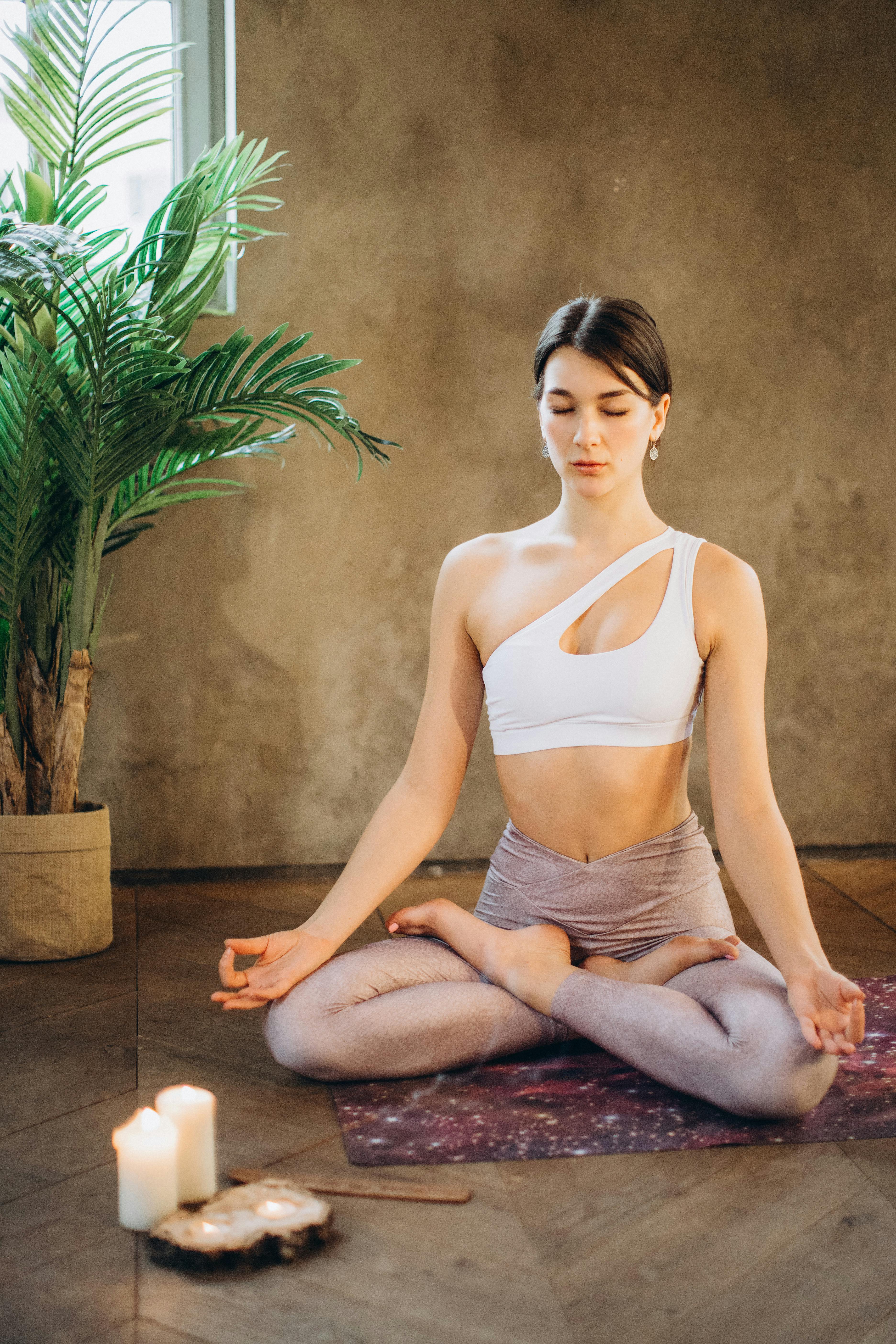
I set small rituals—playing a specific playlist, lighting a candle, or using a particular mug after practice—to create positive association. I also celebrate small wins like extra balance time or a pain-free day.
When to seek professional guidance
I know my limits and when to get expert support.
Indicators I consult a professional
- Persistent or worsening pain despite modification.
- New numbness, tingling, or weakness.
- Difficulty performing basic daily tasks.
- Complex rehabilitation after surgery or significant injury.
A physical therapist, experienced movement coach, or physician can personalize progressions and safety guidelines.
Final reflections on Gentle Daily Exercises for Mindful Movement
I’ve found that gentle daily exercises are not just about flexibility or strength—they’re about cultivating presence and a kinder relationship with my body. Consistency, curiosity, and compassion guide my practice. By choosing small, manageable actions each day, I’ve built a reliable foundation of mobility, better mood, and a calmer nervous system.
If I were to summarize the approach in three steps they would be: breathe with attention, move with gentle curiosity, and honor recovery. That triad helps me sustain a lifelong habit rather than a short-lived resolution.
Thank you for reading my perspective on gentle daily exercises for mindful movement. I hope my descriptions and practical tips make it easier to bring mindful motion into daily life, one small movement at a time.