Gentle Exercises for Daily Movement and Mobility
Gentle Exercises for Daily Movement and Mobility. You can use gentle exercises to maintain or improve your mobility without needing a gym or fancy equipment. This article gives you clear guidance and practical routines so you can move with more ease every day.
Why gentle movement matters
Gentle movement helps maintain joint range, increases blood flow, and reduces stiffness that builds up from long periods of sitting or repetitive tasks. When you move consistently, you protect your independence and make everyday tasks—like standing up, bending, or reaching—easier and safer.
Who benefits from these exercises
You can benefit from gentle mobility work at any age, whether you are recovering from injury, managing chronic conditions, or simply wanting to feel less stiff. These exercises are especially helpful if you spend long hours sitting, have job-related movement restrictions, or want low-impact ways to stay active.
Principles of gentle exercise
Understanding the core principles helps you do the right amount of work safely and effectively. Keep these ideas in mind as you build habits and routines.
Consistency over intensity
Small, regular sessions produce better long-term results than occasional intense sessions that leave you sore or discouraged. Aim for short daily habits—5 to 20 minutes—rather than long infrequent workouts.
Would you like to feel more comfortable moving through your day with simple, gentle exercises you can actually stick with?
Mobility vs flexibility vs strength
Mobility is the usable range of motion around a joint, flexibility is how far a muscle can lengthen, and strength supports control within those ranges. You should train a mix of gentle mobility, stretching, and light strengthening to make movement both possible and stable.
You will feel mild discomfort when challenging your range, but sharp or radiating pain is a sign to stop and reassess. If an activity causes pain that increases, limits daily function, or lasts more than 24–48 hours, consult a healthcare professional.
Preparing to move
A short preparation phase makes your movement more comfortable and reduces injury risk. Preparation includes a brief warm-up, assessing your environment, and choosing the right pace.
Warm-up basics
A warm-up raises your body temperature and primes your nervous system so movements feel smoother and less effortful. Use dynamic, low-load movements such as marching, arm circles, or gentle hip swings for 2–5 minutes before doing more targeted mobility drills.
Safety and modifications
You can modify almost every exercise to match your current ability; the goal is movement, not performance. Use supports like chairs, walls, or cushions if balance, strength, or pain is a concern.
You don’t need equipment for most gentle mobility exercises, but a chair, resistance band, small cushion, or foam roller can add helpful options. Choose items that are stable and safe—avoid anything that shifts or slips under load.
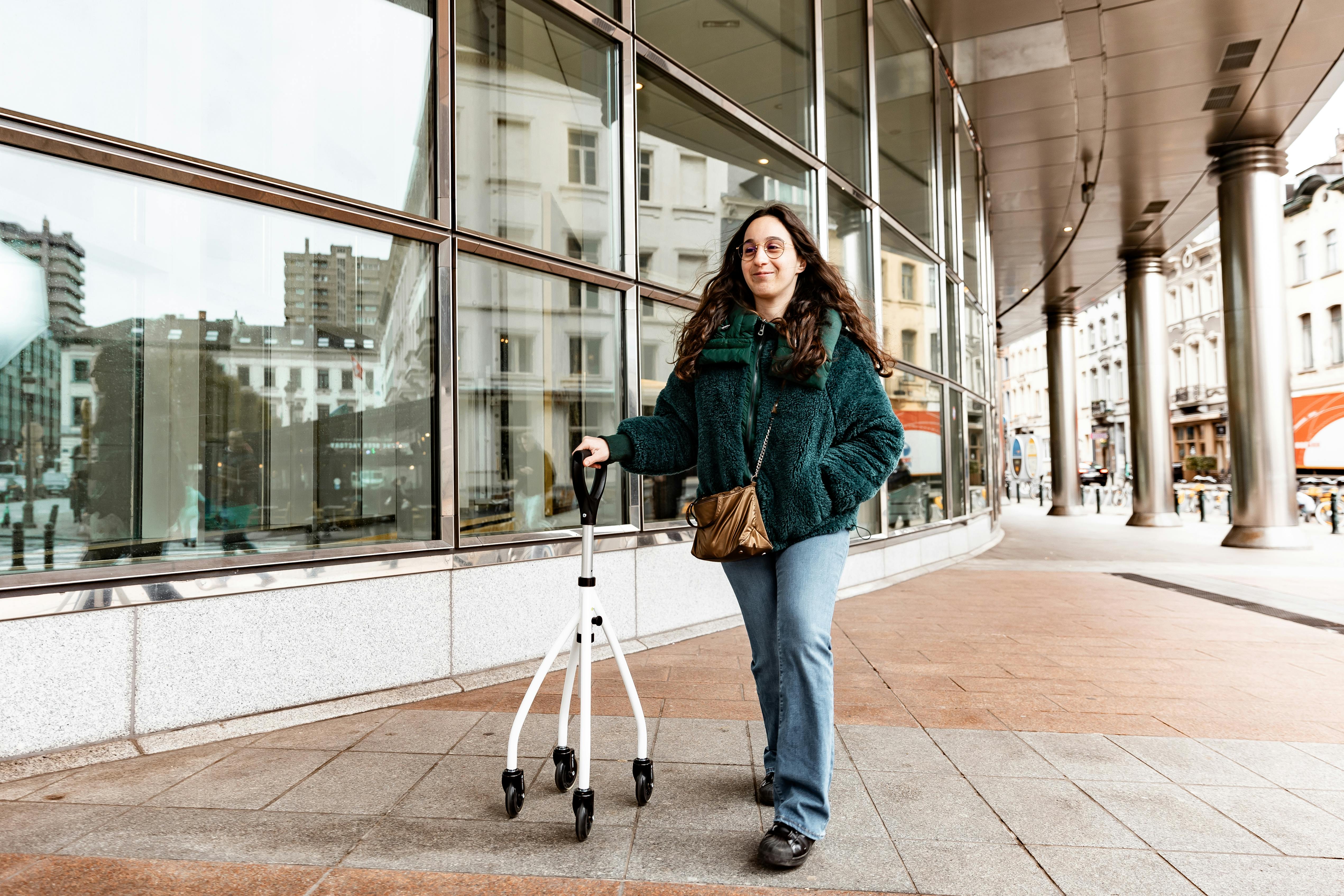
This image is property of images.pexels.com.
Daily movement routine structure
A simple structure lets you integrate movement into your day without thinking too much, and it creates a balanced approach to whole-body mobility. Use the following framework to plan short sessions that address your major joints and movement patterns.
Warm-up (2–5 minutes)
Begin with light activities that get your blood flowing and joints lubricated, like marching on the spot, shoulder rolls, or gentle heel raises. This prepares your tissues and nervous system for the mobility work to come.
Mobility and range work (5–10 minutes)
Focus on controlled movements that move joints through their comfortable ranges, such as hip circles, thoracic rotations, and ankle dorsiflexion practice. Move slowly and match the speed to the control you have, breathing evenly.
Strength and stability (5–10 minutes)
Add gentle strengthening that reinforces the new ranges—bodyweight squats, seated leg extensions, or wall push-ups are good examples. Strength supports mobility by teaching your muscles to hold and guide joints through motion.
Cool-down and restorative stretches (2–5 minutes)
Finish with relaxed, static stretches or breathing-focused positions to encourage recovery and relaxation. Avoid overstretching—stay within comfortable limits and breathe into the areas you’re working.
Gentle exercises: neck and upper back
You can relieve neck tension and improve upper back mobility with small, controlled motions that encourage alignment and circulation. These exercises reduce stiffness that often accumulates from desk work or phone use.
Neck range-of-motion
Perform gentle nods and rotations to keep cervical joints moving while avoiding aggressive end-range positions. Sit or stand tall, tuck your chin slightly, nod slowly, and then look over each shoulder without forcing movement.
- Steps:
- Sit tall with shoulders relaxed.
- Slowly nod as if saying “yes,” then return.
- Gently rotate head left and right as if looking over each shoulder.
- Repeat 6–8 times per direction.
Upper thoracic rotations
Thoracic rotations counteract slumping and improve your ability to twist safely. Sit or stand with hands behind your head or cross your arms, rotate your chest slowly to each side while keeping hips level.
- Steps:
- Sit with feet flat and hands lightly on your shoulders or behind your head.
- Rotate your upper trunk left, return to center, then rotate right.
- Move smoothly within comfort and repeat 8–10 times.
Shoulder circles help maintain scapular motion and shoulder joint lubrication for reaching and carrying tasks. Perform slow circles forward and backward without shrugging.
- Steps:
- Stand or sit tall with arms at your sides.
- Make small to medium circles forward 8–10 times.
- Reverse the direction for another 8–10 repetitions.
Gentle exercises: mid-back, core, and breathing
You can improve posture and core control through gentle core activation and thoracic mobility work, which enhances breathing and spinal support. Breath-driven movement helps coordinate the nervous system and reduces tension.
Diaphragmatic breathing
Deep breathing supports relaxation and stabilizes your core during movement. Lie on your back or sit upright, place one hand on your belly, inhale to expand your abdomen, and exhale to feel it soften.
- Steps:
- Find a comfortable seated or supine position.
- Breathe in slowly through the nose, expanding your belly.
- Exhale slowly through the mouth or nose, allowing the belly to fall.
- Repeat for 6–10 breaths.
Cat–cow spinal mobilization
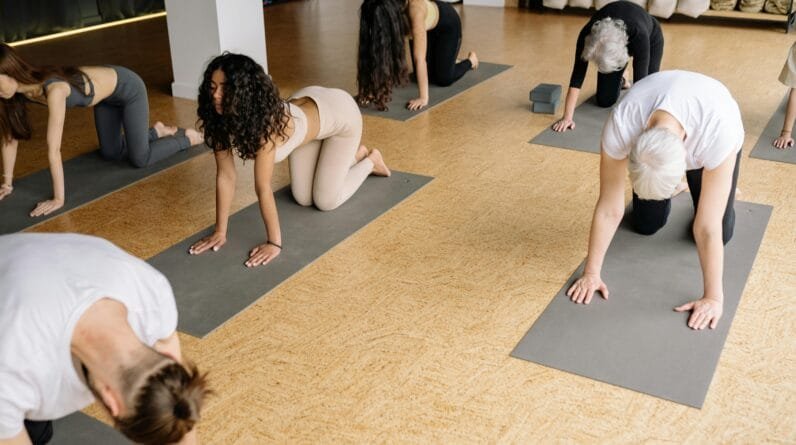
Cat–cow increases spinal flexibility and coordinates breath with movement to improve comfort during bending and reaching. Move slowly, matching the spine’s flexion on the exhale and extension on the inhale.
- Steps:
- Start on hands and knees in a neutral spine.
- Inhale: drop your belly and lift your chest and tailbone (cow).
- Exhale: round your spine and tuck your chin (cat).
- Repeat 8–12 cycles, moving with your breath.
Dead bug for core control
Dead bug teaches you to stabilize your spine while your limbs move, which transfers to safer daily movements. Lie on your back, press your lower back to the floor, and alternate lowering opposite arm and leg with control.
- Steps:
- Lie on your back with knees bent and arms up towards the ceiling.
- Slowly extend one leg and the opposite arm while keeping your back gently pressed to the ground.
- Return to center and switch sides.
- Do 6–10 repetitions per side.
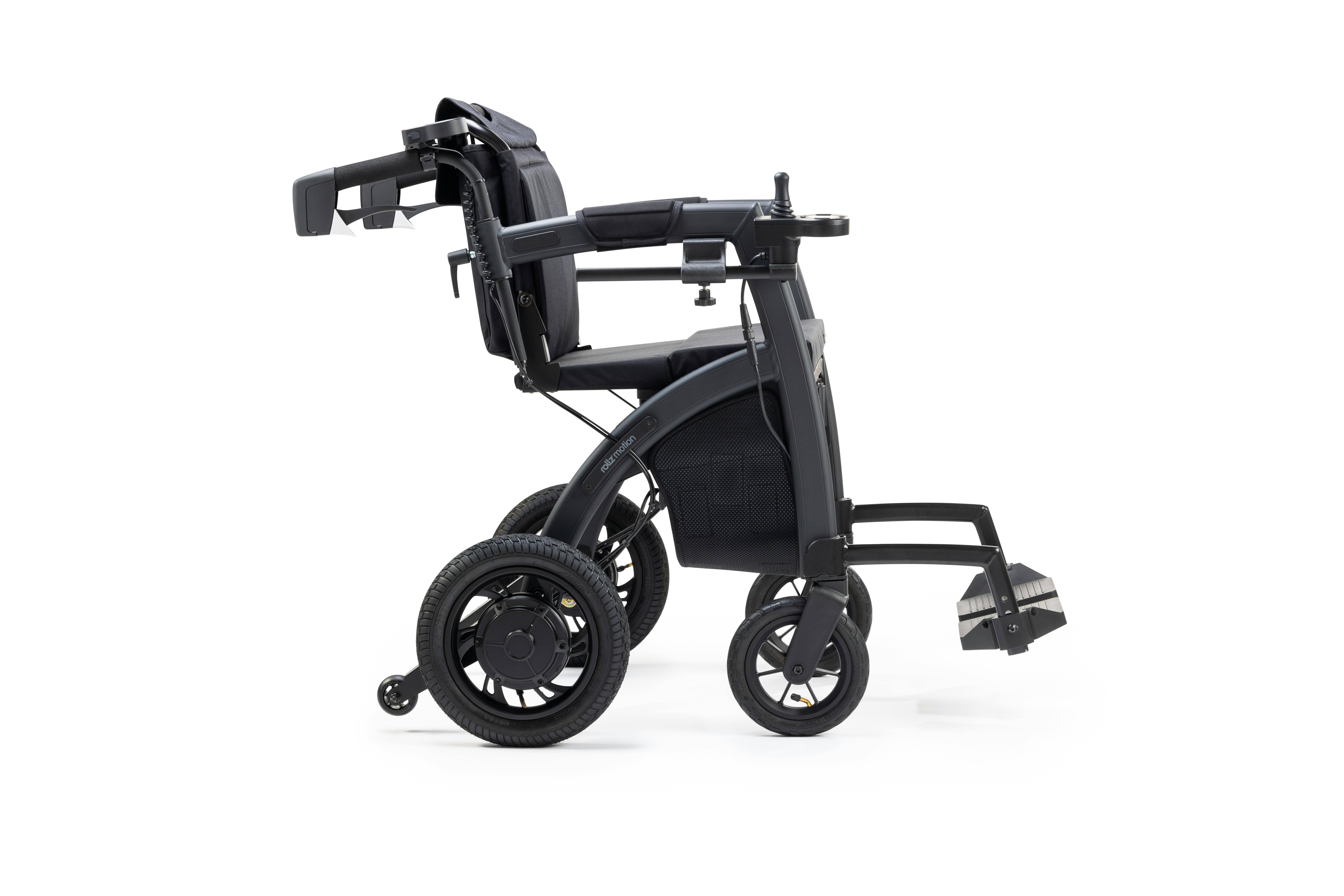
This image is property of images.pexels.com.
Gentle exercises: hips and pelvis
Your hip joints are central to walking, standing, and many household tasks; gentle mobility here prevents stiffness and reduces compensations elsewhere. These exercises include controlled hip openings and muscle activation.
Hip circles and marches help lubricate the hip socket and improve balance and gait mechanics. Stand with feet hip-width apart and perform controlled circular motions at the hips, then lift knees in a marching pattern.
- Steps:
- Stand tall with a slight bend in the knees.
- Place hands on hips and gently circle your hips in both directions 6–8 times.
- Follow with 30–60 seconds of marching, lifting knees comfortably.
Seated figure-4 stretch (gentle)
This stretch opens the outer hip and gluteal region without heavy loading of the spine. Sit tall, cross one ankle over the opposite knee, and gently lean forward from the hips to feel a mild stretch.
- Steps:
- Sit on a chair with both feet on the floor.
- Place your right ankle on your left knee and keep your torso upright.
- Lean forward slightly until you feel a comfortable stretch in the right hip.
- Hold 20–30 seconds, then switch sides.
Bridge for posterior chain activation
The bridge strengthens glutes and hamstrings, supporting hip extension and lower-back health during walking or transitions. Lie on your back with knees bent and feet flat, then lift your hips toward the ceiling with control.
- Steps:
- Lie down with knees bent and feet hip-width apart.
- Press through your heels and lift your hips slowly until your body forms a straight line from knees to shoulders.
- Lower with control and repeat 8–12 times.
Gentle exercises: knees and lower legs
Keeping knees and lower-leg joints mobile supports functional tasks like stair climbing and standing up. Gentle strengthening keeps the area stable without stressing sensitive tissues.
Seated knee extensions
Seated knee extensions strengthen the quadriceps with low impact on the knee joint, useful for improving confidence during standing transitions. Sit upright and slowly extend one leg until it’s almost straight, then lower.
- Steps:
- Sit on a stable chair with feet flat.
- Lift one foot off the floor and extend the knee until the leg is nearly straight.
- Lower slowly and repeat 10–15 times per leg.
Heel raises and ankle mobility
Heel raises strengthen the calves and improve ankle control while small ankle circles restore dorsiflexion and plantarflexion. Use a chair for balance as needed.
- Steps:
- Stand behind a chair with feet hip-width apart and hands on the back for support.
- Rise onto the balls of your feet, then slowly lower.
- Repeat 10–15 times, then sit and do 10–20 ankle circles per side.
Standing mini-squat
Mini-squats strengthen the muscles around the knee without loading deep into the joint, helping with daily activities like sitting and lifting. Keep the motion small and controlled, aiming for 30–45 degrees of knee bend.
- Steps:
- Stand with feet shoulder-width apart and toes slightly turned out.
- Hinge at the hips and bend the knees a small amount, keeping chest up.
- Return to standing and repeat 8–12 times.
Gentle exercises: ankles, feet, and balance
Strong, mobile ankles and resilient feet reduce falls and improve your ability to move smoothly over different surfaces. Balance practice is especially important if you feel unsteady.
Single-leg stands for balance
Single-leg stands challenge balance and build small stabilizer muscles around the ankle and hip. Stand near a support, lift one foot for 10–30 seconds, and switch sides—progress by reducing support.
- Steps:
- Stand tall near a chair or wall.
- Shift weight to one leg and lift the other foot slightly off the floor.
- Hold for 10–30 seconds, then switch sides.
- Repeat 2–3 times per side.
Toe curls and doming for foot strength
Strengthening intrinsic foot muscles helps with shock absorption and balance. Practice picking up a small towel with your toes or doing seated toe curls.
- Steps:
- Sit with feet flat and place a small towel under one foot.
- Try to scrunch the towel toward you using only your toes.
- Repeat 8–10 times per foot, then switch.
Ankle alphabet
Tracing the alphabet with your big toe while seated or lying down promotes ankle mobility in all directions. Move slowly and control the motion throughout the exercise.
- Steps:
- Sit comfortably and lift one foot slightly off the ground.
- Use your ankle to “write” the letters of the alphabet in the air.
- Complete the alphabet and switch sides.

This image is property of images.pexels.com.
Functional movements for daily life
You can practice movements you use every day—getting up from a chair, stepping over obstacles, carrying items—so they become easier and safer. Functional training links mobility and strength to the tasks you care about.
Sit-to-stand practice
Repeated sit-to-stand practice improves leg strength, balance, and confidence with transitions you do dozens of times a day. Use a chair of comfortable height, and progress from using both hands to fewer or no hands.
- Steps:
- Sit near the front of a chair with feet under your knees.
- Lean forward, press through your feet, and stand up fully.
- Sit back down with control and repeat 8–15 times.
Step-ups and curb practice
Step-ups mimic stair climbing and teach you to load one leg at a time safely. Use a low step and hold onto a railing or wall for support as needed.
- Steps:
- Stand facing a step or curb with a hand for support if needed.
- Step up with one foot, bringing the other foot to meet it.
- Step down carefully and repeat 8–12 times per leg.
Carrying and load management
Practicing light carrying helps you coordinate posture, core stability, and breathing under load. Start with light objects and maintain an upright torso and active core while you walk short distances.
- Steps:
- Hold a light object close to your body with both hands.
- Walk slowly while breathing steadily and keeping your shoulders relaxed.
- Increase load gradually as you feel comfortable.
Gentle strengthening to support mobility
Combining simple strength work with mobility training reduces the risk of injury and improves functional independence. Choose exercises that work through the same ranges you need for daily tasks.
Resistance band rows for posture
Rows with a band or a light weight enhance upper-back strength and counteract forward shoulder posture. Secure the band at chest height, pull toward your ribcage, and squeeze your shoulder blades.
- Steps:
- Anchor a resistance band at a sturdy point.
- Hold the band and pull toward your torso while keeping elbows close to your side.
- Perform 8–15 controlled repetitions.
Wall push-ups for upper-body strength
Wall push-ups build chest, shoulder, and core strength with minimal load, making them ideal for varied fitness levels. Stand facing a wall, place your hands on it, and perform push-ups with your body in a plank-like line.
- Steps:
- Stand arm’s length from a wall with hands at chest height.
- Bend elbows to bring your chest toward the wall, then press back.
- Repeat 8–15 times.
Chair-assisted squats for lower-body strength
Chair-assisted squats let you strengthen legs safely by providing a fallback if you lose balance. Use a slow tempo and control both the descent and ascent.
- Steps:
- Stand in front of a chair with feet shoulder-width apart.
- Hinge at the hips and lower toward the chair without fully sitting.
- Press through your heels to stand and repeat 8–12 times.
Sample daily routines (table)
A quick-reference table shows sample gentle routines for different time budgets and focuses, helping you pick one that fits your day. Use the routines as templates and modify as needed.
| Routine | Time | Focus | Example exercises |
|---|---|---|---|
| Quick morning wake-up | 5–7 minutes | Overall mobility | Diaphragmatic breathing, neck range, shoulder circles, hip marches |
| Midday refresh | 10–12 minutes | Mobility + posture | Cat–cow, thoracic rotations, seated figure-4, wall push-ups |
| Evening unwind | 12–15 minutes | Relaxation + gentle strength | Bridge, dead bug, seated knee extensions, gentle hamstring stretch |
| Full daily session | 20–25 minutes | Balanced mobility & strength | Warm-up, hip circles, single-leg stands, chair-assisted squats, band rows, cool-down |
Modifications and progression (table)
You can scale each exercise up or down depending on your ability and goals. The table below suggests easy modifications and ways to progress.
| Exercise | Easier modification | Progression |
|---|---|---|
| Single-leg stand | Hold both hands on chair | Reduce hand support; close your eyes briefly |
| Bridge | Perform heel slides instead of full lift | Add single-leg bridge or hold top for time |
| Wall push-up | Perform standing farther from wall (less incline) | Move to counter push-ups, then floor push-ups |
| Sit-to-stand | Use hands to push off | Reduce hand use, use lower chair for increased difficulty |
Tracking progress and building habit
You’ll stay motivated when you notice small, consistent improvements in comfort and function. Use simple tracking tools and habit-forming strategies to keep movement a daily part of your life.
How to track improvements
Note one or two functional markers—like how many sit-to-stands you can do, how long you can balance on one leg, or how far you can reach without pain—and record them weekly. Small, visible wins encourage continued practice.
Forming a habit
Link mobility practice to an existing daily cue, such as after brushing teeth or before your morning coffee, so it becomes automatic. Keep sessions short and accessible; if you miss one, a short reset session later in the day helps you maintain momentum.
When to seek professional advice
You should consult a health professional if you have significant pain, recent injury, unexplained swelling, or neurological symptoms like numbness and severe weakness. A physical therapist or physician can assess your condition and give individualized guidance and exercises.
Red flags to watch for
Seek immediate care if you experience new severe pain, sudden loss of function, unexplained fever with pain, or signs of infection near a joint. For gradual worsening or persistent symptoms, schedule a clinical evaluation to rule out underlying causes.
Working with a physical therapist
A physical therapist customizes exercises to your condition, teaches safe movement patterns, and helps progress you responsibly. You’ll get hands-on techniques, education, and measurable goals to improve your mobility over time.
Common questions and answers
Addressing common concerns helps you start safely and consistently. Here are practical answers to questions people often have when beginning gentle mobility work.
How often should you do these exercises?
You can do short mobility sessions daily because they’re low load and focused on range and movement quality. For strength components, aim for 2–4 sessions per week while keeping gentle mobility work more frequent.
Can gentle exercises help chronic pain?
Yes, consistent low-load movement and strength training often reduce chronic pain by improving function, circulation, and tissue tolerance. Always start slowly and tailor movements if certain activities aggravate your symptoms.
Do you need to warm up?
A brief warm-up of 2–5 minutes prepares your body and makes movements feel easier and safer. If you’re short on time, performing the mobility work itself in a gradual manner can also serve as a warm-up.
How long before you see benefits?
Many people notice reduced stiffness within a few days to a couple weeks, with more meaningful improvements in strength and balance appearing over several weeks. Consistency is the main driver of long-term benefit.
Putting movement into your daily life
You can weave mobility work into everyday chores and routines so it doesn’t feel like extra burden. Simple cues, short sessions, and functional practice make it sustainable.
Micro-movement breaks
Set a timer or tie movement to routine activities—stand for one minute each time you get up from your desk, do heel raises while you wait for the kettle, or perform hip circles while brushing teeth. These small bursts accumulate into meaningful change.
Make good ergonomics a habit
Adjust your workspace and daily setups to support neutral posture, and use movement to reset when you feel tight. Frequent posture checks and targeted mobility can counteract the negative effects of long static postures.
Precautions and common mistakes
Awareness of common mistakes prevents setbacks and helps you get the most out of your gentle routine. Use pain as a guide and prioritize control and alignment over range or repetitions.
Don’t force range
Trying to force a joint beyond its current capacity can cause irritation or injury, so progress gradually and respect your limits. If a movement causes sharp pain, stop and try a gentler alternative or seek professional advice.
Avoid rushing technique
Fast or jerky movements reduce control and increase compensations in other joints. Slow, deliberate motion enhances neuromuscular control and teaches safer movement patterns.
Tools and aids to support mobility
A few simple items make gentle exercise more comfortable and accessible, while most routines require nothing at all. Choose items that feel safe and provide appropriate support for your needs.
Useful items
Consider a stable chair, resistance bands, a small cushion, and a firm mat for comfort and traction. A timer or phone app can help with reminders and intervals.
What to avoid
Avoid unstable surfaces unless you’re working with a professional, and be cautious with heavy weights or extreme stretches unless you have appropriate supervision. Safety and comfortable progression matter more than gear.
Final tips and encouragement
You don’t need long, arduous sessions to create meaningful improvements in your movement and mobility. Short, consistent practice, thoughtful progression, and listening to your body will give you the best chance of long-term success.
Start small and be consistent
Commit to tiny steps that you can repeat daily; even five minutes of intentional movement will make a difference over weeks and months. Celebrate small wins—more ease getting out of a chair, less stiffness in the morning, or longer balance holds.
Keep it enjoyable
Pick movements you like and pair them with music, podcasts, or a short reward so practicing becomes something you look forward to. Movement that fits your lifestyle and preferences is the movement you’ll keep doing.
If you want, you can tell me about your current routine, any health concerns, and how much time you have each day, and I’ll help you build a personalized gentle mobility plan that fits your life.