Low-Impact Exercises for Beginners to Build Strength and Mobility
In this guide, you will learn what low-impact exercise really means, why it works so well for beginners, how it supports both strength and mobility, and which movements to include in a practical at-home routine. You will also find a guided YouTube video embed, three images, a frequently asked questions section, and FAQ schema markup you can keep inside the page code.
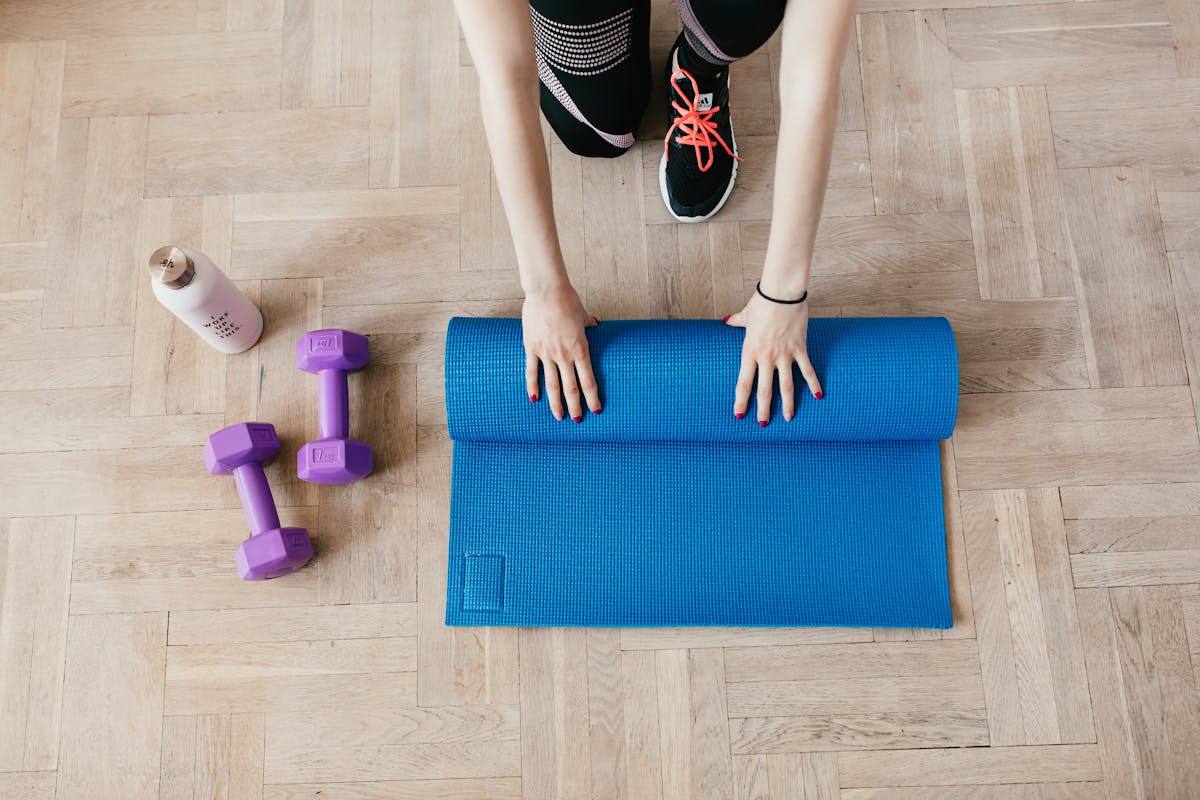
What Low-Impact Exercise Means
Low-impact exercise usually means movement that places less force on your joints compared with jumping, sprinting, or explosive workouts. It does not mean the workout is ineffective. It simply means the movements are gentler on the body while still helping you develop strength, stability, endurance, and better movement quality.
Many low-impact exercises keep at least one foot on the ground or use slow and controlled movement patterns rather than repetitive impact. This makes them a strong option for beginners, older adults, people returning to exercise after a break, and anyone who wants to improve fitness without feeling beaten up afterward.
The most important thing to understand is that low-impact does not mean low value. A routine can be calm, controlled, and joint-friendly while still helping you make meaningful progress. In fact, many people build a stronger foundation with low-impact training because it allows them to stay consistent.
Why Beginners Benefit from Low-Impact Training
Beginners often need a routine that feels doable, safe, and repeatable. If the first workout experience feels too intense, too confusing, or too painful, it becomes much harder to stay consistent. Low-impact exercise lowers that barrier.
When you start with controlled movement, you have more time to learn body position, breathing, balance, and basic exercise form. You can pay attention to how your body responds without the distraction of speed or high intensity. This creates a stronger base for future progress.
Low-impact training is also useful because it supports habit building. The best exercise plan is not the hardest one. It is the one you can keep doing. A beginner-friendly routine that feels manageable can build confidence much faster than a demanding plan that leaves you sore, discouraged, or worried about injury.
For many people, the real goal is not to become an athlete overnight. It is to feel stronger getting up from a chair, climbing stairs, carrying groceries, walking with less stiffness, and moving through life with more comfort. Low-impact exercise supports exactly that kind of progress.

How Low-Impact Work Builds Strength and Mobility
It builds strength through control
You do not always need heavy weights or explosive movements to build strength. Beginners can develop useful strength by practicing simple bodyweight exercises with good control. Slow squats, wall push-ups, chair sit-to-stands, glute bridges, and supported balance work can all challenge muscles in a safe and approachable way.
Controlled repetitions help you learn how to engage muscles properly. This is especially important for people who have been inactive, spend a lot of time sitting, or feel disconnected from their bodies during exercise.
It supports mobility through range of motion
Mobility is your ability to move a joint through a comfortable and useful range of motion with control. Low-impact routines often include movements that open the hips, loosen the shoulders, improve spinal movement, and help the ankles and knees move more comfortably. Over time, this can make daily movement feel easier and less restricted.
It improves balance and coordination
Strength and mobility do not work alone. Balance and coordination matter too. Gentle step patterns, single-leg holds with support, standing marches, and slow transitions between positions can all improve how steady and capable you feel. This matters in everyday life more than many people realize.
It encourages consistency
One of the hidden benefits of low-impact training is that it encourages repetition. Because the routine is less harsh, many people are more willing to do it again tomorrow. That consistency is often what leads to better strength, better mobility, and better overall confidence.
Who This Routine Is For
This kind of exercise plan can work well for many people, including:
- Beginners starting exercise for the first time
- People returning after a long break
- Adults who sit for much of the day
- Anyone who wants a no-jumping routine
- People who feel stiff and want better mobility
- Those looking for safe home exercise options
- Older beginners who want a calmer way to build strength
It is also a good fit for people who dislike aggressive workout culture and want something more sustainable. Building strength does not have to feel punishing. In many cases, the most practical routine is the one that feels realistic enough to continue for months, not just days.
Best Low-Impact Exercises for Beginners
Below are some of the most useful beginner-friendly low-impact exercises for strength and mobility. You do not need to do all of them at once. Think of these as a menu you can use to build a simple and repeatable routine.
1. Sit-to-stand
Sit-to-stands are one of the most practical exercises for beginners because they mirror a movement you use in daily life. Start seated in a sturdy chair, stand up with control, and sit back down slowly. This helps strengthen the legs, hips, and core while also improving confidence in a basic movement pattern.
2. Wall push-ups
Wall push-ups are a beginner-friendly way to strengthen the chest, shoulders, and arms without the difficulty of floor push-ups. Place your hands on a wall, step back slightly, and bend your elbows as you bring your body toward the wall. Keep the movement steady and controlled.
3. Glute bridges
Glute bridges help strengthen the hips, glutes, and lower body while also supporting core control. Lying on your back with knees bent, lift your hips gently and squeeze at the top, then lower with control. This exercise can be especially helpful for people who spend a lot of time sitting.
4. Standing marches
Marching in place is simple, but it improves coordination, warms up the body, and adds a little low-impact cardio to the session. It also helps with balance and can be made easier by holding onto a wall or chair.
5. Heel raises
Rising onto your toes and lowering slowly helps strengthen the calves and ankles. This supports walking, posture, and lower-leg control. It can also be useful for people who feel stiff or unstable when standing for long periods.
6. Bird-dog
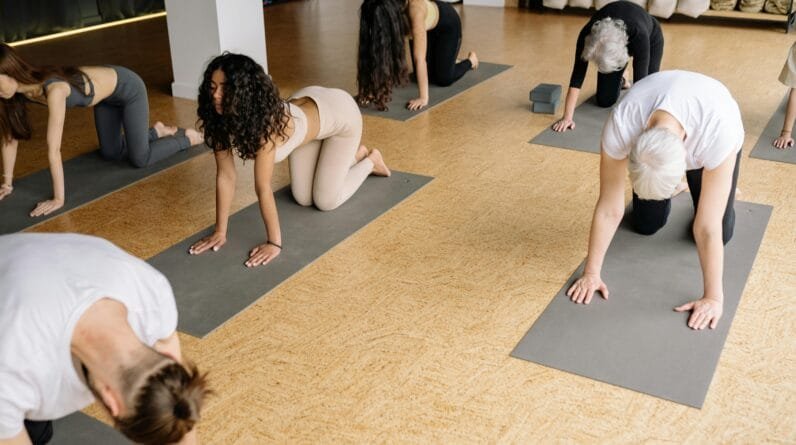
Bird-dog is a gentle exercise performed on hands and knees. You extend one arm and the opposite leg while keeping the torso steady. This helps build core stability, body awareness, and controlled balance.
7. Cat-cow
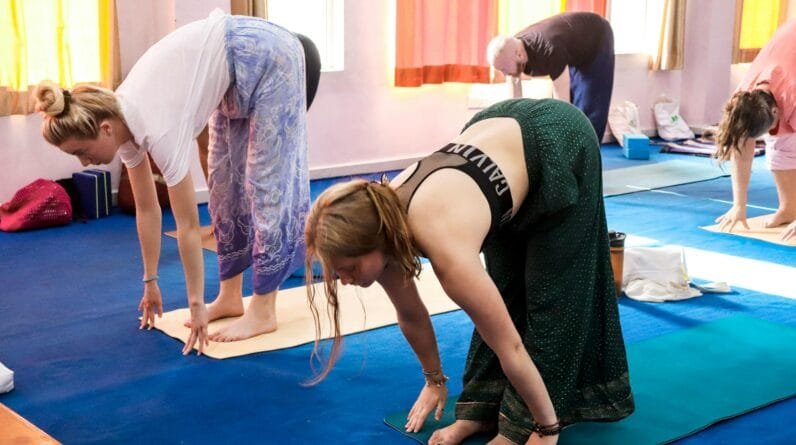
Cat-cow is a classic mobility movement for the spine. It helps loosen the back and encourages gentle full-body awareness. This is a useful exercise to include near the start of a routine.
8. Hip circles
Hip circles are a simple way to improve mobility around the hips and pelvis. They can help reduce stiffness caused by long periods of sitting and make other movements feel smoother.
9. Side leg lifts
Standing side leg lifts strengthen the hips and outer glutes, which can support balance and walking comfort. Use a chair or wall for support if needed and move slowly rather than swinging the leg.
10. Step touch or side step
A step touch adds gentle movement and rhythm while encouraging coordination. It is a good low-impact option for people who want to increase movement without jumping.
11. Seated hamstring reach
This gentle stretch can help improve flexibility behind the legs. It also encourages better posture awareness and can reduce the feeling of tightness that builds from prolonged sitting.
12. Shoulder rolls and arm circles
These upper-body movements are simple but effective for reducing stiffness and improving shoulder comfort. They work especially well as part of a warm-up or reset routine.
A Simple Beginner Routine to Follow
Here is a practical low-impact routine you can follow at home. Move slowly, breathe normally, and rest as needed. This routine is designed to help you build basic strength and mobility without making exercise feel intimidating.
Warm-up: 3 to 4 minutes
- March in place – 45 seconds
- Shoulder rolls – 30 seconds each direction
- Hip circles – 30 seconds each direction
- Arm circles – 30 seconds each direction
- Neck turns and nods – 30 seconds
Main routine: 10 to 15 minutes
- Sit-to-stand – 8 to 10 reps
- Wall push-ups – 8 to 12 reps
- Glute bridges – 10 to 12 reps
- Standing marches – 45 seconds
- Bird-dog – 6 reps per side
- Side leg lifts – 8 reps per side
- Heel raises – 10 to 15 reps
- Cat-cow – 6 to 8 slow rounds
Cool-down: 2 to 3 minutes
- Seated hamstring reach – 20 seconds per side
- Standing side bend – 20 seconds per side
- Deep breathing – 4 to 5 slow breaths
This kind of session can be done three to five days per week depending on your comfort level and schedule. If that feels like too much, start with two or three days per week and build from there. The key is to let the routine feel approachable enough that you can return to it consistently.
Watch: A Related Low-Impact Strength and Mobility Video
If you want a guided option, this video fits the topic of beginner-friendly low-impact strength and mobility work.
How to Progress Safely
Progress in beginner exercise does not need to be dramatic. In fact, the safest and most sustainable improvements usually come from small changes. You might add one or two extra repetitions, slow the movement down for more control, reduce the amount of support you use, or repeat the routine one additional day each week.
Another way to progress is to improve quality before quantity. Focus on smoother movement, better posture, and less tension. If an exercise that once felt awkward begins to feel natural, that is real progress.
You can also use a simple scale:
- Week 1: Learn the movements and keep the sessions short
- Week 2: Add a few repetitions where comfortable
- Week 3: Repeat the routine more consistently
- Week 4: Add another round of two or three key exercises if desired
This kind of progression works well because it respects your current level while still giving your body a reason to adapt.

Common Mistakes to Avoid
Doing too much too soon
It is common to feel motivated at the beginning and want quick results. But doing too much can leave you sore or discouraged. A better approach is to begin with less than you think you need and build slowly from there.
Using speed instead of control
Fast movement can make exercises feel easier to “finish,” but slower movement is often more useful for beginners. Control helps you build awareness, improve form, and actually use the muscles you are trying to strengthen.
Ignoring posture and breathing
Even simple exercises work better when you stay tall, breathe steadily, and avoid unnecessary tension. Good breathing can make movement feel smoother and more manageable.
Skipping mobility work
Some beginners focus only on strength and forget mobility. The combination of the two is what makes movement feel better. Mobility helps you move more freely, while strength helps you feel more supported.
Comparing yourself to advanced workouts online
You do not need to match advanced routines to make progress. Your goal is not to look advanced. Your goal is to become stronger and more mobile than you were before.
Related Internal Links for Your Exercise Cluster
To support your site structure and content optimization, add contextual internal links to related pages such as:
- Exercise Routine for Calm Minds
- Simple Daily Exercise for Beginners
- Gentle Exercise Routine for Daily Movement and Mobility
- Body Awareness Exercises for Beginners
- Simple Exercise Routine Without Gym Equipment
- Exercise Routine for Beginners Over Fifty
- Gentle Exercises for a Calm Morning Routine
These links help reinforce your exercise silo while guiding readers toward closely related beginner content.
A Simple 7-Day Beginner Plan
If you want a practical way to start, here is a gentle weekly structure:
- Day 1: Full low-impact beginner routine
- Day 2: Short mobility reset with cat-cow, shoulder rolls, and hip circles
- Day 3: Full routine again
- Day 4: Easy walk plus light stretching
- Day 5: Full routine with extra focus on sit-to-stands and wall push-ups
- Day 6: Gentle movement and balance practice
- Day 7: Recovery day with breathing and light mobility
This kind of weekly plan can help you build consistency without feeling trapped in a rigid schedule. It also gives your body variety while keeping the routine simple.
Final Thoughts
Low-impact exercises for beginners can be one of the smartest ways to build strength and mobility at home. They are practical, sustainable, and easier to repeat than high-intensity routines that demand too much too soon. When you choose controlled movements that support your body instead of overwhelm it, you create a much stronger foundation for long-term progress.
The real power of this kind of routine is not in doing everything perfectly. It is in showing up regularly, moving with care, and gradually helping your body feel stronger, steadier, and more comfortable in everyday life. Start small, keep it simple, and let consistency do the heavy lifting.
Note: This article is for general wellness education only and is not medical advice. If you have pain, injury concerns, balance issues, or a health condition that affects exercise, speak with a qualified healthcare professional before starting a new exercise program.
Frequently Asked Questions
What are low-impact exercises for beginners?
Low-impact exercises for beginners are movements that place less stress on the joints while still helping improve strength, mobility, and overall fitness. Examples include sit-to-stands, wall push-ups, glute bridges, standing marches, heel raises, and gentle mobility drills. These exercises are useful because they feel more manageable and are easier to repeat consistently than high-impact workouts.
Can low-impact workouts really build strength?
Yes, low-impact workouts can build strength, especially for beginners. Controlled bodyweight movements challenge muscles without relying on jumping or explosive effort. Exercises like wall push-ups, chair squats, glute bridges, and bird-dog movements help improve strength, posture, and body control. For many beginners, this kind of training builds an excellent foundation for long-term progress.
How often should beginners do low-impact exercise?
Many beginners do well with low-impact exercise three to five times per week, depending on their energy level and schedule. The key is to start at a manageable pace and increase slowly. Short sessions done regularly tend to work better than long sessions done only once in a while. Consistency usually matters more than workout length.
Are low-impact exercises good for mobility too?
Yes, low-impact routines can help improve mobility when they include controlled range-of-motion exercises such as cat-cow, hip circles, arm circles, and gentle hamstring stretches. Mobility improves when you move joints comfortably and consistently through useful positions. Combining mobility work with beginner strength exercises often creates a more balanced and effective routine.
Do I need equipment for beginner low-impact workouts?
No, most beginner low-impact workouts can be done with little or no equipment. A sturdy chair, a wall, and enough floor space for comfortable movement are often enough. This makes low-impact training very accessible for home exercise. As you improve, you can always add light resistance bands or small dumbbells later if you want more variety.
What is the best low-impact exercise if I am out of shape?
The best low-impact exercise is usually the one that feels safe and realistic enough to keep doing. Sit-to-stands, wall push-ups, standing marches, heel raises, and short mobility sessions are all strong options. These exercises are practical, beginner-friendly, and easy to modify. Starting with simple movements builds confidence and makes consistency much easier.