Low impact exercises for beginners to build strength and mobility
Low impact exercises for beginners to build strength and mobility. This article outlines practical, evidence-informed low-impact exercises for beginners, with a focus on people over 40 who want to gain strength and mobility without excessive joint stress. It provides clear routines, progressions, safety guidance, and a companion table that helps readers select exercises based on goals, equipment, and difficulty.
Why low-impact training matters after 40
Low-impact training reduces joint stress while still providing meaningful stimulus for muscles and connective tissue. People over 40 often face age-related changes—such as reduced muscle mass, slower recovery, and decreased joint lubrication—that make low-impact approaches both safer and more sustainable.
Can a beginner over 40 safely build strength and improve mobility using low-impact exercises that fit into a busy life and reduce injury risk?
Benefits of strength and mobility training for beginners
Strength training preserves muscle mass, increases metabolic rate, and improves bone density, while mobility work supports joint range of motion and movement efficiency. Together they enhance functional capacity for daily tasks, reduce fall risk, and improve quality of life.
Who should consider low-impact exercise routines
Beginners, people returning from injury, and those with arthritis or cardiovascular concerns usually benefit from low-impact programming. Individuals who prefer gentler training that still builds practical strength and mobility will find these options appropriate.
Medical clearance and initial screening
A brief health screening helps identify contraindications and necessary modifications. He or she should consult a healthcare provider if there are known cardiac conditions, uncontrolled hypertension, recent surgeries, or a history of unstable joint injuries.
Basic principles of safe training for beginners over 40
Progress gradually, prioritize form, and allow recovery between sessions. They should favor consistent, moderate-intensity workloads, and follow the principle of progressive overload by increasing sets, repetitions, resistance, or complexity over weeks.
Equipment and environment
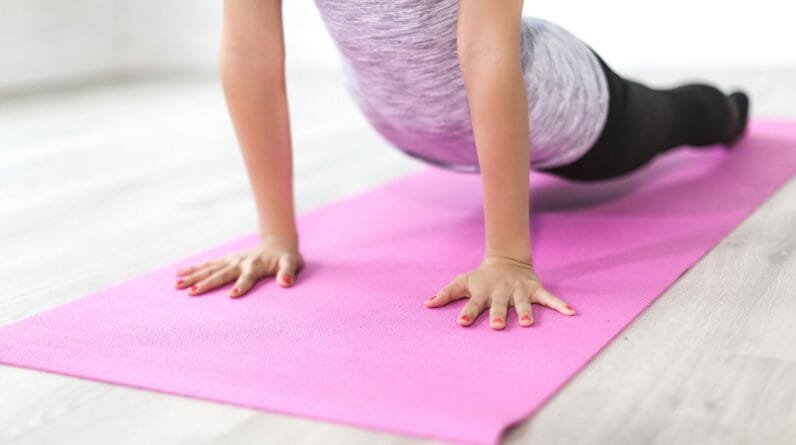
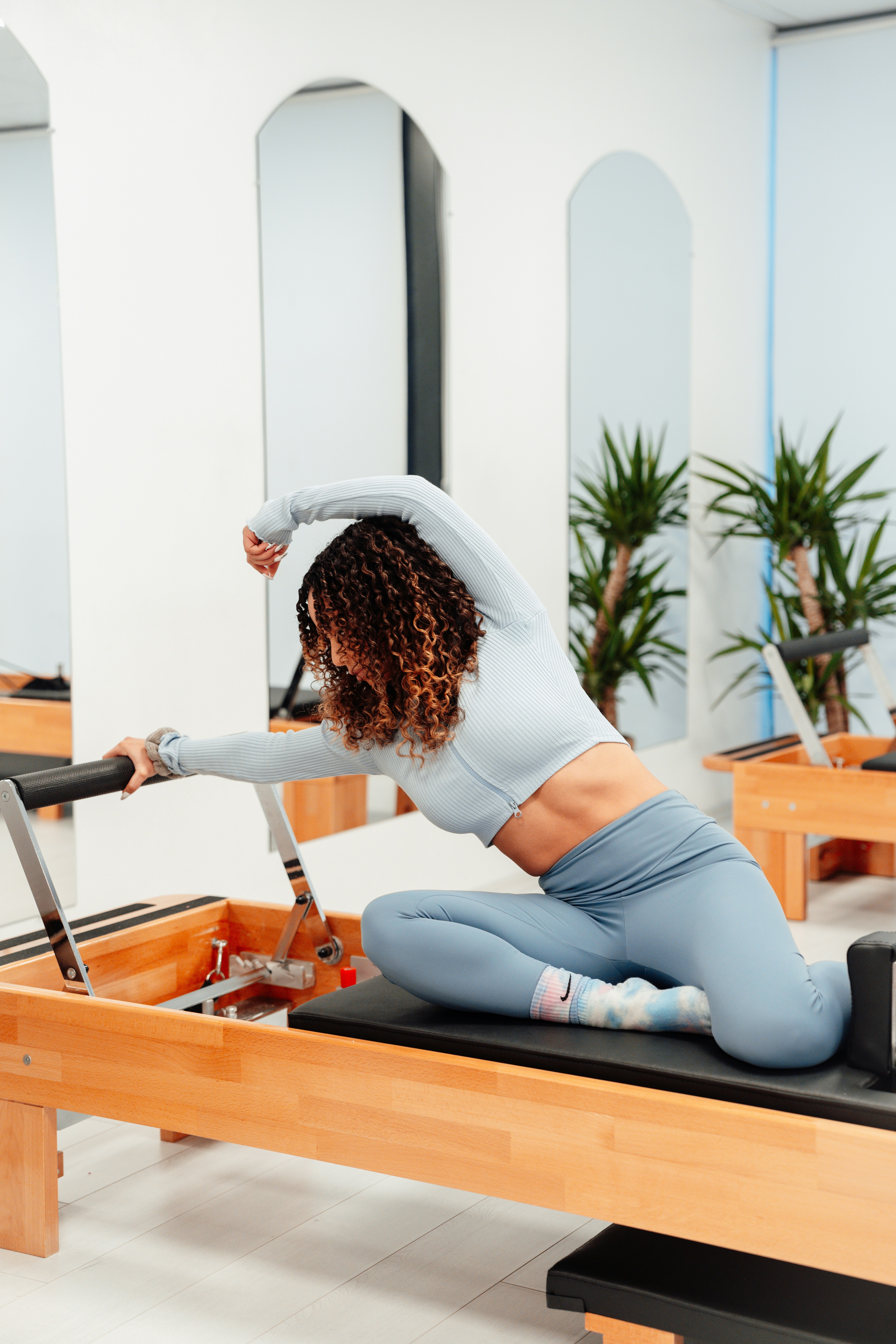
Minimal equipment is effective: a sturdy chair, resistance bands, light dumbbells, and a non-slip mat serve most needs. A clutter-free space with good lighting and a stable surface reduces the risk of trips and falls.
This image is property of images.unsplash.com.
Warm-up: the foundation for safe sessions
A proper warm-up increases blood flow, raises tissue temperature, and primes the nervous system for movement. A simple five- to ten-minute routine that includes marching or step-touch, shoulder rolls, and gentle hip circles prepares the body for exercise.
Example warm-up sequence
A short, progressive sequence helps transition into the main work. He or she can perform 30 seconds each of marching in place, arm circles, torso twists, hip hinges (bodyweight), and ankle mobility drills.
Types of low-impact strength exercises
Low-impact strength exercises can be categorized into bodyweight movements, resistance band work, machine-assisted exercises, and light free-weight actions. Each category provides scalable options that prioritize joint comfort and muscular engagement.
Bodyweight exercises
Bodyweight moves are versatile and require minimal equipment. Squats, lunges to a chair, wall push-ups, and glute bridges teach movement patterns and build foundational strength.
Resistance bands provide variable tension and are gentle on joints while allowing for progressive overload. He or she can use bands for rows, banded squats, overhead presses, and lateral walks to target different muscle groups.
Chair- or bench-assisted exercises
Chairs provide stability and safety for beginners, enabling controlled loading and easier progression. Seated leg extensions, sit-to-stand, and incline push-ups from a bench reduce demands while reinforcing technique.
Light free-weight exercises
Using light dumbbells introduces controlled resistance that supports muscle growth and bone health. He or she might perform dumbbell deadlifts, single-arm rows, and farmer carries to challenge strength without abrupt impact.
Mobility-focused exercises and their value
Mobility work emphasizes joint range of motion and movement control rather than strength. It includes active stretching, controlled articular rotations, and dynamic movements that improve daily function and reduce stiffness.
Daily mobility drills
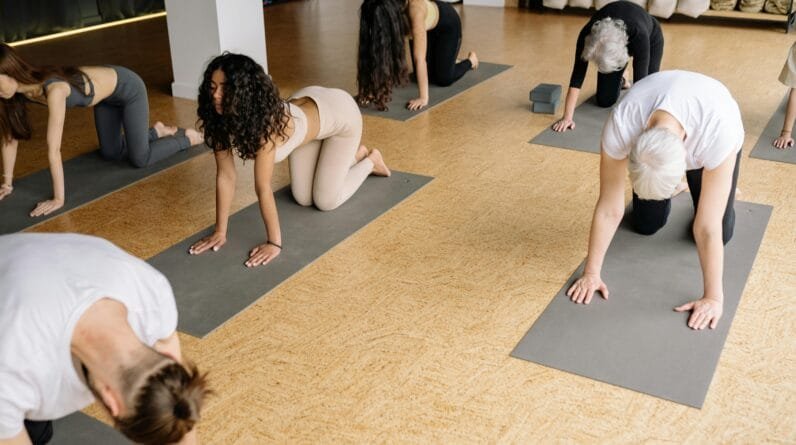
Daily mobility drills maintain and extend joint range of motion over time. Examples include shoulder pass-throughs with a band, hip CARs (controlled articular rotations), cat–cow spinal mobilizations, and ankle circles.
Balance and proprioception exercises
Balance exercises reduce fall risk and enhance movement confidence, which is especially important with aging. Simple progressions such as single-leg stands, tandem walking, and heel-to-toe balance help maintain proprioceptive ability.
Breathing, posture, and core engagement
Proper breathing and posture optimization ensure safety and efficiency during movements. He or she should breathe naturally—exhaling on effort—and focus on gentle core engagement to protect the spine during exercises.
Sample exercise table: movements, targets, equipment, and guidelines
The table below summarizes recommended low-impact exercises, the primary muscles targeted, required equipment, suggested sets and repetitions, and key form notes. This provides a quick reference to choose exercises based on individual goals.
| Exercise | Primary targets | Equipment | Sets × Reps | Key form notes |
|---|---|---|---|---|
| Chair sit-to-stand | Quads, glutes | Chair | 2–3 × 8–15 | Sit to edge, press through heels, avoid forward knee collapse |
| Glute bridge | Glutes, hamstrings, lumbar | Mat | 2–3 × 10–15 | Drive hips up, squeeze glutes, avoid hyperextending lower back |
| Wall push-up | Chest, triceps, shoulders | Wall | 2–3 × 8–15 | Maintain straight line from head to hips, control descent |
| Resistance band row | Upper back, biceps | Band | 2–3 × 10–15 | Pull elbows back, squeeze scapulae, avoid shrugging shoulders |
| Seated overhead press (band or DB) | Shoulders, triceps | Band or light dumbbells | 2–3 × 8–12 | Press overhead without locking elbows, stabilize core |
| Split-stance RDL (single-leg hinge) | Hamstrings, glutes, balance | Bodyweight or light DB | 2–3 × 8–12 each side | Hinge at hips, keep spine neutral, slight knee bend |
| Step-up (low step) | Quads, glutes | Low step or stair | 2–3 × 8–12 each leg | Step through the heel, control descent, use handrails if needed |
| Lateral band walk | Glute medius, hip stabilizers | Band | 2–3 × 10–20 steps each direction | Keep tension in band, maintain half-squat posture |
| Seated leg extension | Quads | Chair | 2–3 × 10–15 | Extend knee fully without locking, control return |
| Standing calf raise | Calves | Bodyweight | 2–3 × 10–20 | Rise up slowly, control descent, use support if necessary |
How to structure a weekly program
A balanced weekly program combines strength, mobility, and balance training with adequate recovery. Beginners over 40 often benefit from three full-body strength sessions per week, two short mobility/balance sessions, and one or two rest or light activity days.
Example weekly schedule
A clear schedule helps maintain consistency and recovery. For instance: Strength sessions on Monday, Wednesday, Friday; mobility and balance on Tuesday and Thursday; active recovery (walking, gardening) on Saturday; rest on Sunday.
This image is property of images.unsplash.com.
Sample 8-week beginner plan (progressive)
A progressive 8-week plan allows gradual increases in intensity and complexity. He or she should follow this template, adjusting based on fitness level and recovery.
Weeks 1–2: Foundation phase
Focus on form, low volume, and mobility. Perform 2 sets of 8–12 reps for each exercise, concentrate on control, and include daily mobility drills.
Weeks 3–4: Build phase
Increase to 3 sets and slightly higher resistance. Add gentle balance challenges, such as single-leg stands for 10–20 seconds each side, and continue mobility work.
Weeks 5–6: Intensify phase
Introduce small progressions: a longer range step-up, slightly heavier band or dumbbell, more challenging push-up variation (incline to higher load). Maintain 3 sets and increase reps to 10–15 where appropriate.
Weeks 7–8: Consolidation and test
Test improvements with simple measures: a timed sit-to-stand test, single-leg balance duration, or step-up height. Adjust future programming based on results and comfort.
Detailed exercise descriptions and coaching tips
Clear technical cues promote safety and effectiveness for each exercise. The list below presents concise coaching tips and common errors to avoid.
Chair sit-to-stand (progression for squats)
Start seated and stand to full hip extension, then sit back down with control. Cue sitting back onto the chair rather than dropping forward; ensure knees track over toes; use arms less as strength improves.
Glute bridge
Lie on the back with knees bent and feet hip-width apart, lift hips until a straight line from shoulders to knees. Cue to press through heels, avoid arching the lower back, and hold at the top for 1–2 seconds.
Wall push-up
Stand a comfortable distance from a wall and perform a push-up against it, maintaining a straight body line. Cue to keep shoulders down, engage the core, and control the descent; move feet closer to increase difficulty.
Resistance band row
Secure the band at chest height, pull hands toward the ribcage while squeezing shoulder blades together. Cue to initiate movement with the elbows, avoid forward head position, and keep shoulders relaxed.
Sit tall and press light dumbbells or a band overhead without locking elbows. Cue to keep ribs down, inhale before pressing, and exhale during the press; avoid overarching the lower back.
Split-stance Romanian deadlift (RDL)
Stand in a staggered stance and hinge at the hips while maintaining balance and spinal neutrality. Cue to push the hips back, keep a soft front knee, and avoid rounding the spine.
Step-up
Use a low step and step up with control, driving through the heel and lowering slowly. Cue to keep the torso upright, avoid pushing off the back leg, and place the whole foot on the step.
Lateral band walk
Place a band around the thighs or ankles and take controlled lateral steps. Cue to maintain constant tension in the band, keep knees soft, and avoid leaning to one side.
Standing calf raise
With support if needed, rise onto the toes and lower slowly. Cue to use full range of motion, avoid bouncing, and perform the movement in a controlled tempo.
Progressions and regressions
Each exercise can be modified to match current ability or increase challenge. Regressions decrease range or load (e.g., from a full squat to a box squat), while progressions add resistance, range, or complexity (e.g., from wall push-up to incline then floor push-up).
Monitoring intensity and recovery
Perceived exertion and the ability to speak during exercise are practical intensity gauges. He or she should aim for moderate intensity where conversation is possible but speaking full sentences is slightly challenging. Rest and quality sleep are critical to recovery, and soreness that limits daily activities may indicate the need to reduce intensity.
Pain, soreness, and when to stop
Distinguish between muscle soreness and sharp joint pain. Mild, delayed muscle soreness is normal, but sharp, sudden, or worsening joint pain requires stopping and possibly medical review. He or she should modify or skip movements that provoke joint flare-ups.
Nutrition basics to support strength and mobility gains
Adequate protein, hydration, and a balanced diet support muscle repair and joint health. Older beginners benefit from slightly higher protein intake distributed across meals, calcium and vitamin D for bone health, and healthy fats for inflammation management.
Rest, sleep, and stress management
Recovery includes proper sleep duration and stress control, both of which influence hormonal balance and tissue repair. Relaxation strategies—such as light stretching, breathing exercises, or short walks—can assist in recovery and reduce stiffness.
This image is property of images.unsplash.com.
Mobility versus flexibility: what is the difference?
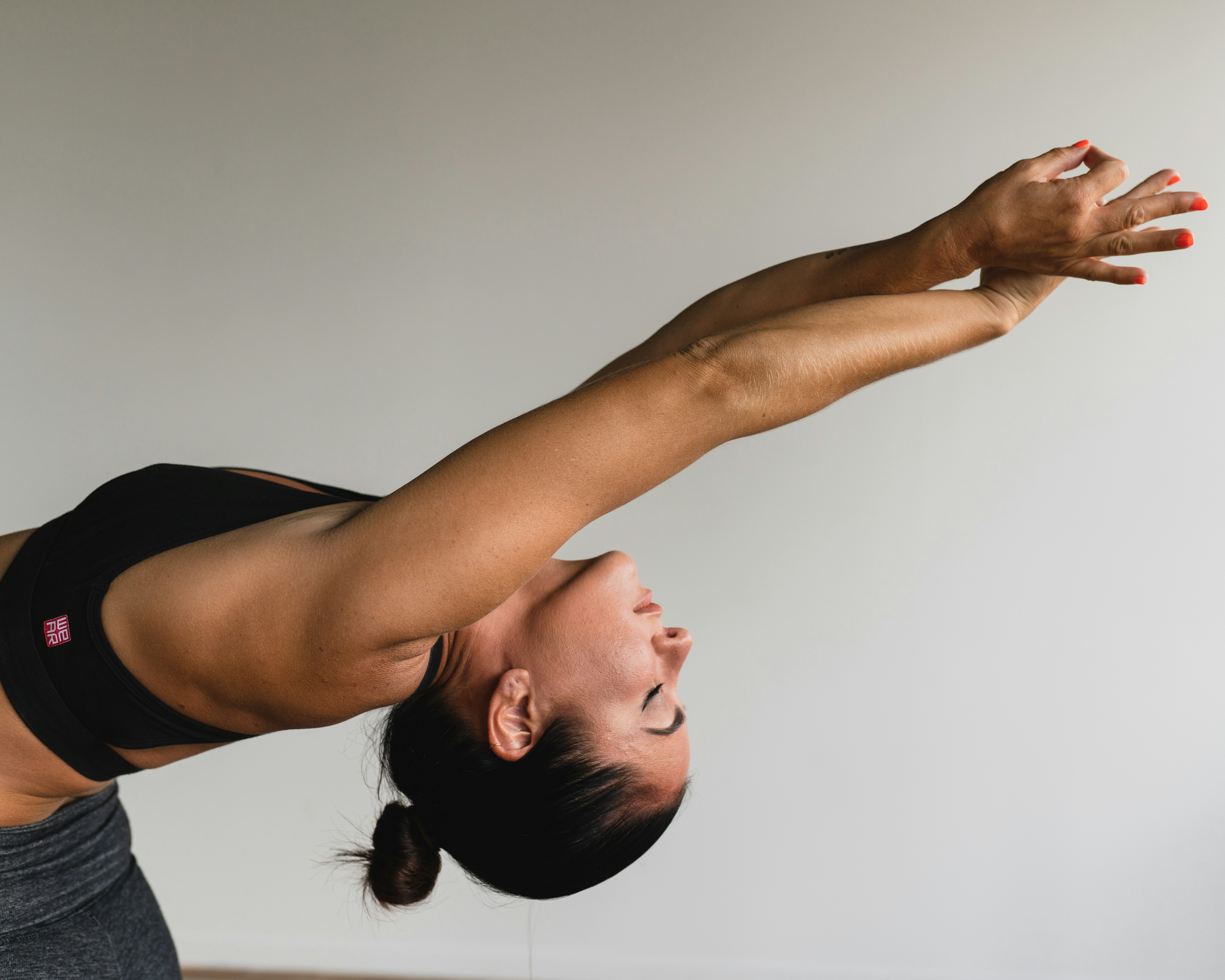
Flexibility refers to muscle length, while mobility refers to joint range of motion and the control to move through that range. Training both is beneficial: mobility drills improve joint health and movement patterns, and flexibility work maintains tissue extensibility.
Common mistakes and how to avoid them
Beginners often use momentum, neglect warm-ups, or progress too quickly. He or she should prioritize slow, controlled movement, maintain consistent technique, and increase load gradually to minimize injury risk.
Adapting exercises for common conditions
Many exercises can be adapted for arthritis, knee issues, or low back discomfort by changing range of motion, support level, or load. For knee pain, reducing squat depth or using a box may help; for low back issues, focus on hip-hinge patterns and core stabilization.
Tracking progress and setting realistic goals
Simple measures—such as number of sit-to-stands in 30 seconds, single-leg balance duration, or the amount of band resistance used—reflect improvements in strength and mobility. He or she should set short-term performance goals (4–8 weeks) and longer-term functional goals (3–6 months).
Examples of functional tests to measure improvement
Functional tests offer meaningful feedback on daily-life capabilities. Examples include a timed up-and-go, a 30-second chair stand test, and a single-leg balance hold; consistent improvements indicate effective programming.
Safety tips for training at home
An uncluttered space, proper footwear, and an emergency plan are important for unsupervised workouts. He or she should have a phone nearby, use stable chairs or blocks for support, and avoid slippery surfaces when performing balance exercises.
Recovery modalities and when to use them
Active recovery (walking, light cycling), foam rolling, gentle stretching, and heat or cold application can assist recovery. He or she should use these modalities to reduce soreness, improve circulation, and maintain mobility between sessions.
Frequently asked questions
A short FAQ addresses typical concerns that beginners might have as they start low-impact training.
Is it too late to start at 40 or older?
It is never too late to begin; muscle responds to resistance training at any age, and improvements in strength and mobility can occur within weeks. Consistent adherence yields the best long-term benefits.
How long before noticeable changes occur?
Beginners often notice improved movement and reduced stiffness within two to four weeks; measurable strength gains typically emerge after 6–12 weeks with regular training. Daily mobility work may yield immediate sensations of ease.
Can low-impact exercise improve bone health?
Yes. Weight-bearing and resistance activities stimulate bone remodeling, which helps maintain or improve bone density. Consistent resistance training combined with adequate nutrition supports bone health.
How should pain be managed during exercise?
Pain that is sharp, localized, or increasing is a sign to stop and reassess the movement or seek medical advice. Mild soreness is normal, but persistent joint pain that limits function should be evaluated.
Case example: a beginner over 40 starting safely
A practical example illustrates how a person might begin. A 48-year-old who is sedentary could begin with brief daily walks, two weekly full-body strength sessions using a chair and resistance band, daily mobility work, and gradual progression over 8–12 weeks. Monitoring soreness and sleep quality helps inform adjustments.
Long-term adherence strategies
Sustainable habits come from small, enjoyable sessions, social support, and variety. He or she should choose movements that feel rewarding, set modest weekly goals, and celebrate functional milestones—such as easier stair climbing or increased confidence in balance.
When to consult a professional
A physical therapist, certified trainer, or physician can help tailor exercises for specific injuries, chronic conditions, or complex medical histories. Professional input is especially useful when pain limits movement or recovery stalls.
Summary and final encouragement
Low-impact strength and mobility training provides a practical and effective path for beginners over 40 to build functional strength, preserve joint health, and improve movement confidence. With gradual progressions, attention to form, and regular mobility practice, he or she can achieve meaningful gains that support everyday life.
Recommended quick-start checklist
A short checklist helps translate guidance into action for a safe start.
- Obtain medical clearance if there are major health concerns.
- Prepare a small, safe exercise area with a chair, resistance band, and mat.
- Begin with a 5–10 minute warm-up and daily mobility drills.
- Perform full-body strength sessions 2–3 times per week, focusing on form.
- Track simple performance measures and increase load gradually.
- Prioritize sleep, nutrition, and recovery to support gains.
- Seek professional guidance for pain or complex conditions.
This article offers a friendly, practical roadmap to begin low-impact training, emphasizing steady progress, joint protection, and improved everyday function. With consistent, sensible practice, beginners over 40 can enjoy stronger muscles, better mobility, and greater confidence in daily movement.