Simple Exercise Routine Without Gym Equipment

0 Reviews

Write a Review

Simple exercise routine without gym equipment

Simple exercise routine without gym equipment. I’ve written this routine so I can follow a clear plan whether I’m at home, traveling, or short on time. I’ll cover why bodyweight routines work, how to get started safely, warm-ups, sample workouts for beginner to advanced levels, progressions, and recovery tips. I aim to make it practical and easy to personalize.

Why a bodyweight exercise routine works

I choose bodyweight routines because they remove common barriers like gym access and expensive equipment. My body adapts to progressive challenges, and I can train strength, endurance, mobility, and coordination with simple movements.

I’ll also point out the efficiency of combining compound movements and interval-style cardio for time-efficient results. With consistent effort, bodyweight training can produce significant changes in fitness and body composition.

Benefits of training without equipment

I get convenience, low cost, and scalability. I can perform sessions anywhere and adapt difficulty by changing leverage, range of motion, tempo, or volume.

I also benefit from improved movement patterns and mobility since many bodyweight exercises require full-range control and balance. These are transferable to daily life and reduce injury risk.

Limitations and how I handle them

I recognize that absolute maximal strength (e.g., very heavy squats) is harder to achieve without added weight. I compensate by increasing repetitions, using unilateral variations, slowing eccentric phases, and adding isometric holds.

I always keep in mind that the goals—whether fat loss, increased stamina, or core strength—determine how I structure the routine.

Getting started: mindset, goals, and safety

I set realistic and specific goals before I begin. That might be “complete three 30-minute sessions per week for 12 weeks” or “do 10 strict push-ups within eight weeks.”

I also perform a simple movement assessment—squatting, lunging, hinging, pushing, pulling (or pulling substitute), and basic carries or holds—to identify limitations. If I’m unsure about any pain, I consult a professional.

Setting realistic goals

I think in terms of process goals (consistency, session count) and performance goals (increased reps, harder progressions). Short-term goals keep me motivated and long-term goals help shape my plan.

I write my goals down and schedule workouts into my calendar as non-negotiable commitments. That accountability helps me stay consistent.

Safety and common precautions

I always start conservatively if I’m new or returning from injury. Pain (sharp, shooting, or joint-surface pain) is a signal to stop and reassess; muscular soreness is normal.

I also pay attention to posture and breathing. I prioritize form over reps and gradually increase intensity to avoid setbacks.

Looking for a simple exercise routine without gym equipment that fits into my busy life and still helps me get stronger, leaner, and more energetic?

Simple exercise routine without gym equipment

This image is property of images.pexels.com.

Minimal space and optional small items

I need only about 2 x 2 meters of clear floor space to do most exercises. Optional items I like to have are a mat, a sturdy chair, and a resistance band for progression, though they’re not required.

I use household items occasionally—backpack for added load, towels for sliders—if I want extra challenge without traditional equipment.

Warm-up: how I prepare my body

I always begin with a 5–10 minute warm-up that raises heart rate, increases body temperature, and mobilizes joints. That reduces injury risk and improves performance during the workout.

I use a dynamic warm-up rather than static stretching before intense sessions. Static holds are better saved for the cooldown.

Sample dynamic warm-up (6–8 minutes)

I follow a simple sequence I can repeat:

  • 60 seconds of marching or light jogging in place to raise heart rate.

  • 6–8 leg swings per leg (front-to-back and side-to-side) to mobilize hips.

  • 8–10 hip circles each direction to open the pelvis.

  • 8–10 arm circles and shoulder rolls to prepare the upper body.

  • 6–10 glute bridges to prime posterior chain activation.

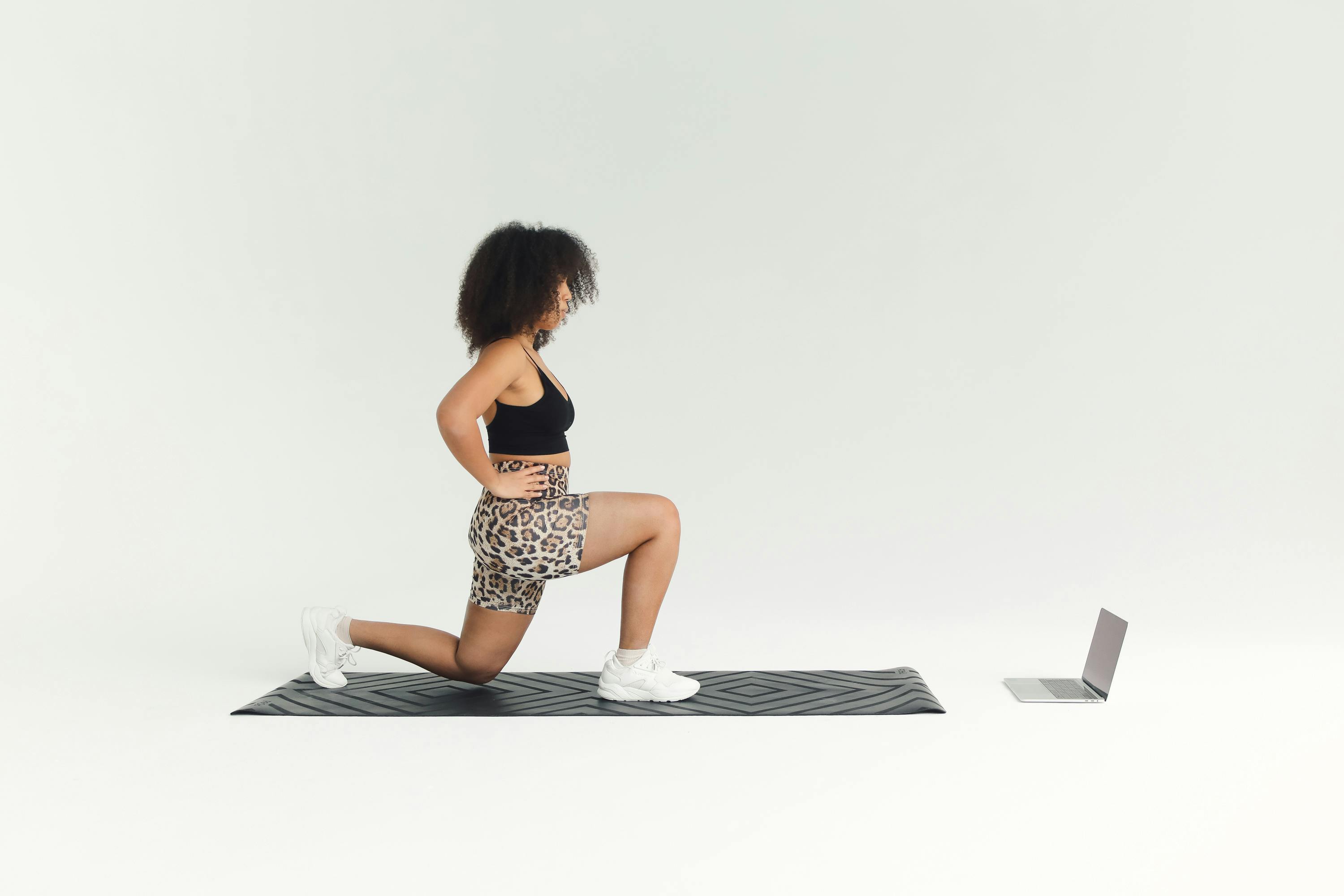
  • 5–8 walking lunges (or stationary lunges) per leg for dynamic hip flexor and quad mobility.

I rarely skip the warm-up because it noticeably improves my movement quality.

Structuring the routine

I organize workouts by frequency, session length, and focus (strength, cardio, mobility). Below are three templates for different experience levels. Each template includes a weekly breakdown, session structure, and progression tips.

I recommend starting with the level that matches my current fitness and advancing when sessions feel easier and I can complete all sets with good form.

How I structure each session

I typically divide sessions into:

  • Warm-up (5–10 minutes)

  • Strength or skill work (20–30 minutes)

  • Conditioning or cardio finisher (5–15 minutes)

  • Cooldown and mobility (5–10 minutes)

I keep sessions between 25–60 minutes depending on time available and goals.

Beginner routine: building a base

I use the beginner plan to establish consistency, learn movement patterns, and build a stamina base. I do 3 sessions per week with rest or light activity days between workouts.

Table: Beginner weekly plan

Day

Focus

Duration

Monday

Full-body strength (emphasis on form)

30–40 min

Wednesday

Conditioning + core

20–30 min

Friday

Full-body strength (slightly harder)

30–40 min

Other days

Active recovery or mobility (walking, stretching)

20–30 min

I keep progression modest—adding a few reps or a set each week, or slightly reducing rest.

Beginner session example (Full-body strength)

I perform the following circuit-style, 3 rounds, resting 60–90 seconds between rounds:

  • Bodyweight squat — 10–15 reps

  • Incline (hands-on-knee) or wall push-up — 8–12 reps

  • Glute bridge — 10–15 reps

  • Reverse lunge — 6–8 reps per leg

  • Plank — 20–40 seconds

I adjust reps based on how I feel. If I can do the top-end reps easily with perfect form, I increase difficulty.

Beginner conditioning session example

I use intervals to boost heart rate and burn calories. I do 20 minutes total:

  • 30 seconds high effort (jumping jacks, high knees, or brisk stairs)

  • 30–60 seconds easy or rest

  • Repeat for 12–15 rounds

I finish with 5–10 minutes of core: dead bugs, bird dogs, and side planks.

Intermediate routine: progressive challenge

I use the intermediate plan once my baseline strength and endurance improve. I train 4 sessions weekly, splitting some days into upper and lower or strength and conditioning.

Table: Intermediate weekly plan

Day

Focus

Duration

Monday

Lower-body strength + core

35–45 min

Tuesday

Conditioning intervals

20–30 min

Thursday

Upper-body strength + core

35–45 min

Saturday

Full-body circuit

30–40 min

Other days

Active recovery

20–30 min

I increase difficulty with unilateral movements, tempo changes, and brief rest reductions.

Intermediate lower-body session

I structure this for strength and control:

  • Single-leg Romanian deadlift (bodyweight or light hold) — 8–10 per leg

  • Split squat — 8–12 per leg

  • Pistol progression (assisted) or step-ups — 6–8 per leg

  • Glute bridge march — 12–16 total

  • Plank variations with limb lifts — 30–60 seconds

I focus on slow, controlled eccentric phases and full range.

Intermediate upper-body session

I emphasize pushing, horizontal pulling substitute (rows with towel under door or table rows), and vertical pressing alternatives:

  • Decline push-up (feet elevated) — 8–12 reps

  • Australian row (under a sturdy table) or band row — 8–12 reps

  • Pike push-up (for vertical pressing) — 6–10 reps

  • Triceps dips (on chair) — 8–12 reps

  • Hollow body hold — 20–40 seconds

I substitute table rows or band rows when a pull-up bar isn’t available.

Advanced routine: higher intensity and skill work

I follow this plan when I’m comfortable with bodyweight strength and want to build higher skill or muscular endurance. I train 4–6 times per week with varied session focuses.

Table: Advanced weekly plan

Day

Focus

Duration

Monday

Strength (lower emphasis, unilateral)

45–60 min

Tuesday

HIIT or sprint intervals

20–30 min

Wednesday

Skill work (handstand, advanced calisthenics)

30–45 min

Thursday

Strength (upper emphasis)

45–60 min

Friday

Active recovery or mobility

20–40 min

Saturday

Full-body metabolic conditioning

30–45 min

Sunday

Rest

I increase intensity with more complex variations, longer sets, shorter rest, and skill practice.

Advanced strength session example

I include higher-skill and isometric holds:

  • Pistol squats — 6–8 per leg or progressions

  • One-arm push-up progressions or archer push-ups — 4–8 per side

  • Handstand hold practice against wall — accumulate 60–120 seconds

  • L-sit holds (on floor or chair) — 10–20 seconds per set, multiple sets

  • Single-leg glute bridges with elevated foot — 10–12 per leg

I prioritize recovery and mobility more as volume increases.

Simple exercise routine without gym equipment

This image is property of images.pexels.com.

Exercise glossary and cues

I provide clear cues to help maintain form and reduce common errors. Table below summarizes key exercises, target muscles, and form reminders.

Table: Exercise glossary

Exercise

Primary targets

Key cues

Bodyweight squat

Quads, glutes, hamstrings

Sit back, chest up, knees track toes

Push-up (standard)

Chest, triceps, shoulders, core

Keep a straight line shoulder-to-ankle, elbows at ~45°

Glute bridge

Glutes, hamstrings, lower back

Drive hips up by squeezing glutes, avoid overextending lumbar

Reverse lunge

Quads, glutes, balance

Keep torso upright, step back and lower knee near floor

Plank

Core, shoulders

Neutral spine, ribs down, squeeze glutes and quads

Pike push-up

Shoulders, triceps, upper chest

Hips high, lower crown of head to the floor with control

Australian row (table row)

Upper back, biceps

Pull chest to edge, retract shoulder blades, maintain straight body

Single-leg Romanian deadlift (bodyweight)

Hamstrings, glutes

Hinge from hips, keep slight bend in standing knee, reach chest forward

L-sit

Core, hip flexors

Legs straight, shoulders depressed, keep torso tall

I often film myself to check form and make small corrections.

Progressions and regressions: how I make exercises easier or harder

I always match exercise difficulty to my current level so I can complete quality repetitions. Below are simple ways I adjust intensity.

Ways I make an exercise easier

  • Reduce range of motion (e.g., partial push-ups before full).

  • Use assistance (hands on elevated surface, band support).

  • Slow the tempo less and rest more.

  • Decrease the number of sets or reps.

I use regressions when form breaks down or if I’m recovering from an injury.

Ways I make an exercise harder

  • Add unilateral work (single-leg or single-arm).

  • Add pauses or slow eccentrics (3–5 seconds lowering).

  • Increase volume or decrease rest periods.

  • Add isometric holds (pauses at the sticking point).

  • Add household weight (backpack, water jugs) for extra load.

I alternate progression methods to avoid plateaus.

Conditioning and cardio options without equipment

I use both steady-state and interval training depending on my goals. Intervals are efficient for fat loss and improving cardiovascular capacity; steady-state helps with recovery and endurance.

Interval options I use

  • Tabata: 20s work / 10s rest for 4 minutes (8 rounds) using burpees, mountain climbers, or high knees.

  • EMOM (every minute on the minute): perform a set number of reps each minute, rest remaining time.

  • Circuit intervals: 40s work / 20s rest across 4–6 exercises for 3–4 rounds.

I keep these sessions intense but brief—10–20 minutes—for maximal efficiency.

Steady-state options

  • Brisk walking or jogging 30–60 minutes.

  • Cycling or swimming if available.

  • Continuous bodyweight movement like a long calisthenics session at moderate intensity.

I choose steady-state when I want a lower-impact calorie burn or an active recovery day.

Mobility and flexibility: I don’t skip this

I include mobility work to support joint health and improve movement quality. Mobility sessions also reduce soreness and improve recovery.

Example cooldown and mobility routine (10 minutes)

I typically do:

  • 2–3 minutes slow walking and deep breathing.

  • 1–2 minutes hamstring and quad dynamic stretches.

  • 1–2 minutes hip flexor stretches (kneeling lunge).

  • 1–2 minutes thoracic rotations and doorway chest stretch.

  • 1–2 minutes deep breathing and child’s pose to relax.

I keep mobility frequent—3–5 times per week—especially when training intensity increases.

Simple exercise routine without gym equipment

This image is property of images.pexels.com.

Nutrition basics to support my routine

I pay attention to protein and calorie needs because results depend heavily on nutrition. I don’t prescribe specific diets here, but I share principles I follow.

Key nutrition principles I follow

  • Prioritize protein: around 0.7–1.0 grams per pound of bodyweight depending on goals and activity to support recovery and muscle maintenance.

  • Moderate calorie balance: I create a deficit for fat loss or a slight surplus for muscle gain. I track roughly rather than obsessing.

  • Hydration: I drink water throughout the day and especially around workouts.

  • Whole foods: I focus on vegetables, lean proteins, whole grains, and healthy fats most days.

I also allow flexibility—sustainable habits beat perfection.

Progress tracking and measuring results

I track consistency, performance improvements, and subjective measures like energy levels and sleep quality. Objective measures include changes in reps, reduced rest times, and body composition trends.

Simple tracking methods I use

  • Training log (paper or app) with sets, reps, and notes on form or fatigue.

  • Weekly photos or measurements every 2–4 weeks.

  • Performance benchmarks: max push-ups, plank time, or a timed circuit.

I celebrate small wins and adjust programming when progress stalls.

Common mistakes I avoid

I keep an eye out for common pitfalls so I can avoid them: rushing progress, sacrificing form for reps, training too often without enough recovery, and inconsistent scheduling.

I prefer slow, steady progress and prioritize rest; that keeps results consistent and reduces injury risk.

How I fix form errors

  • If my knees collapse during squats, I reduce depth, activate glutes, and practice hip-opening mobility.

  • If push-ups feel like shoulder-dominant, I adjust hand placement, reinforce scapular control, and regress to incline push-ups until I build strength.

  • If balance fails on single-leg work, I practice supported variations and reduce range of motion before progressing.

I use mirrors or phone recordings to self-correct.

Sample 4-week progression plan

I use a progressive increase in volume and complexity across four weeks to build strength and endurance. Below is an example plan for someone moving from beginner to early intermediate.

Table: 4-week progression overview

Week

Frequency

Focus

Progression

1

3 sessions

Build base

3 sets per exercise, conservative reps

2

3–4 sessions

Increase volume

Add 1 set or extra reps per exercise

3

4 sessions

Intensity up

Reduce rest, try harder variations

4

4 sessions

Test & consolidate

Re-test benchmarks and deload if needed

I reassess at the end of week 4 and set new targets based on how I feel and the numbers I recorded.

Frequently asked questions I get asked

I address a few common questions that I consider when designing my routine.

Can I build muscle without weights?

Yes—by increasing time under tension, using unilateral movements, slow eccentrics, and higher volume. I can also add household loads for progressive overload.

How often should I train?

I aim for 3–5 sessions per week depending on goals and recovery. Consistency is more important than frequency; I’d rather do three solid sessions consistently than five sporadic ones.

How long until I see results?

I usually notice improved energy and sleep in 1–2 weeks, better movement control in 2–4 weeks, and measurable strength or body composition changes in 6–12 weeks with consistent effort.

Troubleshooting and modifications

If I’m short on time, I compress sessions to 15–20 minutes focusing on full-body circuits. If I’m tired, I reduce intensity or switch to mobility.

I also modify for common challenges like lower-back sensitivity by prioritizing hinge mechanics, core bracing, and avoiding excessive lumbar extension.

Sample short sessions I use when strapped for time

Quick full-body 15-minute circuit (AMRAP format — as many rounds as possible in 15 minutes):

  • 10 air squats

  • 8 push-ups (modify if needed)

  • 10 alternating reverse lunges

  • 20-second plank

I pace myself to keep consistent rounds; short sessions still maintain fitness if done often.

My long-term approach and habits

I treat fitness as a long-term habit rather than a short-term fix. I focus on consistency, sleep, stress management, and small progressive overload steps.

I also vary content seasonally—more endurance in summer, more strength in autumn—so I don’t plateau mentally or physically.

Final thoughts and encouragement

I find that a simple exercise routine without gym equipment can be effective, sustainable, and enjoyable. With clear goals, consistent practice, and gradual progression I achieve meaningful results.

I encourage myself to start small, track progress, and adjust as needed. If I maintain these habits, I’ll continue to get stronger, fitter, and more confident—all without stepping into a gym.

You May Also Like