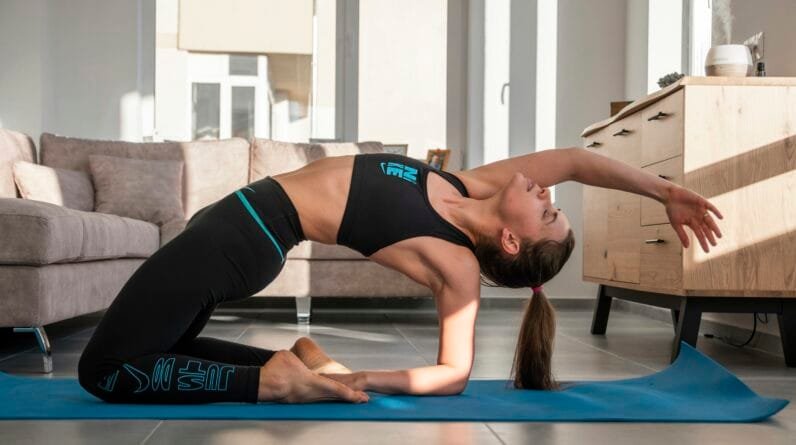
Simple Exercises for Easy Fitness
Simple Exercises for Easy Fitness. We want to make fitness approachable and sustainable for everyday life. In this article we share straightforward exercises, clear instructions, and practical plans that fit into busy schedules and small spaces.
Why choose simple exercises?
We find that simple exercises lower the barrier to starting and increase the chance we keep going. When movements are easy to learn and require little or no equipment, adherence tends to improve and progress becomes more consistent.
Benefits of keeping exercise simple
Simple routines can still produce meaningful health gains, including improved cardiovascular health, stronger muscles, better mobility, and increased energy. We also reduce the risk of injury by focusing on proper technique and appropriate progression.
Principles behind easy fitness
We base our approach on a few core principles: consistency, progression, balance, and recovery. By applying these consistently, we can build a routine that fits our lifestyle and produces lasting results.
How to get started safely
Before beginning any new exercise program, we recommend checking with a healthcare provider if we have preexisting conditions or concerns. Starting gradually, paying attention to form, and listening to our bodies are key to avoiding setbacks.
Warm-up and cool-down: small investments with big returns
Warming up prepares our muscles and nervous system for activity, while cooling down aids recovery and reduces soreness. Spend five to ten minutes before and after workouts on gentle movements and stretches to improve performance and comfort.
Simple warm-up routine
A short warm-up raises our heart rate and loosens joints without fatiguing our muscles. We can use light marching, arm circles, and dynamic leg swings to prime the body for exercise.
Simple cool-down routine
Cooling down helps the body transition back to rest and reduces blood pooling. We can finish with slow walking and static stretches targeting major muscle groups to improve flexibility and aid recovery.
Equipment-free (bodyweight) exercises
We often rely on our bodyweight to build strength and mobility, because these exercises are accessible and adaptable. Bodyweight movements can be performed anywhere and scaled to match our current fitness level.
Squats
Squats strengthen the legs and hips and are foundational for daily activities. We can perform regular squats with feet shoulder-width apart, pushing our hips back and keeping our chest lifted.
- How to: Sit hips back and bend knees as if lowering to a chair. Keep weight in the heels and knees in line with toes. Return to standing.
- Reps/sets: 2–4 sets of 8–15 reps.
- Modifications: Use a chair for box squats for more support; progress by adding tempo, deeper range, or single-leg variations.
Push-ups
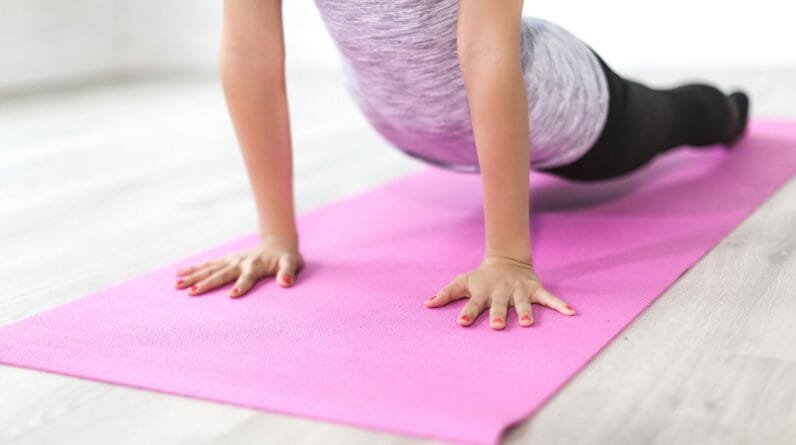
Push-ups build upper-body and core strength while teaching full-body tension. We can start on our knees or against a wall if full push-ups are too challenging.
- How to: From a plank position, lower chest toward the ground while keeping a straight line from head to heels. Push back up.
- Reps/sets: 2–4 sets of 6–15 reps or as many quality reps as possible.
- Modifications: Wall push-ups, incline push-ups (hands on a bench), knee push-ups, full push-ups, or decline push-ups for more intensity.
Glute bridges
Glute bridges activate the posterior chain and support lower-back health. These are excellent for people who sit a lot and want to strengthen hip extensors.
- How to: Lie on our back with knees bent, feet flat. Lift hips upward until the body forms a straight line from knees to shoulders. Lower with control.
- Reps/sets: 2–4 sets of 10–20 reps.
- Modifications: Single-leg bridge for more challenge; march bridges for added core demand.
Plank
Planks develop core stability and endurance while engaging multiple muscle groups. We can vary duration and position to progress over time.
- How to: Hold a straight line from head to heels on elbows and toes (or knees for regressions). Breathe steadily and avoid sagging hips.
- Duration: 20–60 seconds per set, 2–4 sets.
- Modifications: Knee plank, side plank, or adding leg lifts for advanced progression.
Lunges
Lunges build unilateral leg strength and improve balance and coordination. We can perform forward, reverse, or walking lunges based on space and comfort.
- How to: Step forward (or backward for reverse lunges) and lower until both knees are near 90 degrees. Keep torso upright and knee aligned.
- Reps/sets: 2–4 sets of 8–15 reps per leg.
- Modifications: Hold onto support for balance, reduce range of motion, or progress to jumping lunges for power work.
Low-equipment strength options
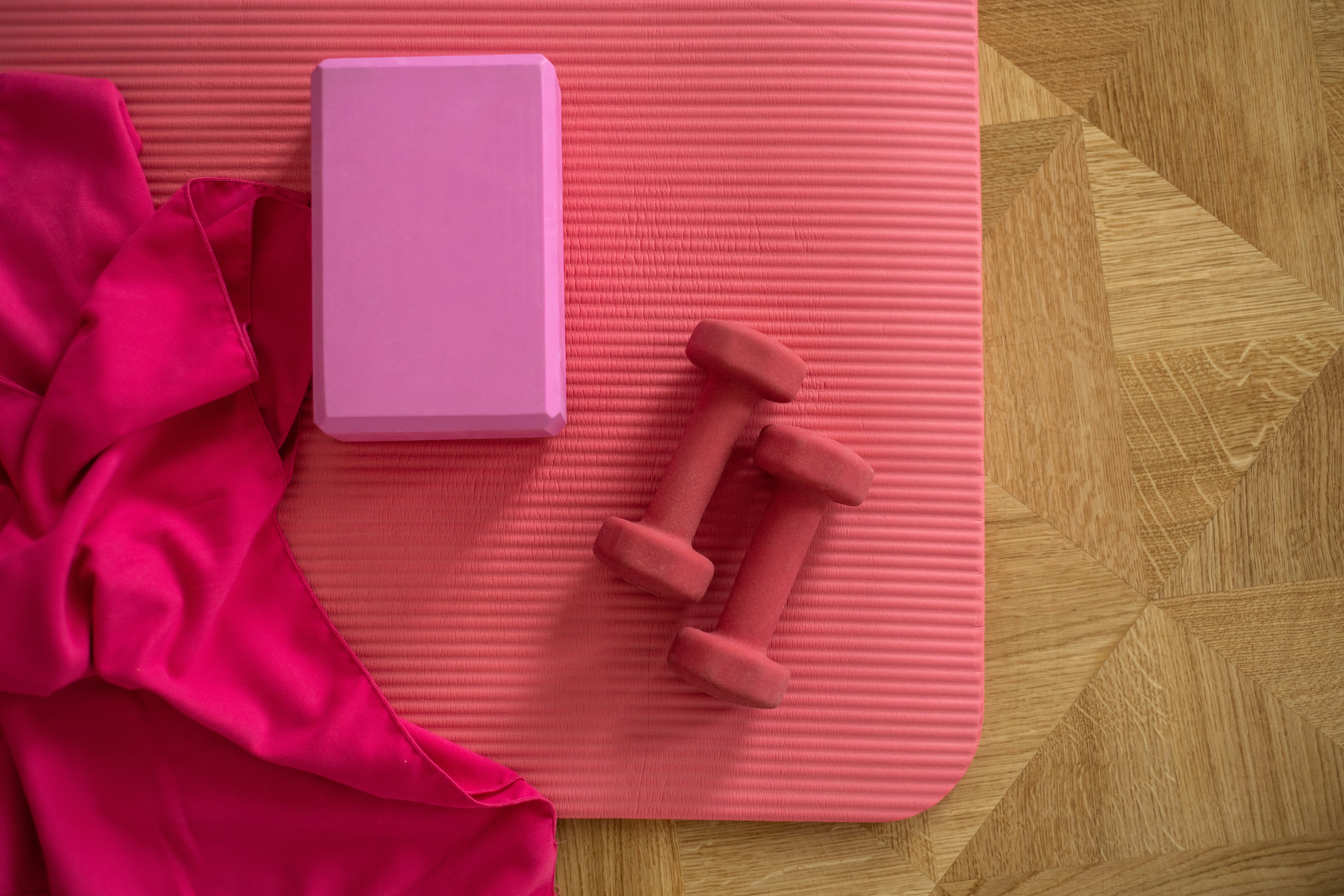
Using minimal equipment like resistance bands, dumbbells, or household items can increase strength gains while remaining simple. These tools are inexpensive and portable.
Are we ready to make fitness simple, consistent, and enjoyable?

This image is property of images.unsplash.com.
Resistance band rows
Band rows target the upper back and help counteract forward shoulder posture. They’re effective and easy to set up at home.
- How to: Anchor the band at chest height or hold it under feet. Pull the band toward our ribcage while squeezing shoulder blades together. Control on the return.
- Reps/sets: 2–4 sets of 8–15 reps.
- Modifications: Change band tension or grip width to adjust difficulty.
Overhead press (dumbbells or bands)
The overhead press strengthens shoulders and improves upper-body stability. We can use light dumbbells, bands, or even water bottles.
- How to: Press weights or bands overhead from shoulder height while maintaining a braced core and neutral spine. Avoid arching the lower back.
- Reps/sets: 2–4 sets of 6–12 reps.
- Modifications: Seated press for extra lumbar support; single-arm press for unilateral control.
Deadlift variations (with dumbbells or kettlebells)
Deadlifts teach hip hinge mechanics and strengthen the posterior chain, improving posture and lifting capacity in daily tasks. Focus on technique over heavy loads.
- How to: Hinge at the hips with a slight knee bend, keep a flat back, and pull weight along the legs to stand. Lower with control.
- Reps/sets: 2–4 sets of 6–12 reps.
- Modifications: Romanian deadlift (lighter knee bend) or single-leg RDL for balance and unilateral strength.
This image is property of images.unsplash.com.
Simple cardio exercises for busy schedules
Cardiovascular fitness supports heart health and mood. Short, regular bursts of activity are often enough to improve fitness without long workouts.
Brisk walking
Walking is the most accessible form of cardio and can be scaled by pace, incline, or duration. We can integrate walking into daily routines for steady progress.
- How to: Walk at a pace that elevates heart rate but still allows conversation, aiming for consistent movement.
- Duration: 20–60 minutes depending on goals; shorter 10–15 minute walks are valuable when time is limited.
- Modifications: Add intervals of faster walking or incline to increase intensity.
Jumping jacks
Jumping jacks are a simple, whole-body cardio move that requires no equipment. They are perfect as a warm-up or a short interval.
- How to: Jump feet out while raising arms overhead, then return to start in a rhythmic pattern.
- Duration: Use sets of 30–60 seconds or 15–30 reps in interval formats.
- Modifications: Low-impact step jacks (stepping out one foot at a time) reduce joint stress.
Marching or running in place
These moves raise heart rate in confined spaces and can be done while watching TV or during breaks. They are effective micro-sessions for consistent activity.
- How to: Lift knees and pump arms to increase cardiovascular effort. For more intensity, increase knee height and speed.
- Duration: 30–120 seconds per set; repeat several times.
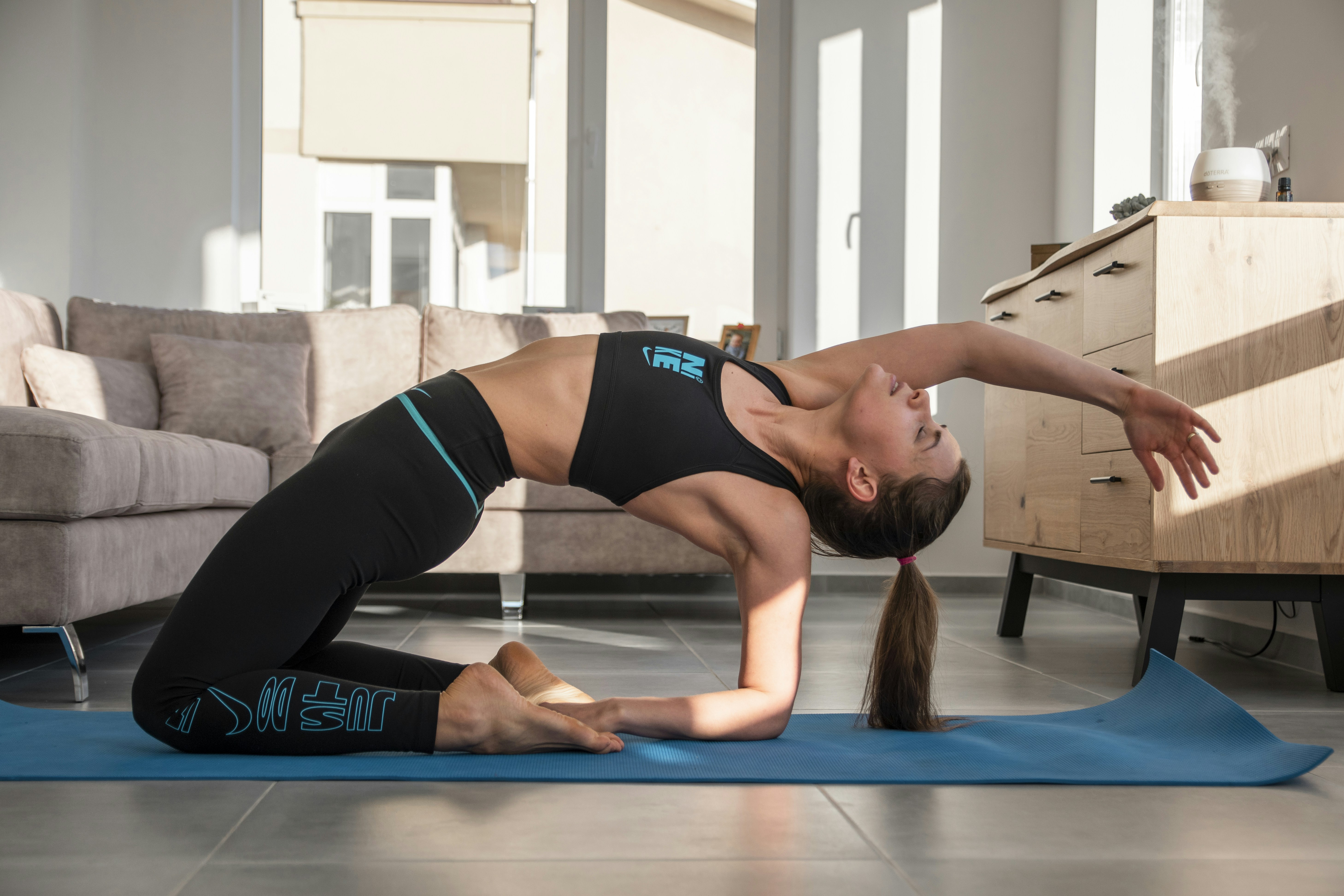
Flexibility and mobility exercises
Flexibility and mobility work supports movement quality, reduces stiffness, and helps prevent injuries. Short daily routines can yield noticeable benefits.
Hip flexor stretch
Tight hip flexors are common for people who sit frequently; stretching them helps restore full hip extension.
- How to: Kneel on one knee with the other foot forward and lunge gently forward while maintaining upright posture. Feel a stretch in the front of the hip.
- Duration: Hold 20–40 seconds per side and repeat.
Chest opener
Opening the chest counters rounded shoulders and can improve breathing and posture. We can use a doorway or clasp hands behind the back.
- How to: Stand in a doorway with arms at the sides of the frame and gently lean forward, or interlace fingers behind and lift the chest.
- Duration: Hold for 20–40 seconds, repeat 2–3 times.
Spinal twists
Gentle spinal twists relieve lower-back tension and improve thoracic mobility for turning and reaching motions.
- How to: Sit or lie on our back, bring knees to one side while keeping shoulders grounded, and breathe into the twist.
- Duration: Hold 15–30 seconds per side, repeat for comfort.
Balance and coordination exercises
Improving balance reduces fall risk and enhances functional movement for everyday tasks. We can practice short balance drills several times per week.
Single-leg stand
Standing on one leg challenges balance and builds ankle and hip stability. We can add progressions for more challenge.
- How to: Lift one foot and balance on the other with a slight bend in the knee. Use a support if needed.
- Duration: Hold 15–60 seconds per leg, 2–3 sets.
- Modifications: Close eyes, add head turns, or perform small dynamic movements.
Heel-to-toe walk
Heel-to-toe walking promotes better gait mechanics and balance. It’s easy to do in a hallway or down a sidewalk.
- How to: Walk in a straight line placing the heel of one foot directly in front of the toes of the other. Keep eyes focused ahead and arms relaxed.
- Duration: Walk 10–20 steps per set and repeat several times.
Core-strengthening exercises beyond planks
A strong core supports posture and reduces back pain. We can include several simple core moves that target different muscle groups.
Dead bug
The dead bug is a low-load core exercise that trains coordination and anti-extension strength. It’s gentle and effective for most fitness levels.
- How to: Lie on our back with arms up and knees bent at 90 degrees. Slowly lower opposite arm and leg toward the floor while keeping the lower back in contact with the ground. Return and alternate.
- Reps/sets: 2–4 sets of 8–12 reps per side.
Bird dog
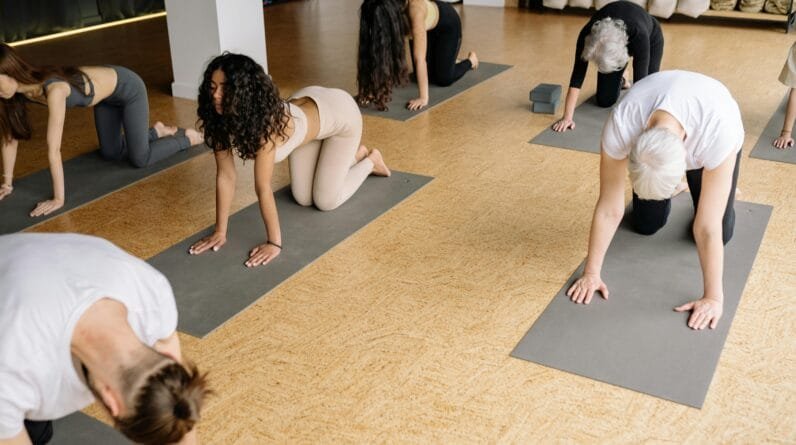
Bird dog strengthens the posterior chain and core while improving coordination and spinal stabilization.
- How to: From hands and knees, extend opposite arm and leg while maintaining a neutral spine. Hold briefly, then switch.
- Reps/sets: 2–4 sets of 8–12 reps per side.
This image is property of images.unsplash.com.
Structuring a simple workout session
A balanced session includes a warm-up, primary exercises (strength or cardio), and a cool-down. We recommend 20–45 minutes depending on goals and time availability.
Example 20-minute session (no equipment)
We can get an effective session done quickly with a mix of strength and cardio. This format suits busy days and maintains consistency.
- How to: 5-minute warm-up, 12 minutes circuit (3 rounds of 40s work/20s rest: squats, push-ups or incline push-ups, glute bridges, plank), 3-minute cool-down.
Example 40-minute session (with light equipment)
If we have a bit more time and a resistance band or dumbbells, we can increase load and variety while still keeping the session straightforward.
- How to: 5–10 min warm-up, 25–30 min strength (3 sets of 8–12 reps across 6 exercises: band rows, overhead press, deadlifts, lunges, glute bridges, planks), 5 min cool-down.
Sample weekly plan for simple fitness
A weekly plan helps structure progress and balance stress and recovery. We can vary intensity and focus across days to build consistency.
| Day | Focus | Session length | Notes |
|---|---|---|---|
| Monday | Full-body strength | 30–40 min | Moderate intensity, compound movements |
| Tuesday | Cardio + mobility | 20–30 min | Brisk walk or intervals + stretching |
| Wednesday | Active recovery | 20 min | Gentle yoga or mobility flow |
| Thursday | Strength (upper/lower split) | 30–40 min | Lighter load, emphasis on technique |
| Friday | Cardio intervals | 20–30 min | Short HIIT or continuous cardio |
| Saturday | Functional movement | 25–40 min | Balance, core, and movement patterns |
| Sunday | Rest or light activity | 15–30 min | Walk, stretching, or playtime |
We recommend listening to our bodies and adjusting volume and intensity based on recovery and schedule.
Progression: how to get stronger and fitter without complexity
Progress requires gradual increases in challenge. We can progress by adding reps, sets, slower tempo, reducing rest, increasing resistance, or introducing more advanced variations.
Practical progression strategies
Small, consistent changes such as adding 1–2 reps per week or increasing plank hold by 5–10 seconds are sustainable and reduce injury risk. We should track adjustments and celebrate incremental improvements.
When to increase difficulty
When we can complete the upper range of prescribed reps with good form for several sessions, it’s time to increase the challenge. This approach keeps training effective without guesswork.
Tracking progress simply
Simple tracking keeps motivation and accountability high. We can use a notebook, a phone app, or a calendar checkmark system to record workouts and note strength or endurance gains.
Metrics to track
Track frequency (days per week), exercises completed, total reps or time, bodyweight or resistance used, and subjective measures like energy and sleep. These give a clear picture of progress without overwhelming detail.
Nutrition basics to support fitness
Nutrition supports our workouts and recovery. Basic strategies include prioritizing protein around workouts, staying hydrated, and choosing whole foods for consistent energy.
Quick nutrition guidelines
We don’t need a complicated diet to support simple exercise; aim for a balanced plate with protein, vegetables, whole grains or starchy vegetables, and healthy fats. Regular meal timing helps sustain energy for training and daily tasks.
Recovery, sleep, and stress management
Recovery is where the body adapts to training. Adequate sleep, stress management, and active recovery days are as important as the workouts themselves.
Sleep and repair
Getting 7–9 hours of quality sleep per night supports hormonal balance and muscle repair. We can improve sleep hygiene by keeping consistent sleep times, limiting screens before bed, and creating a comfortable sleep environment.
Managing stress
Chronic stress impairs recovery and motivation. We can use breathing exercises, short walks, or gentle mobility sessions to reduce stress and maintain fitness gains.
Common mistakes and how to avoid them
We give practical advice on common pitfalls so we can stay safe and consistent while progressing.
Rushing form for heavier loads
Prioritizing form over heavier weights reduces injury risk and improves long-term gains. If we can’t maintain technique, we lower the difficulty or load until form returns.
Skipping warm-ups and cool-downs
Skipping warm-ups increases injury risk and reduces performance, while skipping cool-downs may increase soreness. Short sessions for both phases are time-efficient and beneficial.
Expecting immediate dramatic results
Fitness is a long-term pursuit. Small, consistent changes produce lasting transformations, so we avoid unrealistic expectations and focus on steady progress.
Adapting exercises for common limitations
We can modify most exercises for joint pain, mobility restrictions, or balance issues. The aim is to keep moving in a safe and effective way.
Knee pain
If knee pain limits squats or lunges, we reduce range of motion, use a chair for support, or substitute with glute bridges and hip hinge movements that stress the knees less.
Lower-back sensitivity
We avoid heavy spinal flexion and focus on hip hinge mechanics, core bracing, and low-load posterior chain work like glute bridges and Romanian deadlifts with light weights.
Limited mobility
Mobility work and gradual progression help expand ranges over time. Start with supported variations and prioritize consistency in mobility routines.
Motivation strategies to stay consistent
Sustainable fitness depends on consistency more than intensity. We share practical tips to keep motivation steady and avoid burnout.
Habit stacking
Attach exercise to an existing habit, such as doing a short mobility routine after brushing our teeth in the morning. This makes training automatic and less reliant on willpower.
Small goals and milestones
Set weekly goals (e.g., three sessions per week) and celebrate small wins like improved reps, longer plank times, or fewer aches during daily tasks.
Workout with a friend, join an online group, or keep a visible habit tracker. Adding variety in exercises and formats prevents boredom while maintaining focus on core movements.
Sample 4-week progression plan
We offer a realistic 4-week plan that gradually increases workload and builds habit. This plan suits beginners and those returning after a break.
Week 1: Build the habit
- Frequency: 3 sessions (strength/cardio/mobility)
- Focus: Learn movement patterns and prioritize form.
- Example: 20–30 min sessions with bodyweight squats, push-ups (incline if needed), glute bridges, planks, and a 10–15 minute walk.
Week 2: Increase volume slightly
- Frequency: 3–4 sessions
- Focus: Add small volume — extra set or 2–3 more reps.
- Example: 30–35 min sessions including resistance band rows and overhead press.
Week 3: Add intensity
- Frequency: 4 sessions
- Focus: Shorter rest, slight increase in load, or introduce intervals for cardio.
- Example: Circuit format, 40s work/20s rest for 3–4 rounds plus mobility.
Week 4: Solidify and test
- Frequency: 3–4 sessions
- Focus: Maintain consistency and test improvements (e.g., longer plank, more reps)
- Example: Retest a basic circuit and note improvements in reps, time, or ease of movement.
We recommend repeating cycles while increasing difficulty slowly and celebrating consistent effort.
Frequently asked questions
We answer common questions to remove friction and simplify decision-making.
How often should we exercise each week?
Aim for at least 3 sessions per week for strength and 2–3 sessions of moderate cardio, adjusted to our schedule and goals. Even short daily movement sessions are valuable.
How long until we see results?
We often notice small improvements (energy, sleep, mood) within 1–4 weeks. Strength and body composition changes typically require 6–12 weeks of consistent effort.
Do we need a gym to get fitter?
No, many effective routines require no gym. Bodyweight and minimal equipment routines can produce excellent results when done consistently with progression.
Conclusion Simple Exercises for Easy Fitness
We can achieve meaningful fitness gains with simple, consistent exercises that fit into our lives. By focusing on fundamentals — proper technique, gradual progression, and recovery — we create a sustainable program that supports health, mobility, and confidence.
We encourage us to start small, track progress, and enjoy the process of becoming more active and capable every day.