0 Reviews
Have you ever wondered whether my daily walks are doing enough to keep my muscles strong as I get older?
Walking alone does not prevent age related muscle loss — prioritize strength training for older adults
I read a Tom’s Guide piece by Jane McGuire (published 24 Jan 2026) summarizing fitness advice from Mark Harris of Mirafit, and I want to share what I learned. In short: walking is excellent for cardiovascular health and mental well‑being, but it typically won’t stop the muscle loss that accelerates after age 60. I’ll explain why strength training matters, list six practical exercises you can prioritize, and give safe, specific guidance so you can preserve strength and function as you age.
Why I say walking isn’t enough
I enjoy walking and I recommend it for aerobic fitness, mood, and joint mobility, but walking is mainly an endurance activity and usually doesn’t provide the resistance stimulus needed to build or preserve muscle mass. Most free‑pace walking doesn’t overload the muscles sufficiently to counteract age‑related muscle loss (sarcopenia), especially after 60 when declines speed up.
I want to be clear: walking is not useless. It reduces cardiovascular risk, supports joint mobility, and is an excellent habit for daily movement. However, if my goal is to maintain or increase muscle mass, bone density, and functional strength, I must add resistance work.
How muscle changes with age
Muscle mass and strength don’t stay constant across my lifespan. Starting in my 30s, I can expect gradual losses in muscle mass — typically around 3–5% per decade. After 60, that decline accelerates, and without targeted resistance training the losses become more pronounced and functionally meaningful.
These changes happen for several reasons: hormonal shifts (lowered anabolic hormones), reduced physical activity or lower intensity movement, changes in muscle fiber composition (loss of fast‑twitch fibers), and decreased protein synthesis. Understanding these mechanisms helps me appreciate why a stimulus that challenges muscle — progressive resistance — is necessary to reduce the rate of decline.
Why strength training matters for older adults
I prioritize resistance training for several important reasons that go beyond aesthetics. Strength work:
- Builds and preserves muscle mass, which keeps me stronger and more independent.
- Increases bone mineral density and lowers the risk of osteoporosis and fractures.
- Improves balance, coordination, and reaction time, reducing fall risk.
- Boosts metabolic rate and helps maintain healthy body composition.
- Improves functional tasks such as stair climbing, rising from a chair, carrying groceries, and getting up after a fall.
- Enhances insulin sensitivity and cardiovascular risk markers when combined with aerobic activity.
When I include progressive strength training in my weekly routine, I’m protecting not just how I look but how well I function and move through life.
Six simple strength exercises I prioritize
Mark Harris suggested a set of straightforward exercises that older adults can prioritize to target major muscle groups and functional movements. I use these exercises because they are practical, scalable, and safe when performed correctly. Below, I explain each movement, how to perform it, recommended sets and reps, common mistakes, and modifications.
I include a summary table first so I can quickly see the focus of each exercise.
| Exercise | Primary muscles targeted | Equipment | Suggested sets/reps |
|---|---|---|---|
| Chair sit-to-stand (squat) | Quadriceps, glutes, hamstrings | Chair (bodyweight or added weight) | 2–4 sets of 8–15 reps |
| Step-ups | Quadriceps, glutes, balance | Step/box (12–20 cm to start) | 2–4 sets of 8–12 reps per leg |
| Hip hinge / deadlift (Romanian or suitcase) | Hamstrings, glutes, lower back | Dumbbell/kettlebell or heavy object | 2–4 sets of 6–12 reps |
| Resistance band or seated row | Upper back, rear delts, biceps | Resistance band or cable row | 2–4 sets of 8–15 reps |
| Wall or incline push‑up | Chest, shoulders, triceps | Wall, bench, or sturdy surface | 2–4 sets of 6–15 reps |
| Calf raises or glute bridges | Calves (balance) / glutes (hip extension) | Bodyweight or light dumbbell | 2–4 sets of 10–20 reps |
Chair sit-to-stand (squat)
I use the chair sit‑to‑stand as a foundational lower‑body strength movement because it mirrors the everyday task of standing from a seated position. To perform it, I sit near the front of a sturdy chair, feet hip‑width, lean slightly forward, and push through my heels to stand up fully, then slowly sit back down. I control both the concentric (standing) and eccentric (sitting) phases.
- Tips: Keep weight in the heels, chest lifted, and avoid collapsing the knees inward. Start with bodyweight and add a light dumbbell or backpack for progression.
- Sets/reps: 2–4 sets of 8–15 reps, depending on fitness level.
- Modifications: Use the chair back or slightly higher seat for assistance; use a slower tempo to increase difficulty.
- Safety: Stop if you feel sharp knee pain; check your alignment or seek guidance.
Step-ups
Step‑ups are excellent for single‑leg strength, balance, and functional power — they simulate climbing stairs. I start with a low step (12–20 cm / 4–8 inches), place one foot firmly on the step, and drive through the planted foot to lift my body up until the trailing leg is straight, then step down with control.
- Tips: Focus on pushing through the heel of the working leg and maintain an upright torso. Avoid using momentum from the non‑working leg.
- Sets/reps: 2–4 sets of 8–12 reps each leg.
- Modifications: Lower step height or hold onto a rail for balance. Progress by holding weights or increasing step height.
- Safety: Ensure the step is stable; stop if you feel ankle or knee pain beyond normal muscular fatigue.
Hip hinge / Romanian deadlift (or suitcase deadlift)
The hip hinge pattern strengthens posterior chain muscles (hamstrings, glutes, lower back) that walking alone doesn’t fully challenge. I perform a Romanian deadlift by holding a dumbbell or kettlebell with both hands (or a suitcase deadlift with weight in one hand), softening the knees slightly, hinging at the hips, keeping a neutral spine, and lowering the weight while feeling a stretch across my hamstrings; then I squeeze the glutes to stand back up.
- Tips: Keep the spine neutral and the chest open; the movement should be driven by the hips moving back rather than by bending the knees like a squat.
- Sets/reps: 2–4 sets of 6–12 reps.
- Modifications: Start with bodyweight hip hinges or use a dowel against the spine as a feedback tool. Use light weights and perfect form before increasing load.
- Safety: Avoid rounding the lower back; if you have a history of back issues, consult a professional for technique coaching.
Resistance band or seated row
Strengthening the upper back counters the forward‑rounded posture many of us develop and supports safe arm and shoulder function. I anchor a resistance band or use a cable/row machine, sit upright, and pull the handles toward my torso while squeezing my shoulder blades together.
- Tips: Lead the pull with the elbows, not the hands; keep shoulders down away from ears.
- Sets/reps: 2–4 sets of 8–15 reps.
- Modifications: Use different band tensions to scale resistance; perform single‑arm rows for unilateral work.
- Safety: Keep movements controlled; avoid jerky motions if the band or cable snaps back.
Wall or incline push-ups
Push‑ups strengthen the chest, shoulders, and triceps and improve upper‑body pushing capacity for tasks like pushing doors or getting up from the ground. I start with wall push‑ups or push‑ups against an elevated surface (countertop, bench) to reduce load, and progress to lower inclines or full floor push‑ups as strength improves.
- Tips: Keep a straight line from head to hips, don’t let the hips sag, and breathe out as you push away.
- Sets/reps: 2–4 sets of 6–15 reps depending on variation.
- Modifications: Increase incline to reduce load; perform negative‑only (slow lowering) reps to build strength.
- Safety: Avoid pain in the shoulder joint; reduce range of motion if necessary.
Calf raises or glute bridges
Calf raises improve ankle strength and balance, reducing fall risk, while glute bridges strengthen hip extensors that are central to gait and posture. For calf raises, I stand with feet hip‑width, slowly rise onto my toes, then lower with control. For glute bridges, I lie on my back with knees bent and lift my hips by squeezing the glutes, then lower slowly.
- Tips: Perform both slowly with full control; add slow pauses at the top for increased challenge.
- Sets/reps: 2–4 sets of 10–20 reps.
- Modifications: Single‑leg variations increase intensity; add weight (dumbbell across hips) for bridges.
- Safety: Keep neck neutral during bridges and avoid overarching the lower back.
How to organize these exercises into a session
I usually recommend full‑body sessions two to three times per week for older adults, with at least one day of rest between strength sessions. Each session can include 4–6 exercises from the list, prioritizing major muscle groups and movement patterns (push, pull, squat, hinge, single‑leg, core). Here is a simple structure I follow:
- Warm‑up (5–10 minutes): brisk walking or marching, hip circles, shoulder rolls.
- Main strength work (30–40 minutes): 4–6 exercises, 2–4 sets each.
- Cool‑down and mobility (5–10 minutes): gentle stretching and breathing.
I adjust sets and reps depending on goals and fitness. To build or maintain strength, I often aim for 6–12 reps with heavier resistance; to build muscular endurance, 12–20 reps with lighter resistance works well.
Sample weekly plan I use or recommend
I find that a well‑rounded week mixes walking for cardiovascular and joint health with targeted strength sessions for muscle maintenance.
| Day | Activity |
|---|---|
| Monday | Strength session A (squat, row, hip hinge, calf raises) |
| Tuesday | Brisk 30–45 min walk + mobility |
| Wednesday | Rest or gentle stretching / balance practice |
| Thursday | Strength session B (step‑ups, incline push‑ups, glute bridges, band rows) |
| Friday | Active recovery walk or light cycling |
| Saturday | Optional short strength session or functional practice (e.g., carrying groceries, stairs) |
| Sunday | Rest and recovery: stretching, hydration, sleep focus |
I vary intensity across the week: one strength session can be heavier with fewer reps, the other lighter with higher reps and balance work. Adjust based on energy, recovery, and any health conditions.
Progression: how I make things harder safely
I use progressive overload — increasing challenge gradually — to continue improving muscle and strength. Ways I progress include:
- Increasing resistance (heavier dumbbells, thicker bands).
- Increasing repetitions within the target range.
- Adding an extra set.
- Slowing the tempo (e.g., 3 seconds lowering phase).
- Reducing assistance (higher to lower incline for push‑ups).
- Introducing unilateral variants (single‑leg step‑ups, single‑leg bridges).
I make one small change at a time and track progress so I can safely increase load without risking overuse.
Warm-up and mobility I recommend
A good warm‑up prepares my nervous system and muscles while decreasing injury risk. I usually do 5–10 minutes of light aerobic movement (walking, marching), joint circles, and dynamic stretches such as leg swings, ankle rolls, hip hinges with bodyweight, and shoulder openers.
I also include mobility work for hips, thoracic spine, and shoulders — areas that commonly lose range with age and can limit safe exercise performance. Spending a few minutes on mobility before and after strength training helps me move better and recover faster.
Safety notes and when I’d seek professional advice
I believe safety is the top priority. If I’m returning to exercise after a long break, recovering from injury, or have chronic health conditions (heart disease, uncontrolled hypertension, severe osteoarthritis), I seek personalized advice from a qualified professional such as a physiotherapist or certified personal trainer.
I stop any exercise that causes sharp or unusual pain and consult my doctor or trainer. Soreness is normal — especially when starting — but joint pain, numbness, dizziness, or chest pain are warning signs that need immediate attention.
Common mistakes I try to avoid
I’ve learned to watch for a few predictable mistakes:
- Relying only on walking and ignoring progressive resistance — this won’t sufficiently challenge the muscles.
- Using poor technique to lift heavier weights — I prioritize form over load.
- Progressing too quickly without adequate recovery — rest days matter.
- Neglecting the posterior chain (hamstrings, glutes, upper back) which are crucial for posture and balance.
- Fearing weights because of misconceptions about “bulking” — older adults usually gain functional strength without excessive mass.
Being mindful of these prevents setbacks and keeps training sustainable.
Equipment options and what I recommend
I suggest starting with minimal, affordable equipment that works well at home:
- Resistance bands (various tensions): versatile and low‑impact.
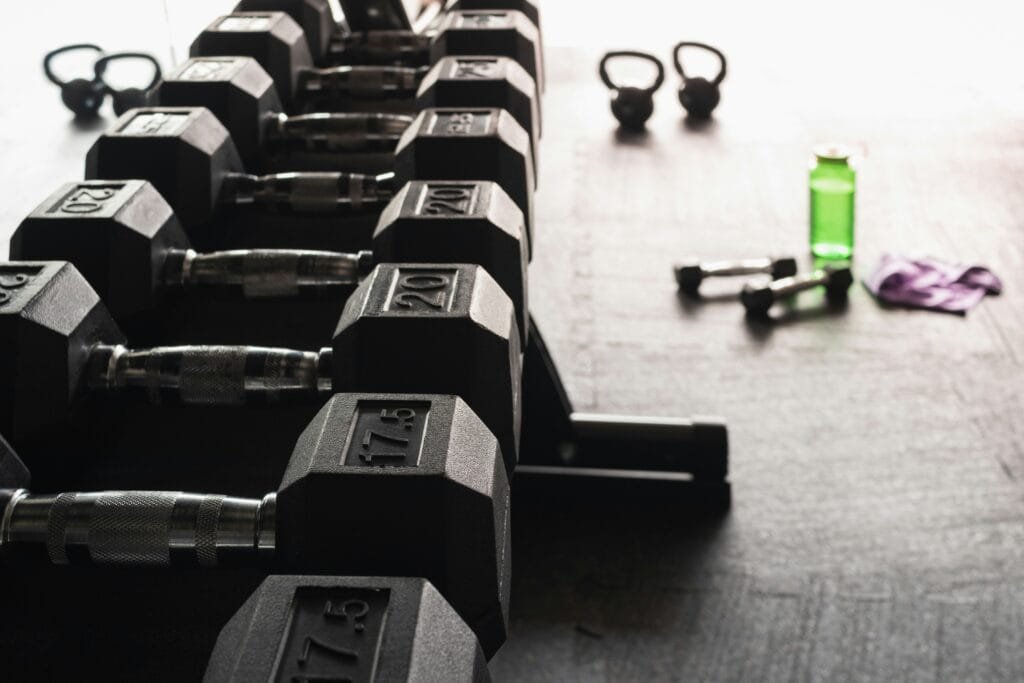
- Single adjustable dumbbell or a pair of light dumbbells.
- A sturdy chair or low bench.
- A stable step or small box for step‑ups.
- Kettlebell (optional) for hip hinge variations.
I prefer bands for beginners since they offer smooth tension and are easy on the joints, but dumbbells are very effective for progression. I recommend learning basic technique with bodyweight or a light load before moving to heavier weights.
Adjustments for common conditions
I personalize training depending on health conditions:
- Knee osteoarthritis: favor controlled sit‑to‑stand, step‑ups with lower step height, avoid deep squats initially.
- Hip issues: prioritize hip hinge variations and glute activation work with careful range of motion.
- Lower back pain: focus on hip hinge technique with neutral spine and glute strengthening; avoid heavy spinal flexion.
- Balance problems: include supported single‑leg exercises, use a rail or chair for assistance, and add balance practice separately.
- Joint replacements: follow surgeon/physio guidance on timelines and safe loads.
I encourage consulting a clinician before beginning a new program if there are existing medical issues.
Nutrition and recovery I focus on
Strength training is just one piece of the puzzle. I support my training with nutrition and recovery practices:
- Protein: I aim for a higher daily protein intake than typical older adults to support muscle protein synthesis — roughly 1.2–1.6 g/kg bodyweight per day, spread across meals, depending on health status and appetite.
- Vitamin D & calcium: important for bone health; I check levels with my doctor and supplement if needed.
- Hydration: staying hydrated helps performance and recovery.
- Sleep: quality sleep is essential for muscle repair and hormonal regulation.
- Anti‑inflammatory habits: balanced diet, alcohol moderation, and sensible recovery strategies reduce chronic inflammation.
I always coordinate supplements and large dietary changes with a healthcare provider.
How I track progress and measure success
I use objective and functional markers to see if my program is working:
- Strength metrics: track weight lifted, reps completed, or band tension used.
- Functional tests: timed sit‑to‑stand (e.g., 30‑second chair stand), gait speed, stair climb time.
- Balance tests: single‑leg stance time.
- Daily function: how easily I get up from a chair, carry groceries, climb stairs.
- Subjective measures: energy, confidence, and pain levels.
Tracking helps me adjust intensity and recognize gains beyond the scale.
Addressing myths I’ve heard
I often hear concerns about strength training at older ages. Here’s how I respond:
- “It’s too late to gain muscle.” I know that older adults can make meaningful improvements in strength and function even if they’ve never trained before.
- “Weights will make me bulky.” Most older adults gain strength and functional mass rather than large hypertrophy; that outcome is rare without very specific high‑volume training and caloric excess.
- “Strength training is dangerous.” When done with proper progression and technique, resistance work is safe and reduces injury and fall risk.
I encourage realistic expectations: progress might be slower than in younger years, but consistent work yields worthwhile benefits.
Practical tips I follow for adherence
Staying consistent is often the hardest part. I use these strategies:
- Keep sessions short and focused — 30–40 minutes fits into most schedules.
- Set specific, achievable goals (e.g., add 1–2 reps weekly or increase band tension in four weeks).
- Use routine anchors (exercise after morning coffee, before dinner) to build habit.
- Train with a friend or a group class to increase motivation and enjoyment.
- Celebrate small wins and functional improvements (easier stairs, less fatigue).
Making strength training practical and enjoyable keeps me returning week after week.
When to consult a professional
I consult a physiotherapist or certified trainer if I:
- Have had a recent surgery or significant injury.
- Experience persistent joint pain or unusual symptoms during exercise.
- Want a personalized program to address specific limitations.
- Need hands‑on coaching to learn lifting technique safely.
A trained professional can modify movements, prescribe appropriate progressions, and ensure safety.
Final thoughts and takeaways
I value walking for its many health benefits, but I won’t expect walking alone to prevent the muscle loss that accelerates after 60. Incorporating regular, progressive resistance training is essential to preserve muscle mass, bone density, balance, and functional independence. Simple, practical exercises — like chair sit‑to‑stands, step‑ups, hip hinges, rows, incline push‑ups, and calf raises or glute bridges — provide a strong foundation. I recommend aiming for two to three full‑body strength sessions weekly, prioritize safety and technique, support training with adequate protein and sleep, and consult a professional when needed.
If you want, I can create a personalized 8‑week beginner program that uses these six exercises, tailored to your current mobility, equipment, and any limitations you have. I can also give a short video cue checklist for each exercise so you can feel confident in your form.